





 Portuguese
  English
  Spanish
  4 min of reading
  0 comments


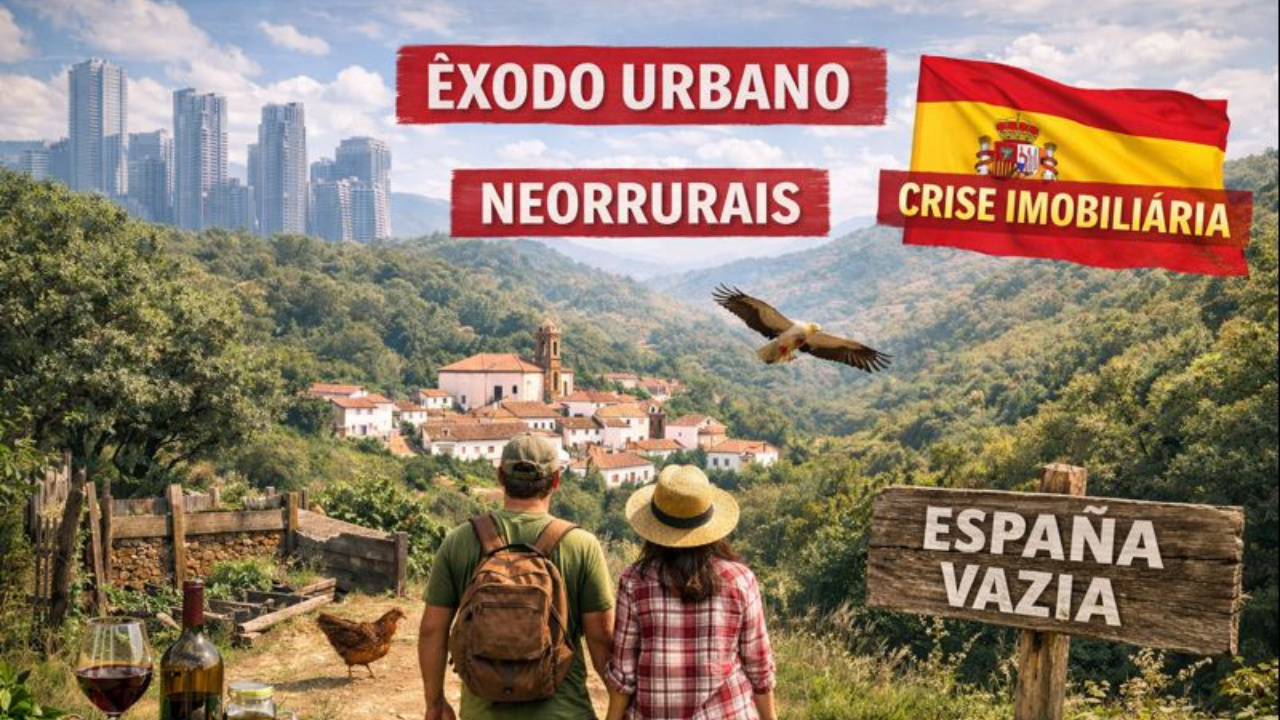
Neorurals Lead Urban Exodus in Spain in Search of Quality of Life Outside Cities Amid Housing Crisis.
The urban exodus has been gaining momentum in Spain in recent years, especially among young professionals and families leaving large cities in search of quality of life.
The movement involves those who are migrating, how this trend intensified after the pandemic, where it occurs — especially in sparsely populated villages — how this change is taking place, and why: the housing crisis in Spain, marked by record rental and property prices.
This displacement has altered the dynamics of regions known as Empty Spain, rural areas that have suffered depopulation over decades, but are now back on the radar of those seeking tranquility, affordable housing, and new lifestyles.
-
Unemployment rises again to 5.8% at the beginning of 2026, raising alarms about the end of temporary positions and its impact on the Brazilian job market.

-
Document organization can cut invisible costs in small businesses, a simple step that prevents waste, rework, and losses in daily operations.

-
Chinese giant worth nearly R$ 4 billion that manufactures cables for electric cars, solar energy, and robotics wants to open a factory in SC.

-
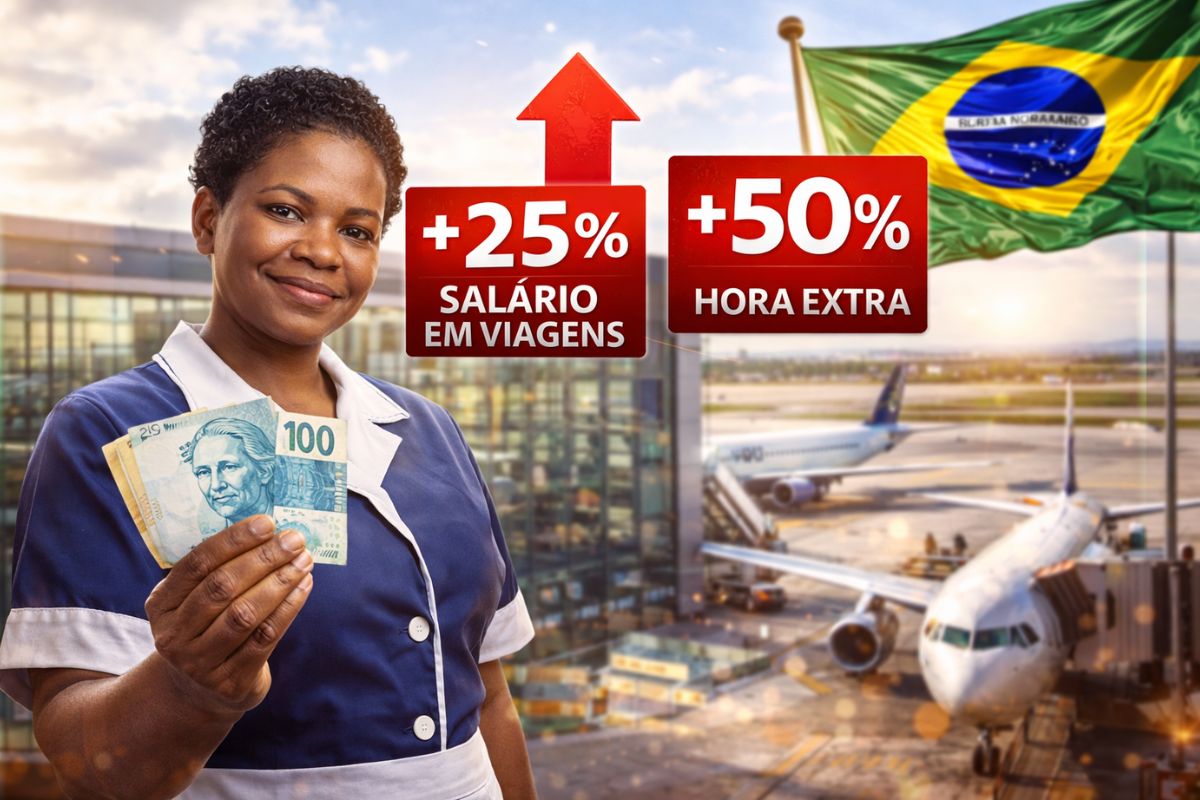
Many employers do not know, but the law guarantees domestic workers a 25% increase in salary during trips, 50% for overtime, 20% for night shifts, and 17 additional benefits that can lead to labor lawsuits if not paid.

Housing Crisis in Spain Accelerates Exit from Big Cities
The housing crisis in Spain is cited as one of the main triggers of the urban exodus.
According to recent data, property prices have already surpassed the levels of the 2008 bubble, while rents are experiencing double-digit increases in several regions.
According to María Matos, director of studies at the Fotocasa portal, 63% of those looking for housing state that they would like to move to rural areas.
The desire is even stronger among young people and low-income individuals, who see the countryside as an alternative to achieve financial independence.
Among young people aged 18 to 24, 70% express a desire to live outside large urban centers, although many acknowledge the practical difficulties of this decision, mainly due to professional limitations.
Neorurals Seek Quality of Life Outside Urban Centers
In this context, the neorurals emerge, people who consciously choose to exchange city life for country living.
This is the case of Ainara and Roger, scientists who left Seville to live in Corterrangel, a village with only 15 inhabitants in the province of Huelva.
“We value silence and contact with nature very much,” says Ainara.
The couple was able to buy the house outright, something they considered impossible in the Andalusian capital due to the instability of employment contracts and the difficulty of real estate financing.
Even with a daily commute of over an hour to Seville, they believe the move was worth it.
“Living here gives us a lot of peace,” sums up the researcher, emphasizing the role of quality of life as a central factor in the urban exodus.
Career Change Accompanies Urban Exodus
The movement is not limited to housing. For many, the urban exodus also represents a professional transformation.
Advertiser Anaí Meléndez decided to leave Madrid after facing low salaries and high rents.
“Salaries were ridiculous,” she reports.
After being laid off and while on unemployment benefits, she returned to her hometown, Nava del Rey, where she opened the restaurant Caín, focused on grilled meats and local products.
“In villages, there is a lot of work, but you have to create it, go after it,” says Anaí.
According to her, other young people have also returned to start businesses, whether opening clinics or revitalizing family vineyards.
Empty Spain Tries to Reinvent Itself to Attract New Residents
The advance of neorurals rekindles the debate about Empty Spain, regions that have lost population since the rural exodus of the last century.
For Diego Curto, manager of the Association for the Integrated Development of the Ambroz Valley (DIVA), the loss of residents creates a negative cycle.
“Population loss leads to the closure of services, businesses, and restaurants,” he explains.
To break this cycle, local organizations are creating real estate banks, promoting job opportunities, and guiding families interested in moving.
“People seek quality of life and tranquility,” says Curto, also highlighting the growing interest of Latin American families in settling in these regions.
Barriers Still Limit the Progress of Urban Exodus
Despite the growing interest, the urban exodus faces obstacles.
The scarcity of housing in villages and the concentration of housing projects in large cities hinder new migrations.
According to María Matos, Spain has a deficit of about 150,000 homes per year, exacerbated by the arrival of more than 500,000 people to the country in the recent period.
In addition, stereotypes about rural life persist. “Many thought it was a step backward,” says Ainara. Still, for those who manage to break away from urban routine, the change represents a conscious choice for a more balanced way of life.










Seja o primeiro a reagir!