





 English
  Francês
  Alemão
  Italiano
  Japonês
  Norueguês
  Portuguese
  Spanish
  4 min of reading
  0 comments


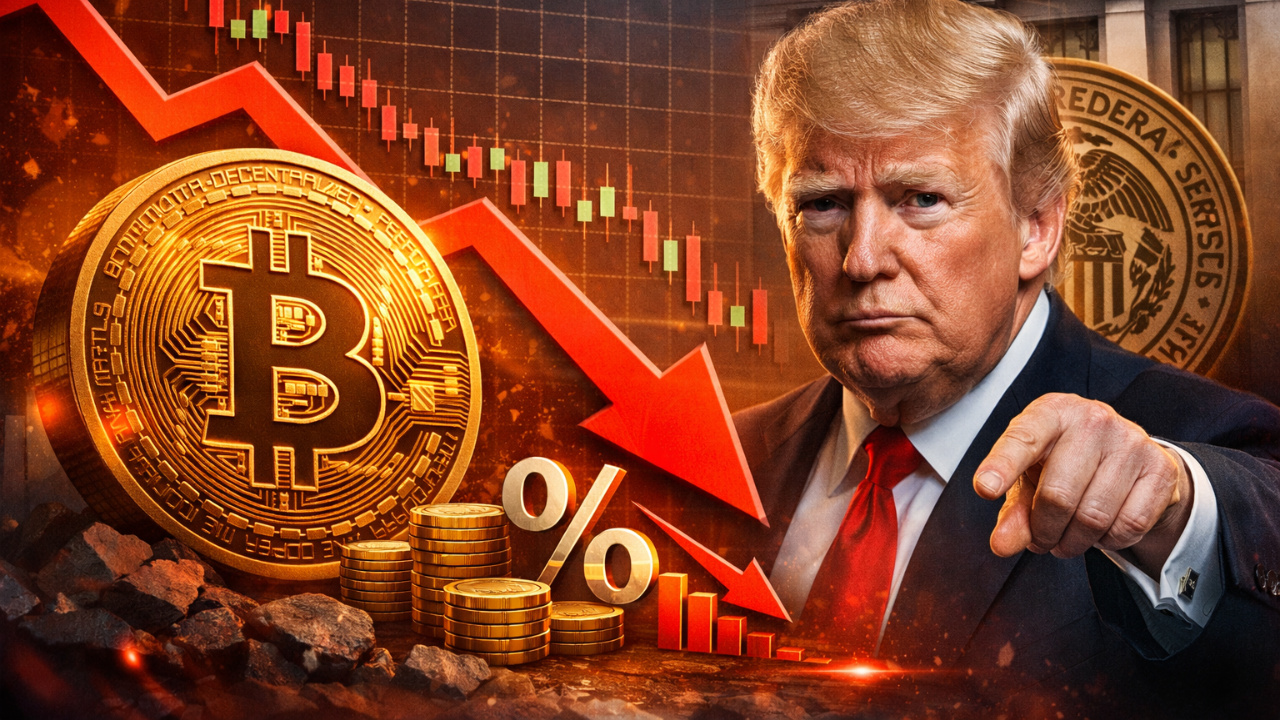
Bitcoin Hits 15-Month Low as Bitcoin Decline Is Pressured by Interest Rates and Donald Trump’s Decisions in the Crypto Market.
The Bitcoin decline has gained momentum in global markets after the cryptocurrency retreated to its lowest level in 15 months, despite U.S. President Donald Trump’s public support for the sector.
The movement occurred in recent days across the U.S. and international exchanges, driven by political and monetary factors, as well as a cooling off of the crypto market.
The asset is now valued at around US$ 65,000, accumulating significant losses in 2026.
-
If the USA were to go to war with Brazil, Washington’s greatest fear would not be the attack itself, but facing a vast territory, prolonged resistance, and a costly, chaotic, and unpredictable occupation.

-
In 2013, Nicaragua sold the concession for a canal to rival Panama to a Chinese billionaire who lost 85% of his fortune, disappeared, and was declared bankrupt. Now the project resurfaces with a new route, a new Chinese partner, and a cost of $64.5 billion.

-
The USA announces a mysterious billion-dollar vault project to store critical minerals, but what intrigues experts is not just the plan itself, but why Latin America, including Brazil, has entered the center of this global dispute against China.

-
Trump Announces Bombing of U.S. Military Targets on Iranian Island Responsible for About 90% of Iran’s Oil Exports, Warns of Further Attacks if Navigation in Strategic Strait of Hormuz Is Threatened

The devaluation comes after months of intense appreciation and raises questions about the new cycle of cryptocurrencies.
Currently, Bitcoin has recorded a 24% drop just this year.
In the past 12 months, the retreat has reached 32%, bringing the price close to levels seen in 2024 and even in previous cycles of the digital market.
Bitcoin Decline Occurs After Recent Historical Record
Before the current correction, Bitcoin was experiencing a strong euphoria.
In October, the cryptocurrency reached its historical peak by surpassing US$ 122,000, mainly driven by favorable political expectations and the entry of institutional investors.
The upward rally was largely sustained by Donald Trump’s pro-crypto rhetoric.
The president promised to ease regulations and turn the United States into the so-called “world capital of cryptocurrencies.”
In addition, an executive order signed in January 2025 sought to strengthen the sector and stimulate financial innovation based on blockchain—technology that underpins crypto assets.
Donald Trump Expands Direct Influence on the Crypto Market
Donald Trump’s involvement with the crypto market went beyond political discourse.
During his first year in office, he launched his own cryptocurrency, directing a significant portion of the profits to companies linked to his economic group.
Trump also maintained an active role in World Liberty Financial, an investment vehicle in digital assets controlled by his family.
In regulatory matters, his administration passed legislation providing federal backing for cryptocurrencies.
At the same time, he disbanded a task force from the Justice Department aimed at monitoring the sector, while the SEC reduced investigations related to the crypto market.
Critics reacted.
Democrats on the Senate Judiciary Committee labeled the strategy as a “pro-cryptocurrency agenda,” highlighting that Trump accumulated over US$ 11 billion in digital holdings and around US$ 800 million in personal income since reclaiming office.
High Interest Rates Pressure Risk Assets
Despite the favorable political environment, the Bitcoin decline was primarily triggered by macroeconomic factors.
Analysts at Deutsche Bank stated that the most recent trigger was the appointment of Kevin Warsh as the chairman of the Federal Reserve, the U.S. central bank.
According to the bank, the market fears a tighter monetary stance. High interest rates reduce global liquidity and make speculative investments—such as cryptocurrencies—less attractive.
An expansionary policy, on the other hand, usually favors digital assets.
Therefore, the current scenario contributed to the contraction of the crypto market.
Negative Sentiment Grows Among Investors
Deutsche Bank also noted that Bitcoin had already been showing a downward trend for the past four months.
“This constant selling, in our opinion, signals that traditional investors are losing interest, and general pessimism regarding cryptocurrencies is rising,” the bank stated.
The institution assesses that the sector will not disappear but may enter a more rational phase, moving away from being viewed solely as a speculative bet.
According to the report, Bitcoin is shifting from a “purely speculative asset” to something that “needs to find its specific role.”
Crypto Market Loses Trillions in Value
The contraction did not only affect Bitcoin.
Other significant coins also saw severe declines.
Ethereum and Solana have accumulated losses close to 37% in 2026.
The total value of the crypto market has drastically shrunk.
Data from CoinGecko indicates that the sector lost over US$ 1 trillion in just the last month.
Since the peak in October, the loss exceeds US$ 2 trillion in market value.
Projections Indicate Risk of Further Declines
Reports from Stifel have raised alarms among institutional investors.
The analysis firm projects that Bitcoin could fall to as low as US$ 38,000 if the macroeconomic scenario remains adverse.
Another observed factor is the increasing correlation between cryptocurrencies and the U.S. dollar—something unusual in previous cycles.
Interestingly, the U.S. currency also displayed recent volatility, hitting its lowest level in four years last week.
Experts See Sector Maturity
Despite the negative moment, part of the market maintains an optimistic long-term outlook.
William Barhydt, CEO of Abra Capital Management, believes the sector is undergoing natural maturation.
“I wouldn’t say they need to recover, but I can’t imagine how that won’t happen,” he said.
He noted that fluctuations are part of Bitcoin’s history. However, he made a geopolitical caveat:
“The only way that doesn’t happen is if we end up in some kind of war.”
What to Expect from Bitcoin Going Forward
The future of Bitcoin will depend on the combination of monetary policy, regulation, and institutional flow.
If interest rates remain high, the crypto market is likely to face prolonged pressure.
On the other hand, any cuts might reignite the appetite for risk.
Meanwhile, the Bitcoin decline marks an important transition: from an asset driven by political euphoria to a market increasingly sensitive to the global economy.
See more at: Bitcoin: why the cryptocurrency plunged to its lowest level since Trump took office – BBC News Brasil










Seja o primeiro a reagir!