





 Portuguese
  English
  Spanish
  3 min of reading
  1 comment


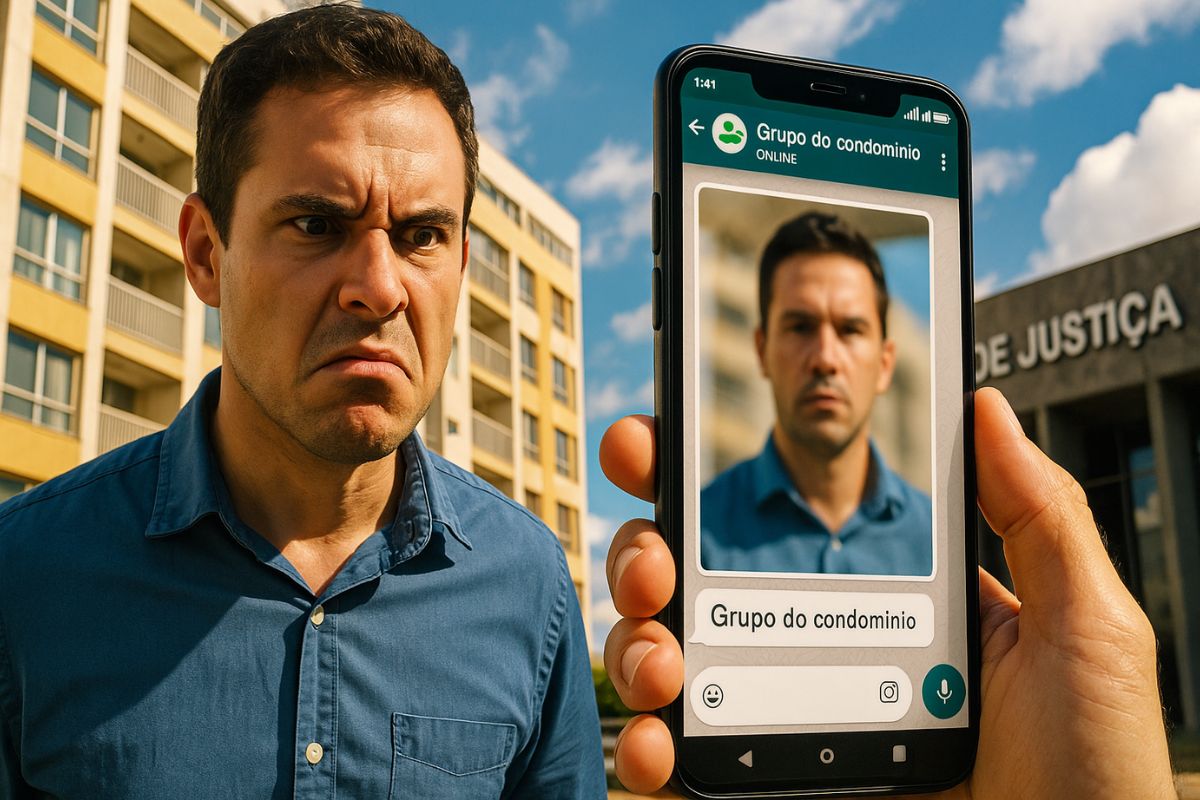


Court of Justice of the Federal District Upheld the Conviction of a Manager Who Shared a Resident’s Image in a WhatsApp Group, Confirming the Duty to Compensate for Violation of Personality Rights.
According to the Conjur portal, the Court of Justice of the Federal District confirmed that a manager must compensate a resident for sharing their image without authorization in a WhatsApp group of the condominium. The decision of the 6th Civil Chamber of the Court of Justice of the Federal District (TJ-DF) upheld the conviction in the amount of R$ 2 thousand and reaffirmed that exposing residents, even in an internal environment, constitutes a violation of image rights and personal dignity.
The case serves as a warning for administrators and managers: the sharing of images of residents, even with good intentions, must respect the legal limits and the right to privacy, under penalty of generating civil liability and compensation.
Understand the Case
The episode began when a resident, at a moment of irritation, damaged a piece of common area equipment.
-
The Senate approves a bill that criminalizes misogyny, hatred, or aversion towards women, and includes the crime in the Racism Law with a penalty of up to 5 years.

-
Chamber Approves Bill That Allows Pepper Spray for Women Over 16 and Imposes Strict Rules for Purchase, Possession, and Use as Self-Defense

-
Chamber Approves Law to Combat Leucaena, Fast-Growing Plant That Dominates Land and Threatens Native Species in Various Regions of the Country

-
Asset Division: Know What Cannot Be Divided in Case of Divorce


The manager, upon learning of the incident, accessed the internal security footage and shared the images in the WhatsApp group of the residents, accompanied by a message disapproving the resident’s behavior.
The exposure, however, generated derogatory comments and jokes among the neighbors, leading the author to file a lawsuit for moral damages.
In their defense, the manager claimed that they acted within their duties, with the intent to inform other residents and prevent further incidents, without intending to humiliate the author.
Court Rejects Defense and Upholds Compensation
When analyzing the appeal, the board of the 6th Civil Chamber of the TJ-DF rejected the arguments presented by the manager.
For the judges, the sharing of the image without authorization constitutes a violation of personality rights, especially when it results in public embarrassment.
According to the decision, “the improper exposure of the author’s image in the condominium’s WhatsApp group generated derogatory and mocking comments, affecting their reputation among other residents.”
The Chamber also emphasized that, even with damage to common property, this does not authorize the public exposure of the responsible person’s image, as there are formal and administrative means to apply warnings or internal sanctions.
Amount of Compensation and Applied Criteria
To define the amount of compensation, the Court considered the seriousness of the conduct, the repercussions of the case, and the educational nature of the decision.
The amount of R$ 2 thousand was upheld as proportional to the damage caused and to avoid undue enrichment of the victim.
The judges noted that civil liability in cases of image sharing is objective, meaning it does not depend on the intent to offend, and it is sufficient to prove that there was a violation of image and damage to honor or reputation. The decision was unanimous and the process is under judicial secrecy.
Implications for Condominiums and Social Networks
The decision reinforces an increasingly established understanding in the judiciary: the exposure of residents on social networks and messaging apps can generate civil liability, even when done with the intent to “alert” or “educate” other residents.
Experts in condominium law emphasize that warnings or penalties must follow the formal procedures laid out in the internal regulations, ensuring notification, adversarial proceedings, and ample defense.
Sharing images without authorization is a direct violation of privacy, and the justification of “transparency” does not exempt the author from liability.
The case illustrates how the boundary between transparency and invasion of privacy is increasingly tenuous in the era of condominium groups and messaging apps.
Sharing an image without consent can turn routine management into a lawsuit.
And you, do you think the manager acted correctly by exposing the resident to alert others, or did they exceed the limits of their role and privacy? Leave your opinion in the comments we want to hear from those who have experienced similar situations in the condominium.










Entendo que as imagens gravadas pelo sistema de segurança de um condomínio podem ser disponibilizadas para qualquer Condômino, como as imagens foram divulgadas no grupo de Condôminos e não para o público externo, entendo que Síndico agiu corretamente não cabendo qualquer penalização por seus atos.