





 Portuguese
  English
  Spanish
  5 min of reading
  1 comment


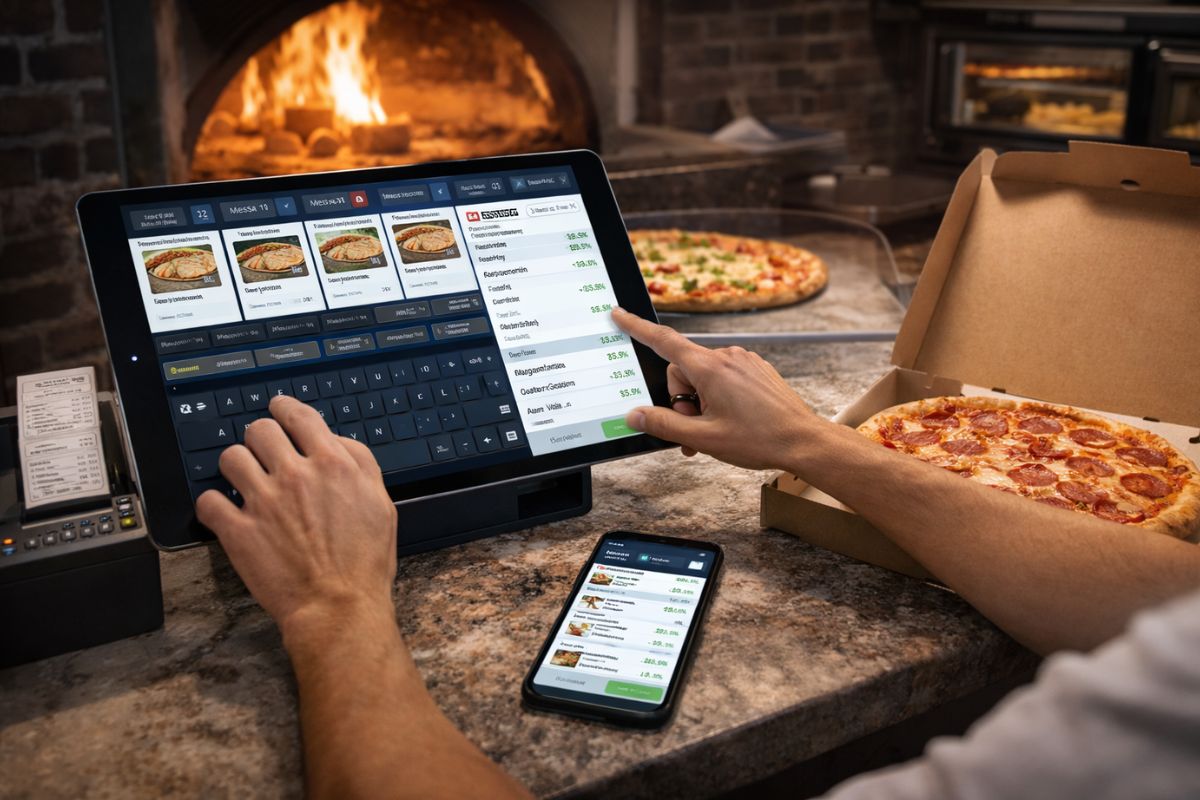

A pizzeria system is what separates an “improvised” operation from a truly efficient pizzeria, with organized orders, timely deliveries, and predictable profit. Pizzerias often experience high volume during concentrated hours, many flavor variations, half-and-half, crusts, sizes, extras, coupons, and different channels (phone, counter, WhatsApp, app, iFood). Without an adequate system, the results appear quickly: wrong orders, delays, waste, confusing cash registers, and poor reviews.
Next, you will understand what a pizzeria system needs to have, which options make sense for each type of operation, and how to implement it without stalling service.
What Is a Pizzeria System?

In general, when we talk about a “system,” we are referring to a setup that can include:
-
Motorola launched the Signature with a gold seal from DxOMark, tying with the iPhone 17 Pro in camera performance, Snapdragon 8 Gen 5 that surpassed 3 million in benchmarks, and a zoom that impresses even at night.

-
Satellites reveal beneath the Sahara a giant river buried for thousands of kilometers: study shows that the largest hot desert on the planet was once traversed by a river system comparable to the largest on Earth.

-
Scientists have captured something never seen in space: newly born stars are creating gigantic rings of light a thousand times larger than the distance between the Earth and the Sun, and this changes everything we knew about stellar birth.

-
Geologists find traces of a continent that disappeared 155 million years ago after separating from Australia and reveal that it did not sink, but broke into fragments scattered across Southeast Asia.

A POS (point of sale) to record orders and payments, an order manager (receipt/kitchen), delivery and motorbike rider control, inventory control and technical sheets, financial reports, and, in many cases, integration with delivery and WhatsApp.
The goal is to centralize information and turn the chaotic order flow into a predictable process: an order comes in, goes to production, is dispatched for delivery/pickup, reduces inventory, records payment, and populates reports.
Why Does a Pizzeria Need a System?
A pizzeria is complex by nature. You do not sell “one item” only; you sell combinations. An order can include a large pizza half calabrese half chicken, stuffed crust, extra cheese, a note “no onion,” a dessert pizza, a drink, a coupon, a different payment method, and a variable delivery fee.
Without a system, this complexity turns into operational errors. With a system, it transforms into standardization. The system reduces rework, improves preparation time, standardizes communication between service and kitchen, and helps maintain consistency even on peak days.
Essential Functions in a Pizzeria System
A good pizzeria system starts with a fast and intuitive POS. It needs to allow pizza customization by size, flavors, half-and-half, and pricing rules (such as charging for the more expensive flavor when it is half-and-half). If this is not simple, the attendant gets lost and the order time explodes.
Managing crusts and extras is another mandatory point. Crusts (catupiry, cheddar, chocolate), extras (bacon, extra cheese), and removals (no onion) need to be organized with a few clicks and reflect correctly in the final price.
The production receipt needs to function clearly for the kitchen. Ideally, the system prints or displays a receipt with all the information legibly, including notes and preparation sequence, reducing errors and back-and-forth.
Delivery management is critical for pizzerias. The system should allow the registration of fees by neighborhood, estimated time, motorbike rider control, order status (in preparation, ready, out for delivery), and track total time. Even if you use third-party deliverers, tracking deadlines and failures improves reviews.
Integration with delivery makes a huge difference. The less manual input, the better. Orders entering the system automatically reduce errors and speed up operations. For those who sell a lot through apps, this integration can be the main game-changer.
Inventory control and technical sheets are where the pizzeria gains real profit. Without a technical sheet, you do not know the cost of a pizza. A good system helps to record ingredient consumption (dough, sauce, cheese, cold cuts), forecast purchases, control losses, and understand profit margins per product. Pizzerias often lose money silently due to “excess filling,” cheese waste, and poorly standardized portions.
Management reports close the loop. Sales per day and by hour, average ticket, best-selling items, percentage of half-and-half, ingredient consumption, cancellations, average delivery fee, payment methods, and performance by channel are indicators that help determine pricing, promotions, and team scaling.
Features That Became Differentiators in 2026
By 2026, some features ceased to be a luxury and turned into competitive advantages. One example is having a catalog with orders via WhatsApp. It’s not just “serving on WhatsApp”; it’s turning the conversation into a structured order: the customer chooses items, the system calculates price, fee, time, and sends it for production.
Another differentiator is having an integrated loyalty program, with points, coupons, and automatic campaigns. A pizzeria is a recurring business. If you can bring the customer back without relying on heavy discounts, your profit margin improves.
Having a dedicated digital menu with online payment also helps reduce dependence on apps and lower fees. Many pizzerias grow by creating a customer base that orders directly through a link, with a simple experience.
How to Choose the Ideal System for Your Pizzeria
The choice depends on your model. If you are a counter and pickup, prioritize a fast POS and production receipt. If you are strong on delivery, prioritize integration with channels and delivery management. If you have a dining area, consider also tables, receipts, and splitting bills.
Consider the complexity of the menu. A pizzeria with many pricing rules (half-and-half, crusts, combos) needs a more robust system. If you have a streamlined and standardized menu, you can opt for something simpler but stable during peak times.
And evaluate support. Pizzerias operate at night and on weekends, so a system with support only during business hours can turn into a nightmare. A system that fails on a Friday night can be costly.
Implementation without stalling operations.
The biggest mistake is implementing quickly, without properly entering the menu and training. Ideally, first register sizes, flavors, half-and-half rules, crusts, combos, and delivery fees. Then, test real orders during off-peak hours. Only then should you switch to using it during peak hours.
Train the service and kitchen separately. Service needs to master shortcuts and pricing rules. The kitchen needs to understand receipts and the flow of statuses (in preparation, ready, out). And someone needs to be responsible for registrations and adjustments, so it doesn’t turn into chaos over time.
Practical Benefits of a Pizzeria System
When the system is well configured, you notice benefits in the first week. The number of order errors decreases, service time improves, the kitchen receives clearer information, deliveries become more organized, and the cash register closes with fewer discrepancies.
After that, comes the most valuable part: understanding which pizzas yield higher margins, which promotions really work, which channel is more worthwhile, and where waste is occurring. This is when the system stops being “software” and becomes a profit tool.
Have an Ideal Pizzeria System for Your Business
A pizzeria system is essential to handle the complexity of the product and peak demand. It organizes orders, standardizes production, controls deliveries, reduces errors, and provides real financial insight into the business. In a competitive market, with strong delivery and demanding consumers, operating without a system means accepting loss of money in the details.








A really good blog and me back again.