





 Portuguese
  English
  Spanish
  4 min of reading
  1 comment


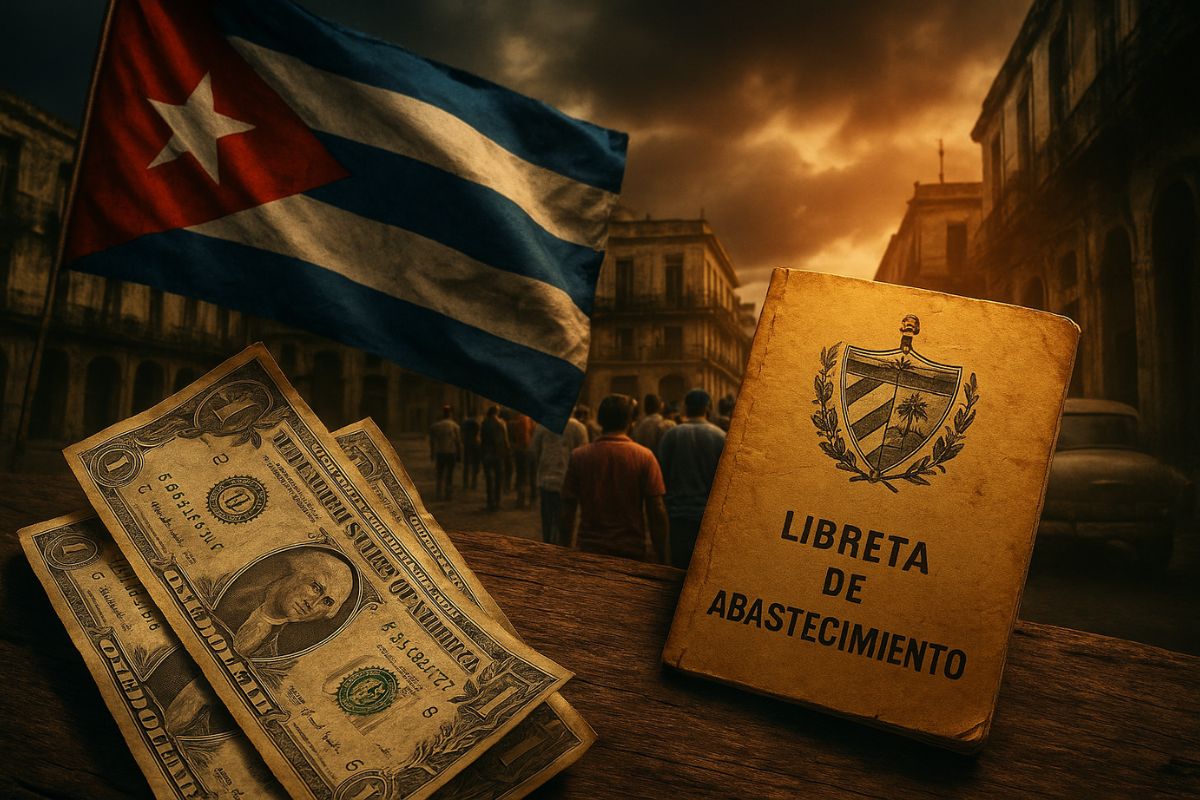

From Colonial Gem to Socialist Laboratory, the Island Today Lives a Paradox Between Social Advancements and Chronic Poverty
In debates about socialism, Cuba is always cited as a symbol — whether of resistance or failure. But understanding the island’s trajectory requires going beyond political propaganda and delving into the historical, social, and economic facts that shaped one of the most controversial experiences in Latin America.
From independence to the present day, socialism in Cuba has had its ups and downs, symbolic victories and deep crises. External embargoes weighed heavily, but internal decisions were decisive for the collapse of a promise of equality. What remains is a reality marked by contradictions and a people caught between ideology and scarcity.
The Colonial Past and Foreign Domination
Cuba was born under Spanish control, sustained by monocultures such as sugar and tobacco and by slavery. Even after formal independence in 1902, the United States came to control much of the economy, transforming Havana into a paradise of casinos, luxury, and business — but for foreigners.
-
50 viaducts, 4 tunnels, 28 bridges, and 40 kilometers of bike paths: BR-262 in Espírito Santo will receive 8.6 billion reais for the largest engineering project in the state’s history, inspired by the Immigrant Highway in São Paulo.

-
Brazil produces too much clean energy and doesn’t know what to do with it: over 20% of solar and wind capacity was wasted in 2025 while investors flee and 509 renewable generation projects were abandoned in the last year.

-
Piauí will produce a new fuel that replaces diesel without needing to change anything in the truck’s engine and reduces pollutant gas emissions by half: truck drivers from all over the Northeast are already celebrating the news that will arrive later this decade.

-
A new Brazilian shopping center worth R$ 400 million will be built in an area equivalent to more than 4 football fields, featuring 90 stores, 5 cinemas, a supermarket, a college, and parking for 1,700 cars, potentially generating 3,000 jobs.


In the countryside, misery was the norm. 75% of exports went to the U.S., while rural illiteracy and lack of infrastructure left the majority of the population on the margins.
The Socialist Revolution: Promises and Breaking Points
The Cuban Revolution (1953–1959), led by Fidel Castro, Che Guevara, and Camilo Cienfuegos, was fueled by inequality and submission to foreign capital. With the fall of dictator Fulgencio Batista, the new regime implemented radical reforms: mass nationalizations, agrarian reform, and universal health and education systems.
For a time, social advancements were real. Illiteracy dropped drastically, life expectancy increased, and Cuba became a reference in preventive medicine. But there was a cost: economic isolation, political closure, and complete dependence on the Soviet Union.
The Soviet Collapse and the “Special Period”
With the fall of the USSR in 1991, Cuba lost 85% of its foreign trade. GDP plummeted by 40% in just four years. Scarcity reached critical levels: severe food rationing, daily blackouts, and urban mobility collapse. It was one of the most dramatic moments in Cuban history in times of peace.
Even so, the regime survived. Thanks to international tourism, remittances from Cubans abroad, and the export of doctors to allied countries, the economy remained in critical but functional condition.
The Alliance with Venezuela and the New Breath
In the 2000s, the alliance with Hugo Chávez brought relief. Venezuela even sent 100,000 barrels of oil per day at subsidized prices, in exchange for Cuban doctors and technicians. This temporarily supported the model without resolving it.
Selective reforms emerged with Raúl Castro: controlled opening to the private sector, legalization of small businesses, and timid attraction of foreign investment. But wages remained below US$ 30 per month, and productivity continued to stagnate.
The Reapproachment with the U.S. and the Setback
Between 2014 and 2016, under Barack Obama, Cuba experienced its greatest chance for reconnection with the world. Direct flights, American tourism, and internal optimism characterized the period. But everything changed with the election of Donald Trump, who reinstated sanctions and undermined diplomatic advances.
The 2020 pandemic deepened the crisis. Tourism, which accounted for 10% of GDP, disappeared. Remittances from Cubans abroad also fell. And Venezuela, in collapse, stopped sustaining the island with oil.
The Inequality of Cuban Socialism
With a per capita GDP of around US$ 7,600 PPP, Cuba is behind countries like the Dominican Republic. The HDI of 0.76 is inflated by health and education indicators but hides real poverty. Salaries of US$ 3 per month, rationing, and blackouts are still part of everyday life.
Meanwhile, the new revolutionary elite lives in privilege. Videos show Fidel Castro’s grandchildren driving luxury cars through Havana streets, attending private parties, and living surrounded by comfort. A stark contrast to the majority of the population, who depend on bicycles, precarious public transport, and state-provided basic food baskets.
The Historical Lesson of Cuba
The history of the Caribbean island exposes an uncomfortable truth: socialism, as implemented in Cuba, offered universal access but did not guarantee collective prosperity. The attempt to create equality generated another form of concentration — that of political and economic power in the hands of a few.
Even acknowledging the destructive effects of the American embargo, it is impossible to ignore internal errors: closure to international trade, suffocation of the private sector, persecution of dissent, and maintenance of an authoritarian regime disguised as social justice.
Do you believe that Cuban socialism failed due to the model or because of external embargoes? Does the current inequality contradict the ideals of the revolution? Share your opinion in the comments — the debate is essential for understanding the future of Latin America.









Falhou por conta do socialismo que não funciona, o embargo dos EUA foi só uma consequência, quem em São consciência vai vender para não receber, foi o que aconteceu. Ilusão implantada na cabeça dos ****, que linsistem em acreditar que o socialismo é bom. É tão bom mas ninguém quer ir morar lá.