





 Portuguese
  English
  Spanish
 5 min of reading
  45 comments


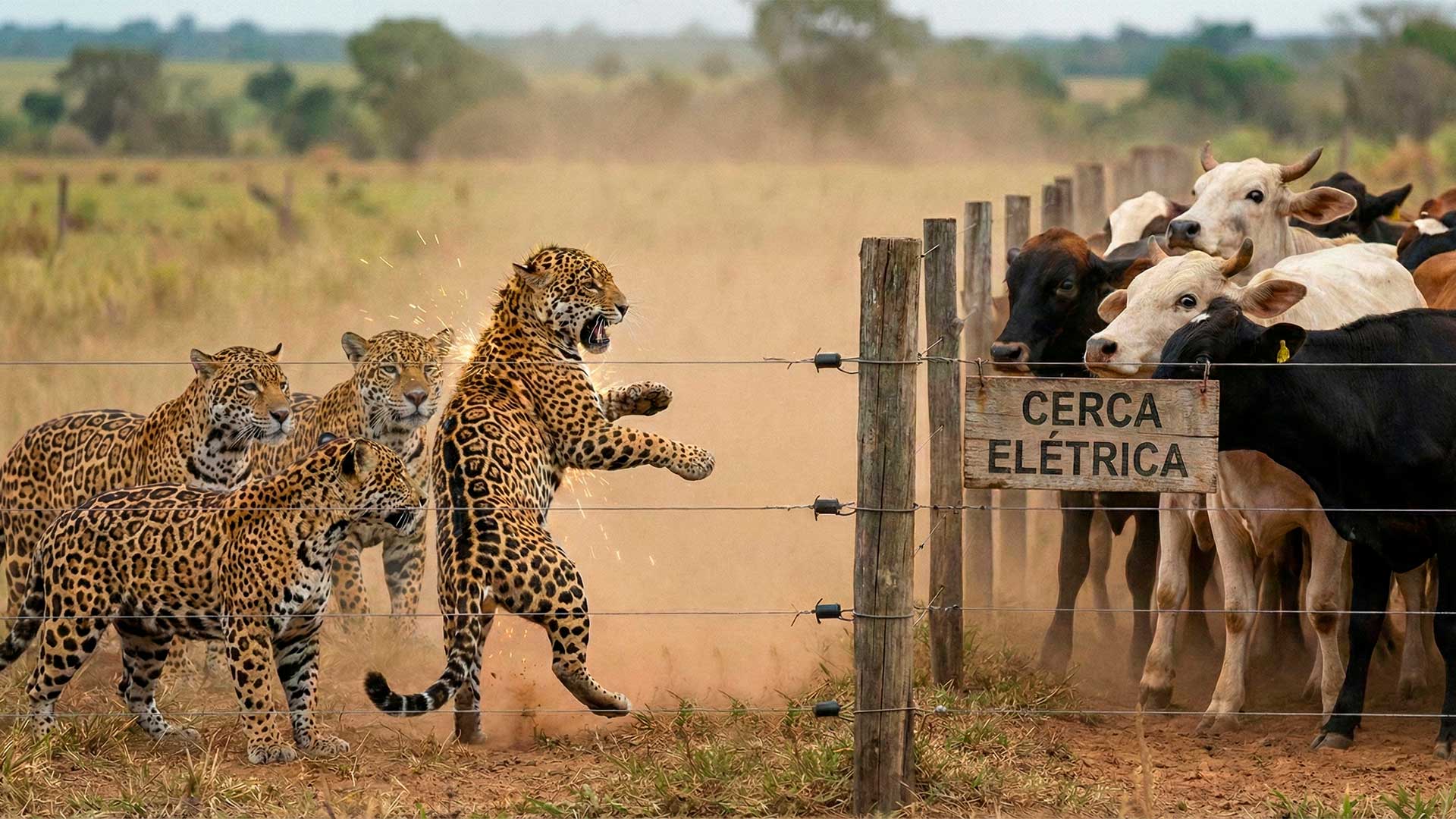


Night Cameras Recorded a Rare Group Near Corrals, and Their Behavior May Help Reduce Conflicts Between Livestock and Conservation in the Biome
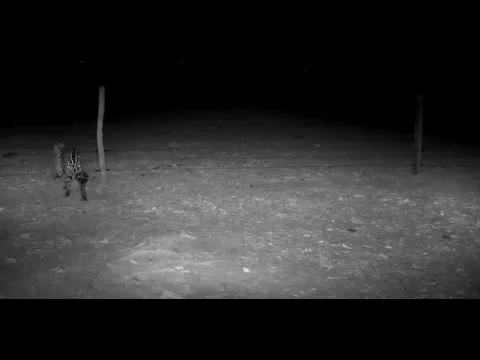
The jaguar is often described as a solitary feline, which makes a recent sighting in the Northern Pantanal in Mato Grosso even more surprising. Cameras installed near corrals captured four jaguars moving in succession, interacting and assessing their surroundings for just over two minutes.
The video is part of an analysis published in the scientific journal Biota Neotropica, which discusses whether social interaction can promote learning in livestock-dominated landscapes. The scene was recorded in an area of farms that use electrified fences as a strategy to protect cattle and reduce the chance of retaliation against the predator.
The context matters because the Pantanal is one of the places where the coexistence between large felines and agricultural production is most intense. The National Action Plan for the conservation of the species itself points out that, in the biome, one of the greatest threats comes from retaliation associated with livestock predation, combined with cultural and economic pressures.
-
A forgotten cord on the floor of a basement in Vienna leads a plumber to a box containing 30 kilograms of gold with Mozart’s face, hidden before World War II. The treasure, worth 2.3 million euros, was just centimeters away from a worker who ignored the sign a day earlier.

-
A couple buys an old chalet, breaks the kitchen floor for renovation, and finds over a thousand coins of gold and silver hidden since the English Civil War over 4 centuries ago.
-
Rigid bags with their days numbered: new trend prioritizes comfort in 2026.

-
YouTuber creates an excavator equipped with a giant 4.5-meter sword to challenge his brother to a rematch, and the invention quickly goes viral on social media.

For researchers, what is most relevant is not just the group itself, but what it suggests about decision-making. Instead of a direct confrontation with the corral, the images indicate assessment, retreat, and a possible transmission of caution among individuals.
What the Cameras Recorded Near the Corrals in the Northern Pantanal


The recording occurred at night, with the jaguars passing in succession in front of the cameras and sniffing around the corral. According to the report that revealed the case, the interaction was quick and focused, but sufficient to show attention to signals left by the first animal that approached the barrier.
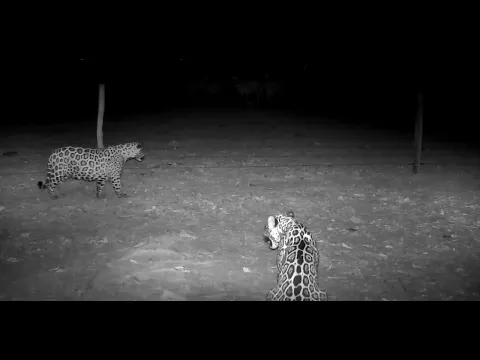
Afterwards, the group kept their distance from the contact point with the fence and avoided insisting on getting closer. The interpretation is that the environment, with livestock occupying a large part of the territory and corrals as predictable points, offers opportunities and risks that can be “read” collectively.
The Study in Biota Neotropica and the Hypothesis of Social Learning
The scientific article describes monitoring with camera traps in corrals equipped with electrified fences. In this setup, the authors report evidence compatible with social learning, where the behavior of one individual influences the decisions of another in the face of a negative stimulus.
The composition of the group is also noteworthy because it is not just a simple mother with small cubs. The study mentions an adult female with two subadult offspring and one related subadult male, described as the brother of the adult female, indicating social tolerance beyond the more well-known pattern.
In the analyzed episode, a young one attempts to approach and receives a shock, retreating shortly afterward. The others observe the reaction and remain more cautious, a detail used by the authors to support the idea of learning through observation in a species considered predominantly solitary.
The study also relates the group dynamics to visits to natural prey carcasses on nearby days, suggesting coordinated use of space and resources. In practice, this may mean that young ones learn not only to avoid human structures but also to seek alternatives in the available landscape.
Recent literature has already been questioning the label of “completely solitary” for the species in specific situations, such as areas with high prey availability. There are records of male coalitions in other studies, reinforcing that sociability can vary according to the environment and opportunities.
Night Electrified Fences and Reducing Conflicts with Livestock
The fence is not intended to harm the animal, but rather to create a short-term aversive stimulus that leads to avoidance of the corral. In reports on the subject, the proposal is to concentrate protection in small areas used at night, reducing losses and, consequently, the motivation for illegal retaliation.
There are reports of properties with a significant reduction in attacks after the adoption of this management, including mentions of a decrease of up to 83 percent in losses in contexts monitored by local projects. Even when numbers vary between areas and methods, the central point is that the strategy seeks to transform a historical conflict into more predictable coexistence.
In parallel, the fact that jaguars respond to the barrier and adjust their behavior is valuable information. If young individuals learn early to associate corrals with risk, the likelihood of recidivism may decrease, benefiting both producers and conservation efforts.
Why This Type of Social Tolerance Matters for Conservation
The National Action Plan highlights that, in the Pantanal, retaliation linked to livestock predation is a central threat and can be aggravated by cultural factors and the low regulation in extensive areas. This helps explain why management solutions that reduce immediate harm tend to have an indirect effect on predator survival.
From an ecological standpoint, the jaguar occupies the top of the food chain, and its removal can create imbalances. Therefore, records indicating practical pathways to reduce conflicts carry weight, especially in a biome where agricultural production and wildlife share the same space.
What Still Needs to Be Answered and Why the Topic Divides Opinions
Despite the impact of the video, the authors themselves regard the record as a rare window into larger questions. How long do these groupings last, how do they form, and to what extent does kinship reduce tension are points that require more samples and long-term monitoring.
Another debate involves cost and scale, as not every farm can implement management, monitoring, and maintenance with the same ease. Some advocate for increased incentives and technical assistance, while others call for stricter enforcement against poaching and retaliation, even when there is real loss of cattle.
There is also the argument that the solution cannot rely solely on technology, as the problem involves landscape, availability of natural prey, farming practices, and even observation tourism. In this scenario, the record of the four jaguars becomes a symbol that each side uses to its advantage, either as proof that coexistence is possible or as a warning that the risk is always close to the corral.
In the end, the scene reinforces a simple yet uncomfortable idea. The species remains predominantly solitary, but can learn, adjust routes, and tolerate proximity under specific conditions, challenging old certainties and demanding more realistic policies.
If you were a producer in the Pantanal, would you invest in electrified fencing and management changes, or do you think that shifts too much cost onto those who rely on cattle? And for those who advocate for conservation, should the priority be incentives and education, or stricter punishment against retaliation? Share your opinion in the comments and tell us which path seems more just and effective.








O melhor caminho é com certeza a tecnologia a favor do fazendeiro e assim manter cada um no seu próprio quadrado. Devem construir piquetes de áreas com pastagens cercadas para proteger a criação e evitar os prejuízos para principalmente os pequenos criadores.
Cerca elétrica resolve o problema de perda de animais.
O justo e que se proteja,a onça ou qualquer outra espécie de vida,dos animais,que tão prejudicados já estão pelos humanos nesse planeta. Viva a onça pintada,viva a floresta,vamos respeitar a natureza.
Babaquice!! Quanta inteligência…