





 Português
  Inglês
  Espanhol
  4 min de leitura
  0 comentários


NASA’s New Horizons Probe Continues Its Journey Beyond Pluto, Revealing New Discoveries in the Kuiper Belt. Scientists Are Intrigued by What May Still Be Hidden in the Outer Reaches of the Solar System.
Since 2006, NASA’s New Horizons probe has been exploring the outer reaches of the Solar System on an unprecedented journey.
What started as a mission to explore Pluto has ended up revealing secrets beyond our imagination.
With billions of kilometers traveled, it has provided fascinating information that is causing scientists to rethink the boundaries of the Solar System.
-
A bright yellow mushroom imported from Asia escaped from a cultivation farm in the United States in 2010 and is now aggressively spreading across 25 states, destroying entire communities of native fungi in American forests.

-
Buried under China, a colossal machine weighing 20,000 tons began operating as the largest neutrino detector on the planet and, in just 59 days, surpassed results that science took half a century to achieve.

-
Iran enters the center of a climate alert after the war emitted 5.6 million tons of CO2 in two weeks, surpassing the annual pollution of entire countries.

-
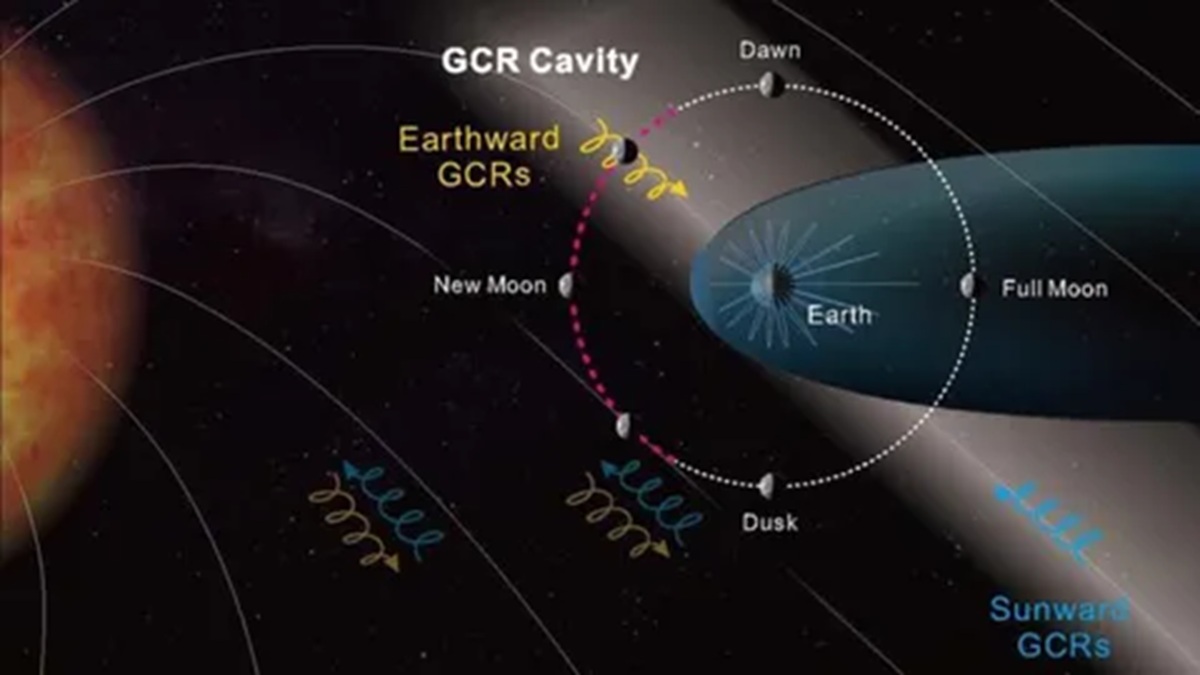
Lunar exploration may change after a Chinese probe finds a “cavity” of radiation that reduces the impact on astronauts by up to 20% at certain times on the Moon.

The Journey of New Horizons to the Kuiper Belt
When it was launched in 2006, New Horizons had a clear objective: to explore Pluto and its moons.
In 2015, the probe made history by capturing the first detailed images of the dwarf planet, revealing a surface more complex than anyone had imagined.
This achievement, however, was just the beginning of an even more ambitious journey.
The probe continued its voyage, moving beyond Pluto toward a still little-explored region: the Kuiper Belt, a cluster of small icy bodies located beyond Neptune.
This area contains frozen objects, comets, and rocky debris, remnants from the formation of the Solar System.
The Kuiper Belt, which had long been considered a distant and static place, has proven to be much more intriguing than scientists had assumed.
The New Horizons probe has doubled the distance it had traveled since 2015, reaching an area of the belt that extends up to 90 times the distance from Earth to the Sun.
Arrokoth: A Mysterious Binary Object
Among the major discoveries made by New Horizons is the encounter with Arrokoth, a groundbreaking binary object and the most distant one ever closely explored by a spacecraft.
In January 2019, the probe flew by Arrokoth, previously known as 2014 MU69, and revealed that it is composed of two large connected blocks.
This fascinating discovery suggests that Arrokoth formed through a slow and gentle merger of two bodies, offering evidence of how objects in the early Solar System came together to form planets and other larger bodies.
According to Wes Fraser, co-investigator of New Horizons, studying Arrokoth has helped refine theories about how planetary formations occurred billions of years ago.
“Arrokoth gave us a glimpse of the conditions that existed when the Solar System was very young, before planets like Earth formed,” Fraser states. “It is a window into the cosmic past.”
The Kuiper Belt May Be Larger Than We Imagined
The exploration of the Kuiper Belt by New Horizons is changing how scientists view this remote region.
The Subaru Telescope in Hawaii has been crucial in helping identify objects in the belt, some of which are at a distance up to 90 times greater than that of Earth to the Sun.
This raises the possibility that the Kuiper Belt is much larger than previously thought, challenging the traditional view that it is a static frontier.
According to the latest data from NASA, there may be more unknown objects scattered throughout the belt, and even another belt that is even more distant, which scientists have suggested since the 1990s. This raises questions about what else might be hidden in this mysterious region.
“Our Kuiper Belt may not be as small as we believed, especially when compared to planetary systems around other stars,” Fraser says, emphasizing the significance of New Horizons’ discoveries.
What Is Yet to Come?
New Horizons still has a long journey ahead.
With enough fuel and energy to operate until at least 2050, the probe will continue exploring the farthest reaches of the Solar System, potentially reaching a distance 100 times greater than that of Earth to the Sun.
If the probe survives the journey, it may join the famous Voyager 1 and 2 missions, which have already reached interstellar space.
However, what else may be hidden beyond the Kuiper Belt? This is the big mystery that intrigues scientists.
The discoveries from NASA’s New Horizons so far suggest that the Solar System may be much more vast and complex than previously imagined. And you, do you believe we still have great surprises to discover in the depths of space?






Seja o primeiro a reagir!