





 English
  Francês
  Alemão
  Italiano
  Japonês
  Norueguês
  Portuguese
  Spanish
  6 min of reading
  0 comments



Discover How the Offshore Driller Operates on Maritime Platforms, What Salaries Are Practiced in the Offshore Profession, and Why This Specialist Is Strategic for the Expanding Oil Market in Brazil.
The Offshore Driller is one of the most strategic professionals in the oil market in Brazil and internationally. According to a report published by the Monitor do Mercado website this Wednesday (11), they operate directly in the drilling rig operations on maritime platforms and drill ships, being responsible for controlling complex systems that penetrate the seabed in search of oil and gas. This is a highly specialized technical role marked by decisions under constant pressure.
According to estimates released by recruitment platforms, along with references from collective agreements in the oil and gas sector in Brazil, the salaries of an experienced professional can range from R$ 25,000 to R$ 40,000 monthly, but can vary depending on seniority, the type of maritime unit, and the additional provisions in labor legislation. The high remuneration is a direct reflection of the technical responsibilities and the inherent risks of the offshore profession.
Offshore Driller in the Oil Market: Acting on the Front Lines
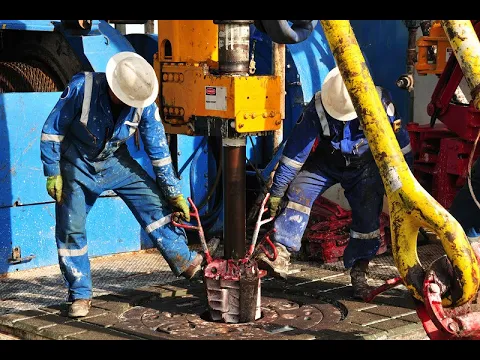
The Offshore Driller works at the heart of drilling operations. They command the drilling rig, controlling critical variables such as rotation speed, torque applied to the string, weight on the bit, and circulation of the drilling fluid.
-
With Announcement for ROV Course in Partnership with Zen, Rio das Ostras Aims to Transform Technical Qualification into Real Jobs in the Competitive Offshore Market

-
Free Offshore Steward Course in São Gonçalo Emerges as a Strategic Opportunity for Those Seeking Qualified Work at Sea

-
Messer Gases Reopens Branch in Macaé to Serve Offshore Oil and Gas Market in Northern Fluminense with Supply of Oxygen, Argon, and CO₂
-
Offshore Profession Simplified: Comprehensive Guide Reveals How to Trade Common Routine for High Salaries and Long Breaks in Life Aboard in the Oil Sector


Moreover, they constantly monitor the well pressure. Any unexpected variation can indicate gas influx or blowout risk, situations that require immediate response. The margin for error is minimal.
Unlike administrative positions in the energy market, the driller operates directly in the field. They lead the deck crew, composed of roustabouts and roughnecks, coordinating activities and ensuring that technical procedures are executed with precision.
In the context of the Brazilian oil market, especially in deep and ultra-deep water operations in the pre-salt, technological complexity has significantly increased. Therefore, the role requires mastery of advanced digital systems and constant reading of real-time parameters.
Salaries of the Offshore Driller and Valuation in the Offshore Profession
The salaries of the Offshore Driller are among the highest in the operational chain of marine drilling. This valuation occurs because the professional assumes critical technical responsibilities and works exposed to significant operational risks.
Based on public market data and references from recruitment in the sector, the estimated monthly remuneration is as follows:
- Driller Assistant: Between R$ 12,000 and R$ 18,000;
- Driller: Between R$ 25,000 and R$ 35,000;
- Senior Driller: Between R$ 38,000 and R$ 50,000 or more.
These amounts typically include additional benefits such as hazard pay, boarding bonuses, and confinement regime. In many contracts, the sum of these benefits represents a significant portion of the total remuneration.
Furthermore, the scarcity of experienced professionals contributes to maintaining competitive salaries. As a result, companies in the oil market compete for talent with international certifications and proven experience in well control. The high remuneration is proportional to the level of responsibility.

Training and Certifications Required to Work in the Offshore Profession
The journey to becoming an Offshore Driller typically starts at the bottom of the operational hierarchy. Many professionals begin as roustabouts and, over time, accumulate practical experience in drilling.
To enter the offshore profession, it is common to require:
- Technical course in Mechanics, Petroleum and Gas, or Electrotechnics;
- Proven experience in drilling operations;
- Technical English for operating international systems.
Among the mandatory certifications, CBSP and HUET stand out, required for boarding on maritime units. However, the most relevant certification for carrying out the role is from the International Well Control Forum (IWCF).
The IWCF certificate validates knowledge in pressure control and prevention of blowouts. Therefore, constant updating is essential to remain competitive in the oil market.
Additionally, equipment manufacturers such as NOV and Aker Solutions use advanced systems that require specific training. Thus, technical learning never ends.
Routine Under Constant Pressure in the Offshore Profession
The routine of the Offshore Driller is intense. The most common regime in Brazil is 14 days on board followed by 14 days off. During the period at sea, work occurs in 12-hour shifts, with continuous operation.
The driller’s cabin is compared to a cockpit. Digital panels display real-time data on pressure, torque, flow rate, and depth. Every technical decision directly affects well performance.
In addition to the technical challenge, there’s the psychological factor. Confinement demands mental discipline. Sleep, meals, and schedules are rigorously controlled. Still, many professionals find the regime advantageous, as long breaks allow for extensive periods with family.
However, it is essential to understand that the offshore profession involves temporary isolation and exposure to adverse environments. Severe weather conditions and constant noise are part of the operational reality.
Brazilian Oil Market and Demand for Offshore Drillers
Brazil is one of the world’s leading offshore producers. Data from the National Agency of Petroleum indicates production of over 3 million barrels of oil equivalent per day, with a predominance of maritime fields.
With the continued investments in the pre-salt sector and the opening of new exploratory frontiers, such as the Equatorial Margin, the demand for qualified professionals tends to remain high. Consequently, the Offshore Driller remains a key player in the oil market.
Furthermore, technological advancement in operations demands increasingly prepared operators. The digitization of drilling rigs and process automation do not eliminate the need for the professional. On the contrary, they increase the complexity of decisions. Those who master well control have guaranteed space in the industry.

Risks, Responsibility, and Environmental Impact in the Oil Market
The high salaries do not exist by chance. The drilling activity involves significant risks, such as high geological pressures and the possibility of unexpected influxes.
The industry’s history shows that failures in well control can result in severe environmental impacts and billion-dollar losses. Therefore, safety protocols follow international standards, such as those defined by the American Petroleum Institute.
The Offshore Driller must act quickly and technically in the face of any abnormality. Their ability to interpret data and apply procedures correctly is crucial to avoiding incidents.
Thus, the responsibility is not only operational but also environmental and financial. Every decision directly influences the operation’s safety.
Career Perspectives and Growth in the Offshore Profession
For those seeking financial growth and technical development, the career can be highly attractive. The experience gained as an Offshore Driller opens doors to positions such as Toolpusher and Drilling Supervisor.
However, it is essential to evaluate personal profiles. The offshore profession demands resilience, commitment to safety standards, and the ability to work under constant pressure.
On the other hand, the salaries above the national average and the strategic relevance in the oil market make this career one of the most valued in the energy industry.
This is a strategic, technical, and highly respected role. The professional who masters the art of safely drilling in deep waters builds a solid trajectory based on competence, discipline, and constant updating.
In a scenario of expansion in Brazilian maritime production, the Offshore Driller remains a protagonist in one of the most challenging and profitable activities in the energy sector.









Seja o primeiro a reagir!