





 Portuguese
  English
  Spanish
  3 min of reading
  0 comments


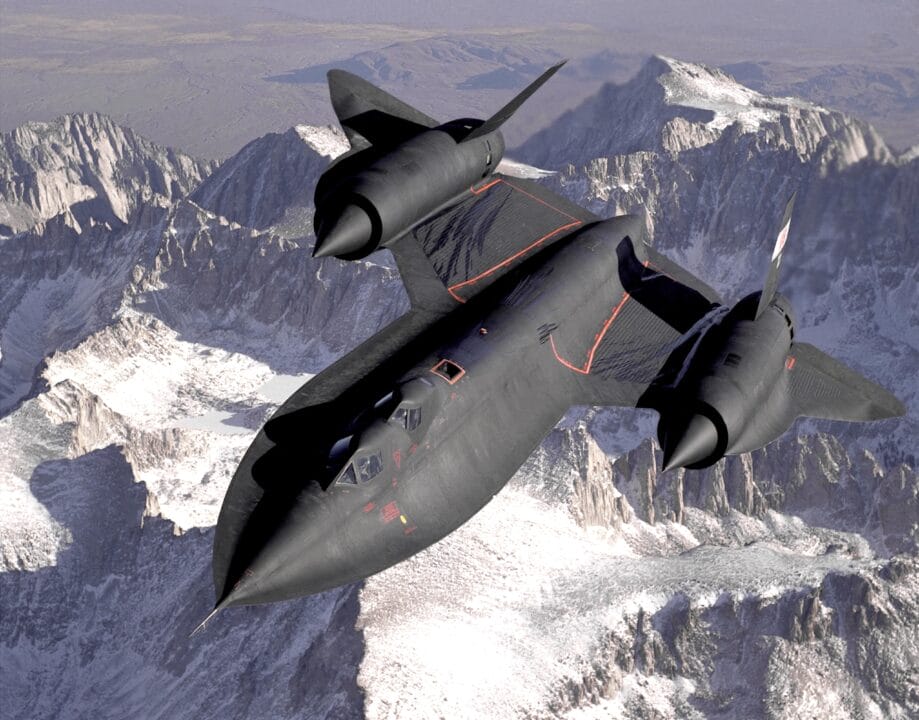
Get To Know The SR-71 BLACKBIRD, The Supersonic Aircraft Over 60 Years Old Considered The Fastest In The History Of The Planet.
The legendary supersonic reconnaissance aircraft of the United States, SR-71 BLACKBIRD, gained fame for its speed and secret missions during the Cold War. On December 22, 1964, 58 years ago, test pilot Bob Gilliland was accelerating the model down the runway at Edwards Air Force Base in California for a historic flight with the “blackbird”.
Supersonic Aircraft SR-71 BLACKBIRD Reached A Top Speed Of Mach 3.3

The Skunk Works, an advanced project development laboratory of Lockheed, was responsible for developing the family of aircraft that became legendary in aviation history. Before the SR-71, the world knew the A-12, a slightly smaller version with only one seat, which flew two years earlier and was used by the CIA, the United States intelligence agency.
During the Cold War, flying high and especially very fast to evade surface-to-air missiles was a priority. Thus, the SR-71 BLACKBIRD achieved a maximum speed of an impressive Mach 3.3, about 4,000 km/h. Years after its inaugural flight, the SR-71 broke the operational speed record, reaching 3,529 km/h.
-
Motorola launched the Signature with a gold seal from DxOMark, tying with the iPhone 17 Pro in camera performance, Snapdragon 8 Gen 5 that surpassed 3 million in benchmarks, and a zoom that impresses even at night.

-
Satellites reveal beneath the Sahara a giant river buried for thousands of kilometers: study shows that the largest hot desert on the planet was once traversed by a river system comparable to the largest on Earth.

-
Scientists have captured something never seen in space: newly born stars are creating gigantic rings of light a thousand times larger than the distance between the Earth and the Sun, and this changes everything we knew about stellar birth.

-
Geologists find traces of a continent that disappeared 155 million years ago after separating from Australia and reveal that it did not sink, but broke into fragments scattered across Southeast Asia.
The first aircraft, before the Blackbird, was the LockHeed U-2, which started flying in 1956, capable of reaching altitudes that Soviet radar could not detect, taking all the photos they wanted, collecting all the information, and leaving the US practically unscathed.
However, the Soviets were already aware of the presence of the U-2, which was shot down in 4 years. The pilot and the supersonic aircraft were captured. But, despite being built for this purpose, the SR-71 BLACKBIRD never flew over Soviet territory. This happened because the Soviets would only release the U-2 pilot, Francis Gary Powers, if the spying from aircraft ceased.
Companies Were Developed For Project Creation
For the development of the U-2 replacement, the US government launched a competition, and two companies began to develop their projects, called Conver and LockHeed.
At LockHeed, the first concept would be called U-3, and this idea of developing the aircraft came from engineer Kelly Johnson, who was responsible for the design of the SR-71 BLACKBIRD. What the engineer proposed was something practically impossible, where the company would have to build basically everything from scratch.
LockHeed had to invest not only to build the aircraft, but also the parts for it, being completely new and bold. In 1959, the company won the competition and secured a construction contract for the new supersonic spy plane. From this moment began the Oxcart project, with the new A-12 aircraft mentioned earlier.
Differences Between The A-12 And The SR-71 BLACKBIRD
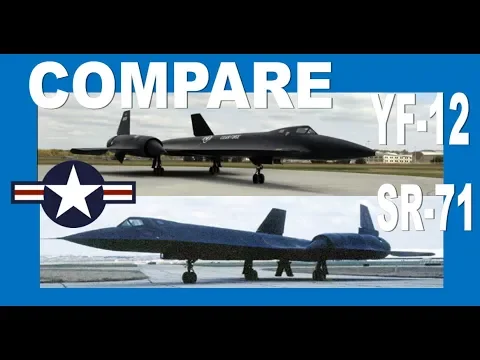
The SR-71 was slightly larger and had somewhat more weight capacity than the A-12, and the company conducted a flight comparison to decide which one they would proceed with the construction, concluding that the SR-71 was more capable and then concentrated efforts on this supersonic aircraft, leaving the A-12 aside.
The construction program for the SR-71 BLACKBIRD was the most mysterious in the US during the 1960s, so secret that no one knew it was happening.
The model was well ahead of its time, and even experts at the time did not believe it was possible. When it was announced in 1964 by President Lyndon Johnson, it ended up changing its name, as initially, its name would be RS-71. Delivered to the US government in 1966, the supersonic aircraft made its first mission in 1968.








-

2 pessoas reagiram a isso.