





 Portuguese
  English
  Spanish
 3 min of reading


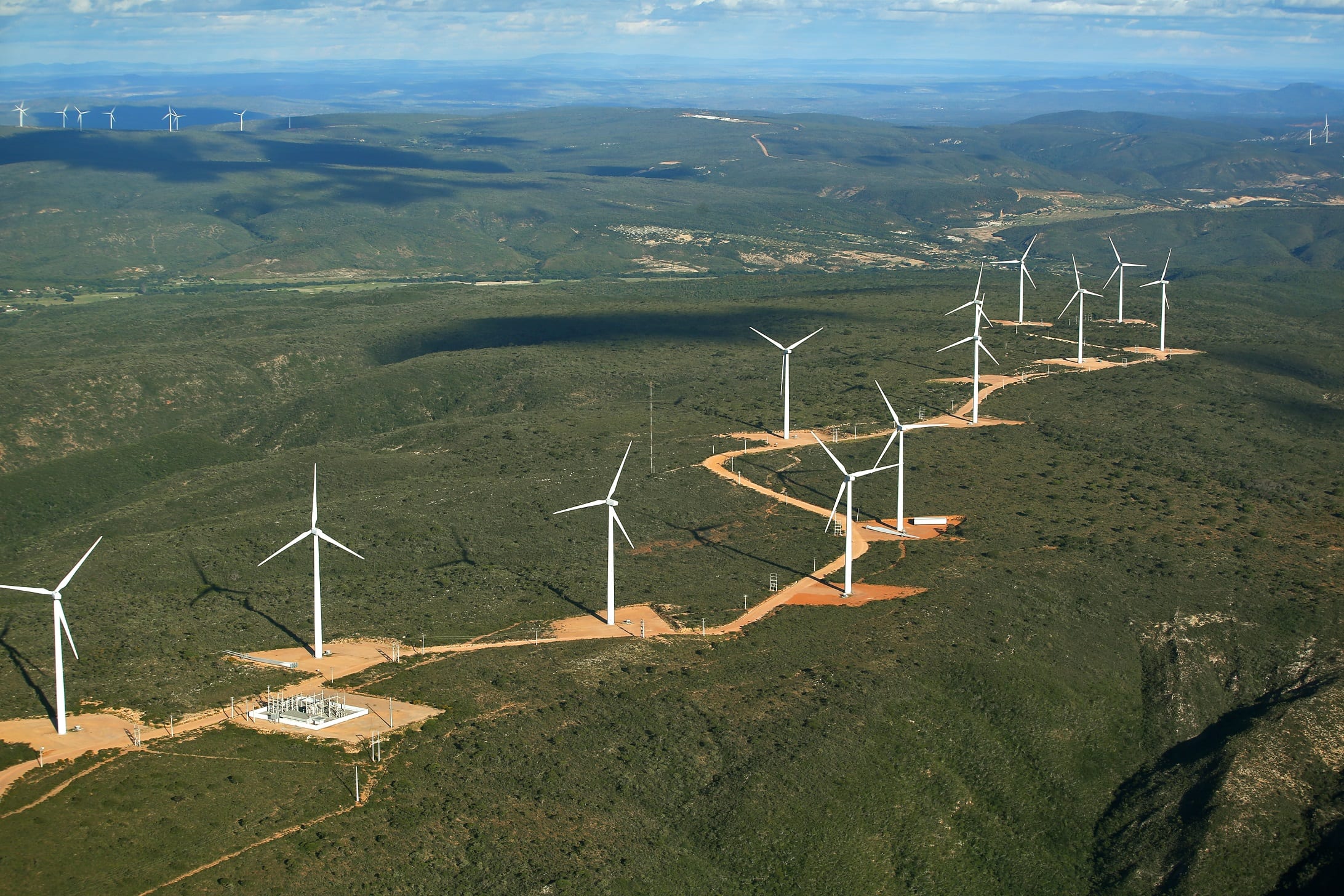
SPIC Brasil, One of the Largest Renewable Energy Generators in the World, Signs Financing Contract with Banco do Nordeste Focused on Building More Wind Farms in Rio Grande do Norte.
The energy generator SPIC Brasil closed a financing contract worth R$ 282.2 million with Banco do Nordeste (BNB). The amount will be used for the construction of the Pedra Amolar I, Pedra Amolar II, and Paraíso Farol II wind farms, located in the municipality of Touros (Rio Grande do Norte). The credit will be released according to the disbursement schedule and progress of the works. The consulting firm Itaca Advisory was involved in the process as a financial advisor in the transaction.
The Financing Obtained by the Energy Generator Will Be Directed Towards the Construction of Three Wind Farms. A Fourth Farm Is in Sight, but the Proposal Is Still Under Review
BNB resources come from the Constitutional Financing Fund for the Northeast (FNE), a branch remunerated by the IPCA +3.68% per year, with payment divided over 24 years.
The wind complex also includes the construction of the Paraíso Farol III farm, which is financed through another credit modality; however, the proposal is still being evaluated.
-
Renewable energy advances over protected areas in Brazil, and a survey by the Energy Transition Observatory reveals silent impacts that challenge environmental conservation and pressure sensitive traditional territories.

-
Rio Grande do Sul accelerates energy transition: State invests in renewable technologies and consolidates decarbonization strategies and pathways to attract billions in new industrial investments.

-
With 160,000 m² of collectors, an area larger than 20 football fields, Silkeborg, in Denmark, hosts a solar thermal plant that heats 19,500 homes and could become the largest solar heating plant in the world.

-
A study reveals the expansion of renewable energy procurement in Brazil and shows how companies are taking advantage of opportunities to reduce expenses, ensure energy efficiency, and strengthen strategic environmental commitments.


More than 20% of the funds used in the construction of the farms come from the company’s own capital. In total, the new Wind Generation Plants will have around 105 MW of installed capacity.
The new complexes are greenfield projects. A greenfield project is one where there are no restrictions imposed by previous work, meaning the construction is built from scratch on land where there is no need to deal with existing building restrictions or other constructions.
SPIC Brasil is the fifth largest private generator in the country, focusing on providing secure, sustainable energy while respecting the communities where it operates.
The company has assets totaling over 3GW. The constructions in RN, in addition to promoting the addition of clean energy sources, will also contribute to generating more jobs in the region, thereby assisting in the country’s energy transition.
“We aim to be among the top three in the sector by 2025. Investments in the Northeast are essential to our growth strategy, where we plan to invest approximately R$ 6.5 billion in the coming years, focusing on renewable energy generation,” says the company’s financial director, Paulo Dutra.
Looking Ahead to the Future of People and the Environment, Beyond Wind Farms
The company is also implementing two solar farms in the region, with a capacity of 738MW, in partnership with Canadian Solar, a Canadian company focused on manufacturing photovoltaic solar modules and also executing large-scale solar projects.
The units are set to start operating in 2024, according to the plan, in the municipalities of Brasileira (PI) and Jaguaretama (CE). With the new wind farms being built in Rio Grande do Norte and two parks already operating in Paraíba, there is approximately 1GW of installed capacity in the Northeast of the country.










Seja o primeiro a reagir!