





 Portuguese
  English
  Spanish
  5 min of reading
  2 comments


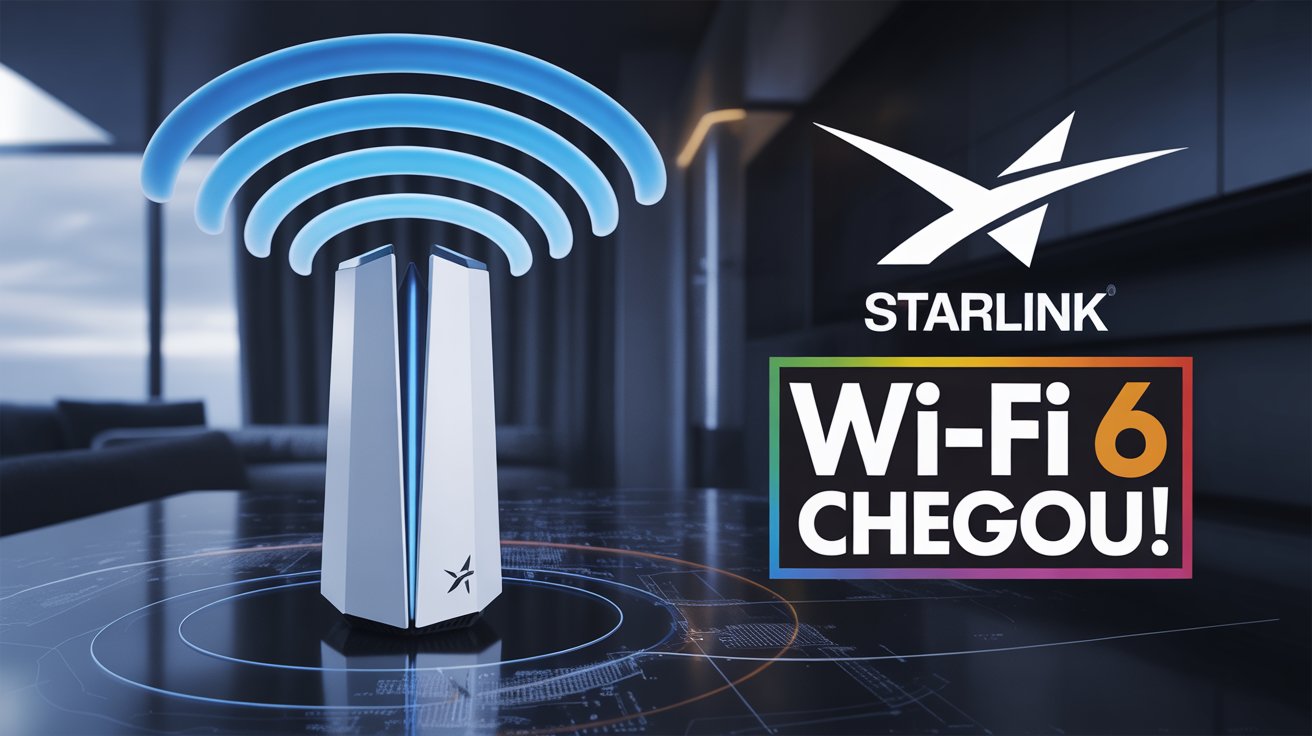


Discover How Starlink’s New Wi-Fi 6 Router, Approved by Anatel, Can Impact High-Speed Connectivity in Brazil with Modern Technology, Distinctive Design, and Advanced Features for Residential and Business Environments.
The latest Starlink Wi-Fi 6 router, named UTR-251, has just been released for use in Brazil after passing approval from the National Telecommunications Agency (Anatel) this month of July.
The equipment had already received approval in the United States from the Federal Communications Commission (FCC) in April of this year, now becoming part of the portfolio of devices that enhance satellite connectivity from the company led by Elon Musk.
The device is considered the likely fourth generation of Starlink routers, consolidating significant advances in data transmission and the provision of high-speed internet in national territory.
-
Motorola launched the Signature with a gold seal from DxOMark, tying with the iPhone 17 Pro in camera performance, Snapdragon 8 Gen 5 that surpassed 3 million in benchmarks, and a zoom that impresses even at night.

-
Satellites reveal beneath the Sahara a giant river buried for thousands of kilometers: study shows that the largest hot desert on the planet was once traversed by a river system comparable to the largest on Earth.

-
Scientists have captured something never seen in space: newly born stars are creating gigantic rings of light a thousand times larger than the distance between the Earth and the Sun, and this changes everything we knew about stellar birth.

-
Geologists find traces of a continent that disappeared 155 million years ago after separating from Australia and reveal that it did not sink, but broke into fragments scattered across Southeast Asia.

UTR-251 Integrates Starlink Antenna Kit and Bets on Wi-Fi 6 Performance
The UTR-251, commercially known simply as the “Starlink Router,” follows the naming logic of previous models, such as UTR-231 (third generation), UTR-211 (second generation), and UTR-201 (first generation).
The main novelty is the compatibility with the Wi-Fi 6 (802.11ax) standard, which provides greater efficiency, lower latency, and support for a high number of devices connected simultaneously.
According to the technical documentation approved by Anatel, the equipment operates on frequencies of 2.4 GHz (2×2 MIMO) and 5 GHz, covering the sub-bands of 5.1 GHz, 5.4 GHz, and 5.8 GHz (3×3 MIMO), which ensures faster and more stable connections for residential or business users.
Another highlight of the new UTR-251 router is the presence of two Ethernet ports on the back, one dedicated to the direct connection with the Starlink antenna and the other aimed at integration with additional network devices or computers, enhancing flexibility in the use of satellite internet.
The design also stands out: the router features a white finish, rectangular shape, and a wider base that allows for vertical installation on flat surfaces, optimizing space and promoting greater stability.
UTR-251 Is Not Manufactured in Brazil but Meets National Requirements
According to detailed information in the approval processes, the UTR-251 is not manufactured in Brazil, being imported from Vietnam, at least in the case of the first evaluated units.
Nonetheless, the recent approval by Anatel allows the equipment to be marketed and integrated into the Starlink kits offered to Brazilian customers.
The approval in the country occurs against a backdrop of growing demand for connectivity in remote areas and regions with limited internet infrastructure, where low-earth orbit satellite technology represents a viable alternative for thousands of families and businesses.
It is worth mentioning that Starlink already offers residential internet access plans starting at R$ 236 per month, in addition to options like the “Travel” plan, aimed at users who need mobility or temporary usage in different locations.
In this modality, the amounts start at R$ 315 per month with a 50 GB limit, and can reach R$ 576 monthly for those who choose unlimited data access.
The launch of the UTR-251 promises to expand the supply of advanced equipment and improve the user experience for subscribers of Elon Musk’s network in Brazil.
Expectations for the Arrival of the New Starlink Kit with UTR-251
Although there is still no official date for the start of UTR-251 sales in Brazil, approval by the main regulatory bodies indicates that the launch could happen at any moment in the second half of 2025.
The new router is expected to be part of a connectivity kit that also includes a new generation of Starlink antenna, designed to provide greater integration between the devices and facilitate installation in homes, commercial establishments, or rural properties.
According to industry experts, the arrival of the UTR-251 reinforces Starlink’s commitment to improving the quality and reach of its network in the country.
The compatibility with Wi-Fi 6 allows for greater stability, especially in intense usage scenarios, such as high-definition video streaming, virtual meetings, and connecting multiple devices in the same home or business.
The inclusion of dual Ethernet ports expands the possibilities for customizing the network environment, benefiting users who need wired connections for critical activities or transferring large volumes of data.
Impact of Wi-Fi 6 and Dual Ethernet for Brazilian Users
The Wi-Fi 6 (802.11ax) standard represents the latest evolution in wireless transmission technologies, designed for densely populated environments and high-bandwidth demand situations.
Among the advantages of Wi-Fi 6 are the optimization of traffic capacity, reduction of interference, greater range, and lower energy consumption by connected devices.
The arrival of the UTR-251 positions Starlink prominently by offering a router designed for the current and future needs of the Brazilian satellite internet market.
In the national context, where over 40 million Brazilians still live in areas with limited or no access to fixed broadband internet, according to data from the Brazilian Institute of Geography and Statistics (IBGE) from 2024, the expansion of technological options becomes relevant.
Investment in modern devices like the UTR-251 follows the accelerated digitization trend, driven by both remote work and distance education, telemedicine, and other essential services.
Starlink Positions Itself Among the Leading Options for Satellite Internet in Brazil
Since its arrival in Brazil, Starlink has invested in infrastructure, expanded coverage, and improved the equipment available to subscribers.
The UTR-251 adds to this innovative portfolio, bringing high-performance connectivity closer to Brazilian homes, especially in regions where traditional operators do not reach.
The approval of the new router by Anatel marks another step in the strategy of Elon Musk’s company to consolidate its presence and increase competitiveness in the satellite internet segment.
With the release of the UTR-251, expectations grow around the arrival of the new complete kit, with antenna and state-of-the-art router, capable of serving different user profiles.
For those who depend on stable and fast connections in rural areas, far from major urban centers, this news may represent a leap in quality and reliability, contributing to reducing digital inequalities in the country.
Do you believe that the arrival of the new UTR-251 router and Wi-Fi 6 can transform access to the internet in remote areas of Brazil? What are your expectations for the future of satellite connectivity in the country?







Já chegou duas gerações atrasado. O Wi-Fi 6e está no mercado nacional e os chineses já estão usando o Wi-Fi 7.
Leva mal não franquia de internet, nessa era que vivemos 50 giga serve para atualizar os aplicativos!
Deveria fazer limite de velocidade de internet mas pacote de consumo… Isso e uma sacanagem para quem usa internet.
Tudo que vc usa consome no mínimo uns 500 mega .!