





 Portuguese
  English
  Spanish
  4 min of reading
  0 comments


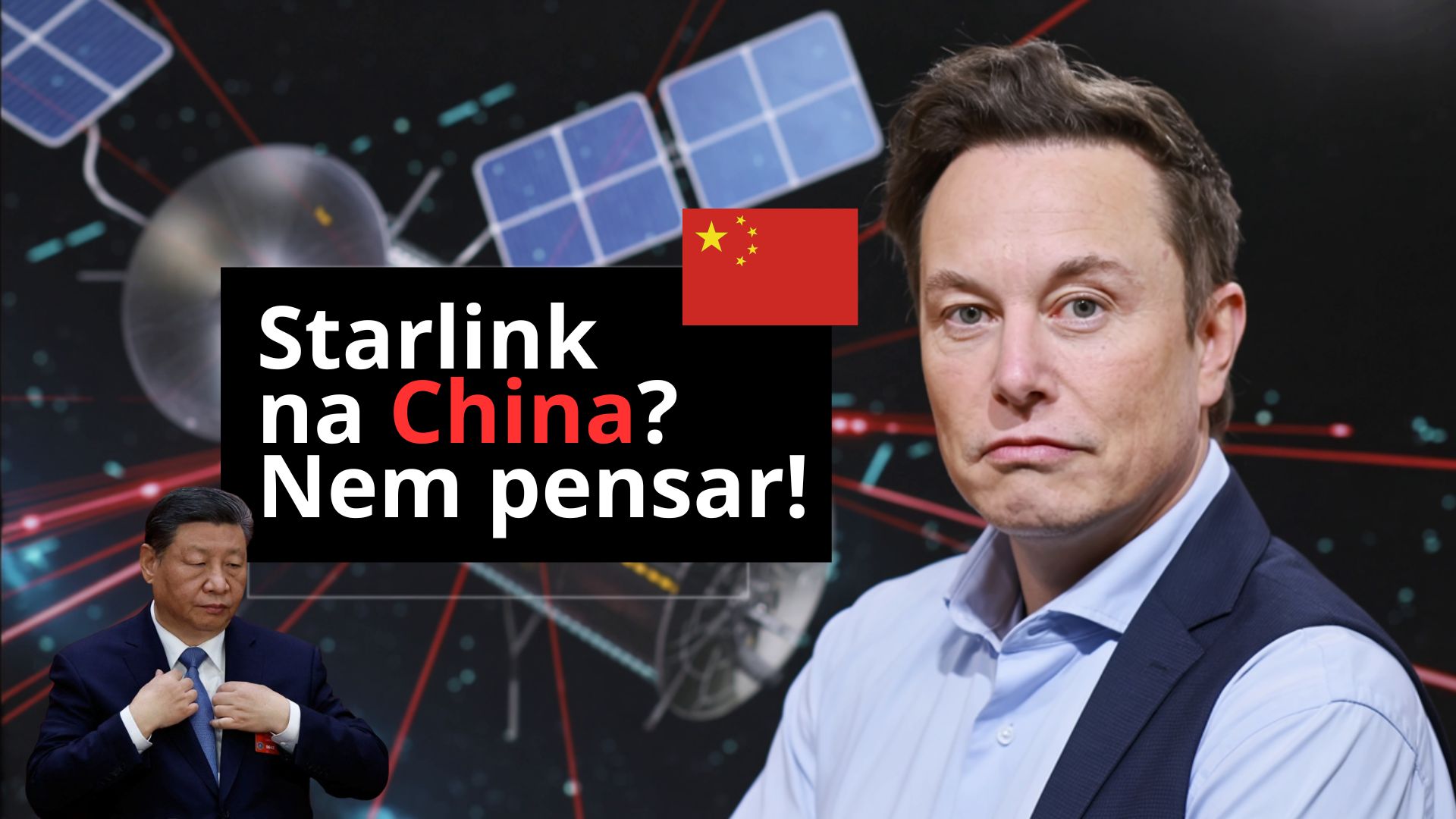
Chinese Scientists Expand Studies To Contain The Advancement Of Starlink, Using Innovative Strategies And Space War Technologies, While The Country Accelerates Its Own Projects To Compete With Elon Musk’s Network.
Researchers linked to the Chinese government and Armed Forces have been dedicating increasing efforts to find ways to track, neutralize, or even destroy Starlink satellites, the global network operated by SpaceX, the billionaire Elon Musk.
This mobilization gained prominence after the publication, in July 2025, of a series of studies released by Chinese research institutions in defense and technology.
The Chinese interest has intensified in light of the integration of Starlink into U.S. military operations.
-
Motorola launched the Signature with a gold seal from DxOMark, tying with the iPhone 17 Pro in camera performance, Snapdragon 8 Gen 5 that surpassed 3 million in benchmarks, and a zoom that impresses even at night.

-
Satellites reveal beneath the Sahara a giant river buried for thousands of kilometers: study shows that the largest hot desert on the planet was once traversed by a river system comparable to the largest on Earth.

-
Scientists have captured something never seen in space: newly born stars are creating gigantic rings of light a thousand times larger than the distance between the Earth and the Sun, and this changes everything we knew about stellar birth.

-
Geologists find traces of a continent that disappeared 155 million years ago after separating from Australia and reveal that it did not sink, but broke into fragments scattered across Southeast Asia.

According to a scientific article from China’s National Defense Technology University, published in 2023, “as the United States integrates Starlink technology into military space assets to gain a strategic advantage over its adversaries, other countries begin to see Starlink as a threat to security in the nuclear, space, and cybersecurity domains”.
For researchers, the network represents a potential risk to the sovereignty of Washington’s rival nations.
Chinese Strategies To Block Starlink
Among the alternatives discussed by Chinese military engineers, the use of submarines equipped with anti-satellite lasers, supply chain sabotage, and the launch of their own satellites with ion thrusters capable of physically damaging Starlink devices stand out.
Studies indicate that, even without officially operating in Chinese territory, Musk’s satellite constellation flies over the country’s airspace and provides uninterrupted coverage over strategically important regions, such as Beijing and Taiwan.
Simulations conducted by experts from China’s National Defense University suggest that Starlink has the capacity to maintain robust connections in sensitive areas, enhancing the monitoring and response potential of the United States in conflict or crisis scenarios.
These possibilities have intensified discussions about how China can develop methods to restrict Musk’s system’s influence in its airspace.
Vulnerabilities And Supply Chain
In addition to technological challenges, Chinese researchers are analyzing the vulnerable points of Starlink’s operation.
A study from China’s cybersecurity emergency response team identified weaknesses in the global network’s supply chain.
The research indicated that the company relies on over 140 direct suppliers and numerous indirect ones, many of which are under insufficient cybersecurity monitoring.
This opens gaps for possible sabotage or infiltration actions, according to scientists.
New Solutions And Offensive Proposals
In the search for solutions, innovative proposals have emerged.
Military engineers suggest launching satellites that follow the orbit of Starlink devices, capable of capturing signals, identifying vulnerabilities, and eventually launching corrosive materials or ion thrusters to damage the equipment.
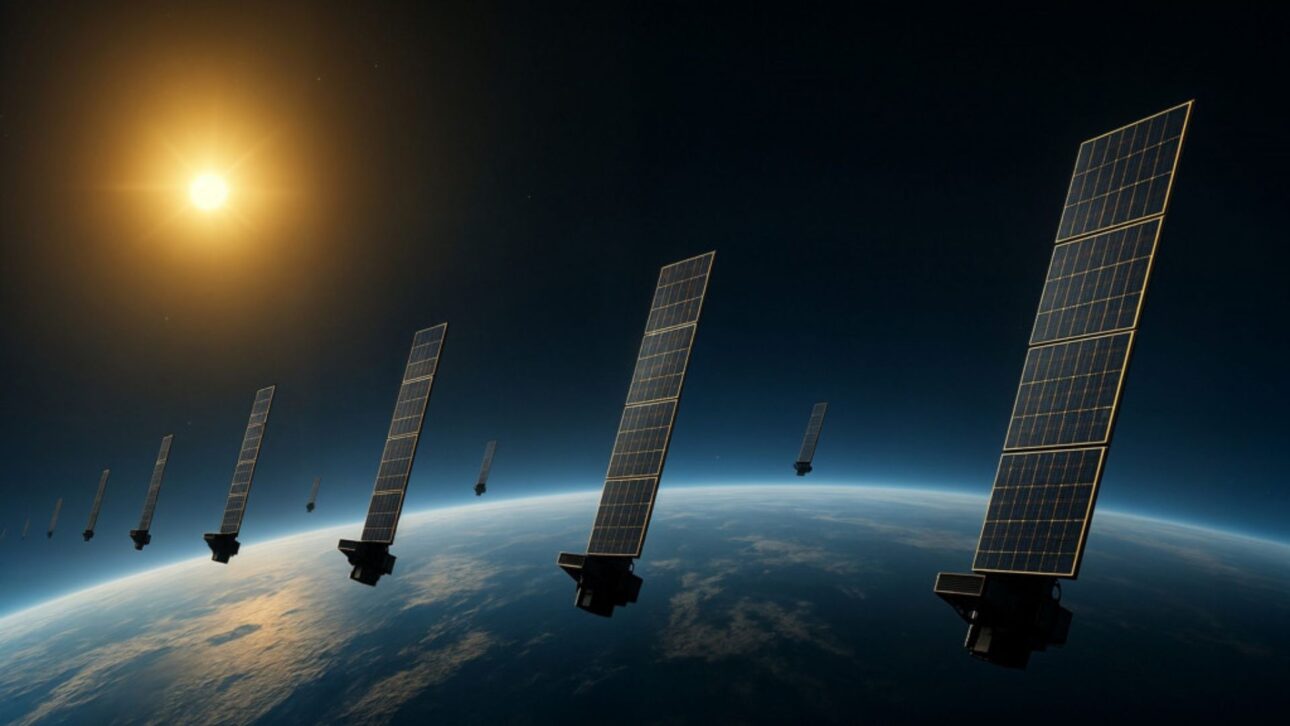
Other strategies include the use of stealth lasers from submarines, the creation of deepfakes to confuse automated satellite identification systems, and systematic monitoring using commercial telescopes.
Academics also suggest diplomatic and regulatory actions, including international pressure to restrict Starlink’s operations in sensitive areas.
These studies gained prominence after the publication of Chinese articles with titles such as “Beware of Starlink”, reflecting the alert environment that dominates part of the country’s scientific community.
China’s Advances With Its Own Satellite Constellation
At the same time, the Chinese government is seeking to create a domestic alternative to the SpaceX network.
In 2021, the state-owned company China SatNet was established, responsible for building the Guowang mega-constellation, designed to rival Starlink.
According to official data released in July 2025, the project already has 60 satellites in operation, out of a planned total of 13,000.
The Guowang aims to guarantee technological autonomy and expand China’s presence in the international satellite communications market.
Another notable initiative is Qianfan, a company supported by the municipal government of Shanghai, which has already launched 90 satellites out of a planned total of 15,000.
The project intends to expand activities to emerging markets in Central Asia, the Middle East, and Africa.
Qianfan has also signed a cooperation agreement with Brazil to provide satellite communication and surveillance services.
Global Concerns About Starlink’s Dominance
Concerns about Starlink’s global dominance are not limited to China.
U.S. ally countries express apprehension about their dependence on a strategic infrastructure under the control of a single private company.
The political stance and business interests of Elon Musk generate uncertainties in governments that, on one hand, recognize SpaceX’s technological advancement but, on the other, question the impacts of a virtual monopoly on space telecommunications.
SpaceX, in turn, consolidates billion-dollar contracts with U.S. civil and military agencies, becoming a central piece in the United States’ space strategy.
This influence generates debates about security, data privacy, and the sovereignty of other countries in light of the rapid advancement of satellite communications.
Technological Dispute And Global Impact
According to U.S. analysts, although some fears regarding Starlink may be overstated, the increasing volume of Chinese research and initiatives points to a scenario of increasingly intense technological and strategic competition in orbital space.
The clash involves not only innovation and security but also international diplomacy, regulation, and long-term commercial interests.
In this context, the dispute over control and security of satellite constellations promises to redefine the global balance of power in the coming decades.
How do you assess the influence of mega satellite constellations on national sovereignty and the future of global communication?







Seja o primeiro a reagir!