





 Português
  Inglês
  Espanhol
  4 min de leitura
  0 comentários


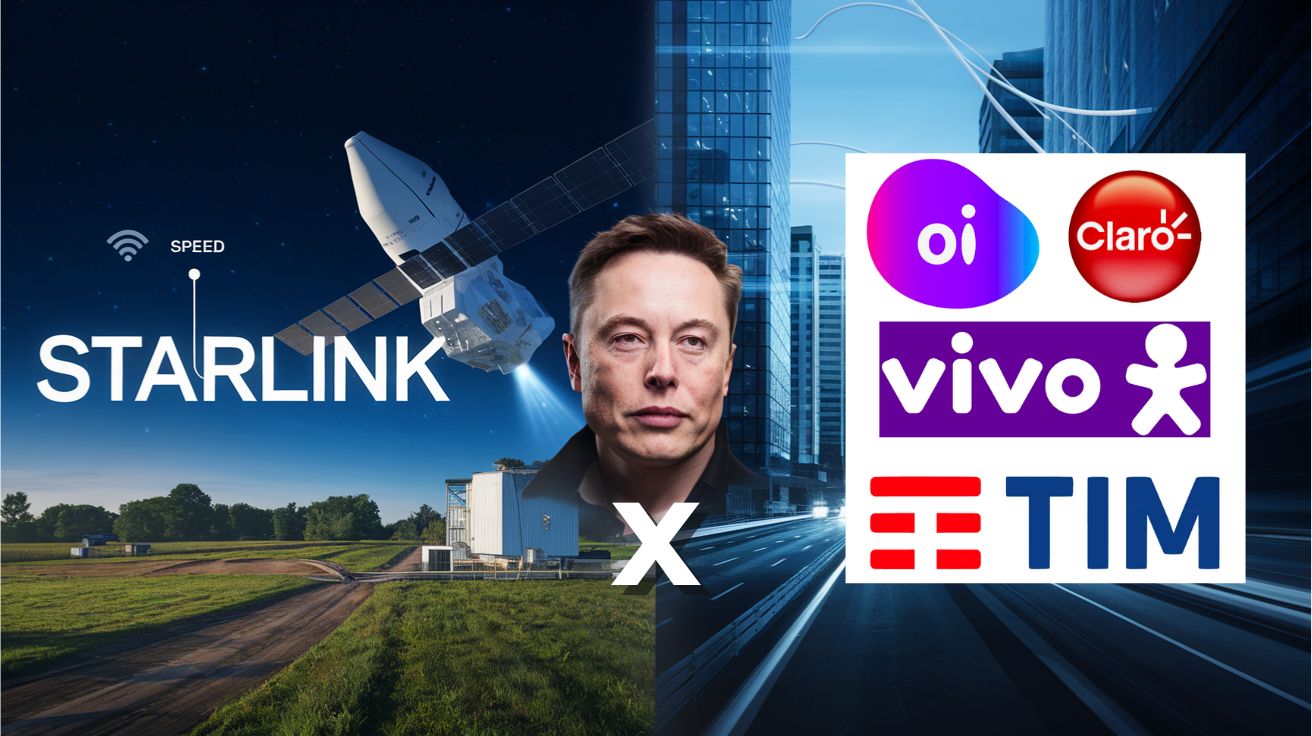
With the Connectivity Revolution, Many Wonder: Starlink or Fiber Optic? While Starlink Promises to Reach Remote Areas, Fiber Optic Offers Superior Speeds and Unmatched Stability. But What Is the Best Choice for You?
Nowadays, choosing the ideal Internet service is a decision that can cause a lot of doubt.
With technological options as distinct as Elon Musk’s Starlink Satellite Internet, and fiber optic offered by providers like Vivo, Claro, and others, users find themselves in a true technological duel.
Despite the promises of high speed and stability, each solution has advantages and disadvantages that can make all the difference in day-to-day life.
-
A bright yellow mushroom imported from Asia escaped from a cultivation farm in the United States in 2010 and is now aggressively spreading across 25 states, destroying entire communities of native fungi in American forests.

-
Buried under China, a colossal machine weighing 20,000 tons began operating as the largest neutrino detector on the planet and, in just 59 days, surpassed results that science took half a century to achieve.

-
Iran enters the center of a climate alert after the war emitted 5.6 million tons of CO2 in two weeks, surpassing the annual pollution of entire countries.

-
Lunar exploration may change after a Chinese probe finds a “cavity” of radiation that reduces the impact on astronauts by up to 20% at certain times on the Moon.


What Is the Best Option for You? This is the question we will answer in this complete guide, detailing the main aspects of these technologies, such as coverage, speed, price, and ease of installation.
Understand what is at stake before making your decision.
What Is Starlink?
Starlink is a satellite internet service developed by SpaceX, Elon Musk’s company.
Its main goal is to connect remote and rural areas, where traditional technologies such as fiber optic do not reach.
Using a constellation of satellites in low orbit, Starlink offers faster connections with lower latency than conventional satellite systems.
Installation is simplified and done by the user themselves with a kit that includes a satellite dish, modem, and router.
To function, a location with a clear view of the sky is necessary, without obstacles like trees or buildings. Speeds range from 50 Mbps to 220 Mbps, while latency is between 25 and 50 ms.
According to the ranking from the Minha Conexão website, Starlink ranks 1045th among the providers evaluated in Brazil, with an average speed of 77.55 Mbps.
Costs are also high: the installation kit costs R$ 1,400, and the residential plan starts at R$ 184 per month.
What Is Fiber Optic?
Fiber optic is a technology that uses glass or plastic cables to transmit data through light pulses.
This solution offers high speed, low latency, and superior reliability compared to other connection methods, such as ADSL and radio internet.
Speeds can exceed 1 Gbps, and latency is under 20 ms, making it ideal for activities such as 4K video streaming, online gaming, and video conferencing.
In Brazil, providers such as Vivo, Claro, and VTAL lead the market.
Data updated in January 2025 by Minha Conexão indicates that Vivo provides an average of 228.22 Mbps, followed by Claro (217.25 Mbps) and VTAL (210.86 Mbps).
The main limitation of fiber optic is its dependence on physical infrastructure. It is widely available in urban and suburban areas, but has limited reach in rural or isolated regions.
Main Differences Between Starlink and Fiber Optic
Speed and Stability: Starlink offers up to 220 Mbps, but its connection is more susceptible to weather instabilities and obstructions. Fiber optic can exceed 1 Gbps and is highly stable, regardless of the weather.
Coverage: Starlink has global coverage, even reaching remote areas. Fiber optic depends on installed infrastructure and is limited to urban and suburban areas.
Price: The initial cost of Starlink is high (R$ 1,400 for the kit) and monthly fees start at R$ 184. Fiber optic is more accessible, with plans starting at R$ 70.
Installation and Maintenance: Starlink installation is done by the user, while fiber optic requires specialized technical support.
Pros and Cons of Starlink
Advantages:
Wide coverage, including remote areas.
User-independent installation.
Reasonable speed compared to other satellite systems.
Disadvantages:
High initial cost and high monthly fees.
Dependence on weather conditions for connection stability.
Higher latency compared to fiber optic.
Pros and Cons of Fiber Optic
Advantages:
Superior speed, exceeding 1 Gbps.
Low latency, ideal for gaming and video conferencing.
Interesting cost-benefit ratio in served areas.
Disadvantages:
Available only where infrastructure is installed.
Need for technical support for installation.
Starlink or Fiber Optic: Which to Choose?
The choice between Starlink and fiber optic depends on factors such as location, budget, and needs.
For residents of remote or isolated areas, where infrastructure is scarce, Starlink is an innovative and efficient solution.
With global coverage and simplified installation, it is ideal for those who need connectivity in hard-to-reach places.
On the other hand, fiber optic is perfect for those living in urban and suburban areas.
With superior speeds and greater stability, it is the most suitable option for intensive activities such as streaming, gaming, and video conferencing. Moreover, it is more cost-effective.
And you, which of these technologies makes more sense for your reality? Leave your opinion in the comments!






-

Uma pessoa reagiu a isso.