





 Portuguese
  English
  Spanish
  4 min of reading
  0 comments


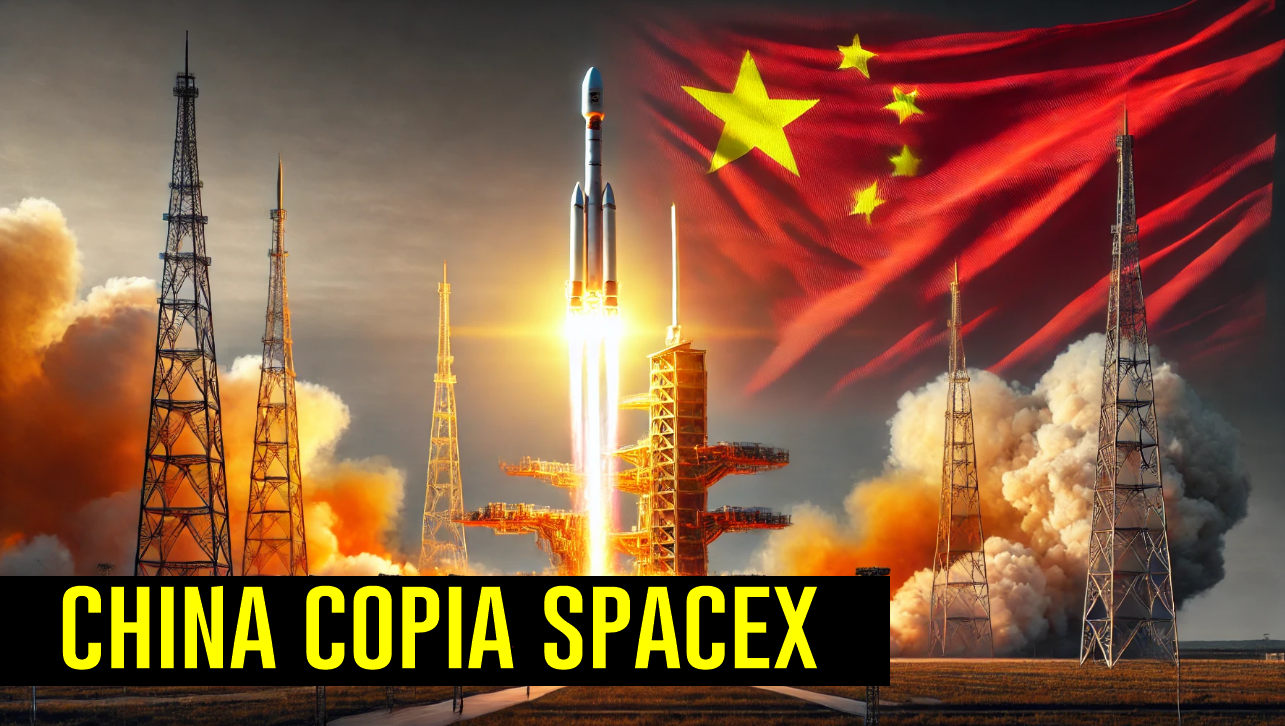
Startup In China Secures Funding To Develop Rocket Recovery Technology Inspired By SpaceX To Reduce Space Costs
The Chinese space technology startup, Cosmoleap, recently announced that it has secured over 100 million yuan (around US$ 14 million) in funding to develop its reusable rocket “Yueqian” and an innovative launch recovery system. This ambitious project aims to transform the Chinese space technology landscape and attract global attention for its similarities to SpaceX’s famous Starship.
The Partnership With Investors And Support For The Yueqian Project
Cosmoleap, officially called Beijing Dahang Transition Technology Company, was founded in March 2024. Although young, the startup has managed to impress investors with its determination and technological vision.
In a press release on November 1st, the company announced that the funding was secured with the support of several venture capital firms, including Shenergy Chengyi, Tiangchuang Capital, and Legend Capital.
-
A “silent skill” is allowing Brazilians to earn up to R$ 22,000 per month without a degree and become indispensable for companies that rely on millions of data to survive.

-
Researchers at the Toyota Research Institute found that if a human uses robotic arms to flip a pancake 300 times in an afternoon, the robot learns to do it on its own the next morning, and this is currently the most promising method to solve the biggest bottleneck in modern robotics.

-
Goodbye iron: a common item in households is starting to lose space to technology that smooths clothes in minutes without an ironing board and with less energy consumption.

-
Antarctica reveals an unusual clue high in the Hudson Mountains, and what appeared to be just an isolated rock began to expose a secret hidden under the ice for ages.


The goal of Cosmoleap is bold: to develop a reusable rocket that can support the construction of a satellite internet network, a project similar to SpaceX’s Starlink system.
While the Yueqian rocket shares various visual similarities with the Starship, the Chinese company aims for applications closer to Earth. The expectation is to conduct the first flight test between 2025 and 2026.
What Is the Yueqian? A Clearly Familiar Inspiration
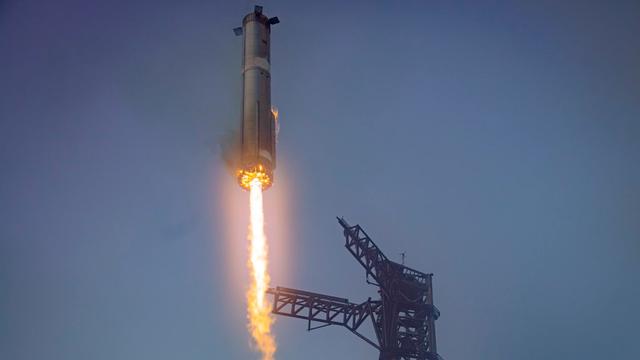
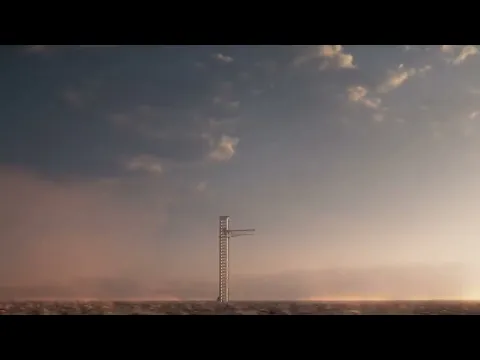
In the concept animations released by Cosmoleap, the design of the Yueqian rocket and its landing system closely resemble the aesthetics and mechanisms of the Super Heavy, the first stage of the Starship rocket.
The Yueqian, like SpaceX’s rocket, will be recovered using a tower equipped with mechanical arms. This system, dubbed “chopsticks,” was demonstrated by SpaceX in October when the Super Heavy was successfully captured.
However, the size of the Yueqian will be smaller than the Starship. At about 75 meters tall, the Chinese rocket will be able to transport 10,460 kg to low Earth orbit in its necessary version.
This weight decreases to 6,280 kg when the first stage is recovered. For comparison, the Starship measures 121 meters and has significantly greater payload capacity.

Reactions And Comparisons With SpaceX
The visual and functional similarities between the projects of Cosmoleap and SpaceX have caught the attention of online observers and generated diverse opinions.
On platform X (formerly Twitter), users remarked that the technology looks almost identical to SpaceX’s launch and recovery system. One ironic comment suggests: “Even the flood [system looks the same]. They should change it a bit. Come on, man.
Despite the comparisons, Cosmoleap seems confident that the Yueqian will be just the beginning of a portfolio of innovative space technologies.
In its vision, the ultimate goal is an even larger rocket, with a projected height of 126 meters and a payload capacity exceeding that of the Starship, targeting a first launch in 2030. If completed, this rocket would become the largest in the world.
The Context Of The Private Space Sector In China
Cosmoleap is part of a growing and competitive ecosystem of private space companies in China. Startups like Space Pioneer, iSpace, Galactic Energy, and Deep Blue Aerospace have already attained global visibility for their notable advancements.
Space Pioneer, for instance, reached Earth orbit on its first launch, something SpaceX only achieved after four attempts with the Falcon 1.
This technological revolution demonstrates the push of the Chinese private sector to invest in space advancements. With increasing capital and technology being directed to these projects, the country is consolidating its place as a global powerhouse in the aerospace sector.
The Trajectory And Challenges Of Cosmoleap
Although it has not yet launched a rocket into space, Cosmoleap enters the market with an audacity reported in startups. The company’s ambitious goals position it alongside industry veterans like SpaceX and Blue Origin in terms of innovation and vision.
However, achieving success will not be an easy task. Developing a reusable rocket capable of competing with SpaceX’s technology requires years of research, development, and, of course, funding.
Many aerospace startups struggle to keep pace with costs and technical challenges, ending their journeys in bankruptcy processes. But Cosmoleap seems determined to go beyond these obstacles.
In addition to the initial funding of US$ 14 million, the company will need other significant funding to continue its developments. Space technology projects tend to be costly and challenging, especially when the ambition is to develop a reusable and efficient structure.
Cosmoleap believes that its Yueqian rocket will be a game-changer for the Chinese market, offering a more affordable and cost-effective alternative for building satellite infrastructure.
What The Future Holds For Cosmoleap And Chinese Space Exploration?
The future of Cosmoleap will be determined by the company’s next steps and its ability to meet the announced goals. The competition in the reusable rocket market is intensifying, but the Chinese company seems determined to tackle these challenges.
The growing investment in space technology startups in China shows that the country is willing to support initiatives that promote its technological independence.
This scenario positions the country favorably to become one of the global leaders in space exploration in the coming decades.
If Cosmoleap manages to conduct its flight tests and develop the Yueqian as planned, it will be proving that there is room for new players in the competitive space technology market.







Seja o primeiro a reagir!