





 Portuguese
  English
  Spanish
  3 min of reading
  0 comments


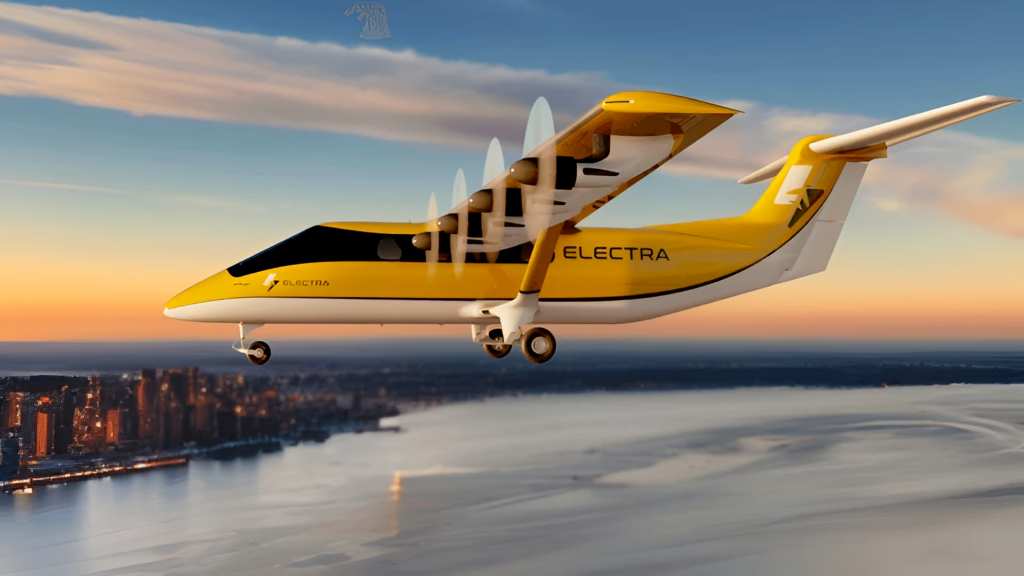
American Startup Created a Hybrid eSTOL Aircraft Capable of Taking Off in Just 92 Meters and Carrying Up to 9 Passengers. The Project Has Already Received More Than 2,200 Orders and Promises to Operate Efficiently on Short Runs and in Areas of Difficult Access
An American startup is revolutionizing aviation with its hybrid eSTOL aircraft, capable of taking off in just 92 meters and carrying up to 9 passengers. The project has already received more than 2,200 orders and promises to operate efficiently on short runs and in areas of difficult access.
The American company Electra surprised the aviation sector by announcing more than 2,200 pre-orders for its new hybrid ultra-short takeoff and landing aircraft, called eSTOL.
With an estimated value of nearly US$ 9 billion (about R$ 51.21 billion), this result surpasses the interest generated by electric vertical takeoff models. Electra bets on a different yet practical concept and already has a defined plan for the coming years.
-
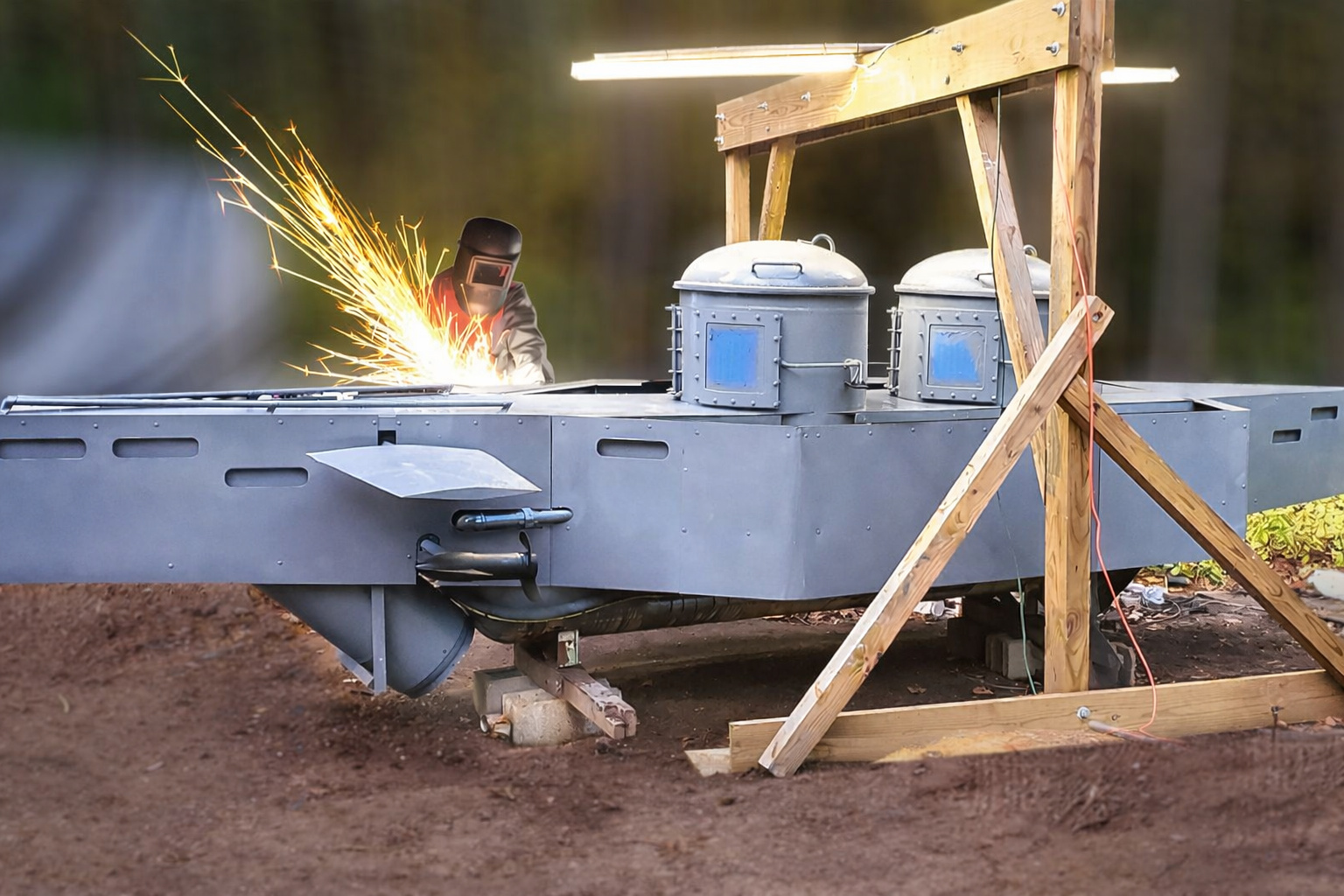
Man builds functional 5-meter submarine in his garage using gas cylinders, PVC pipes, and a refrigerator motor, and navigates with the vessel on a lake in Colombia.
-
Millions of people have been eating yam for centuries without knowing that this humble tuber contains a compound called diosgenin, which scientists have now discovered can improve memory and help control blood sugar levels.

-
Scientists from an international project drill 1,800 meters of ice in Antarctica using hot water and discover details about one of the most intriguing places on planet Earth.

-
Seen from space, a colossal volcano nearly 5,000 meters high in Russia has released 1,600 km of smoke over the Pacific, forming “devil’s horns” of lava and revealing the brutal force of the Ring of Fire.


Performance on Short Runways with Minimal Noise
The commercial model is the EL9, designed to operate on very short runways, with only 92 meters for takeoff and 35 meters for landing. This makes it suitable for tight spaces, improvised runways, and areas with little infrastructure.
The hybrid aircraft carries up to nine passengers with luggage or 1,361 kg of cargo, with a cruise speed of 322 km/h. Service entry is expected for 2028.
The secret to its performance lies in the combination of hybrid-electric propulsion with an aerodynamic system known as blown lift.
The EL9 has eight electric propellers along the leading edge of the wings and larger rear flaps, allowing takeoffs at just 56 km/h. The required runway is about one-tenth the size needed for conventional airplanes.
Despite its traditional appearance, the aircraft incorporates groundbreaking technological solutions. One of the major advancements is the low noise level. Electra claims that at an altitude of 152 meters, the sound emitted by the EL9 is only 55 decibels, similar to that of a conversation.
This opens up possibilities for flights in urban areas without causing noise disturbances, something still far from many jet aircraft.
Real Tests Show Promising Results of the Aircraft
Since May 2024, the company has been testing the EL2 prototype, which has two seats. In October, this model achieved takeoffs of just 46 meters and landings of 34.7 meters.

In one of the tests, it maintained stable flight at just 40.7 km/h without reaching stall speed. The data shows that the propulsion system ensures control even at extremely low speeds.
Electra has also taken a conservative approach to development. Instead of seeking more radical solutions like eVTOLs, the company opted for a fixed-wing model.
This way, certification tends to be faster, operational costs can be up to 70% lower, and regulatory barriers are reduced. The demonstrator with nine seats is expected to fly in 2026, virtually identical to the final model.
US Hybrid Aircraft: Sustainability and Practical Use in the Real World
Another strong point of the EL9 is sustainability. The hybrid-electric technology promises significant reductions in pollutant emissions, lower energy consumption, and minimal environmental impact.
Additionally, since the hybrid aircraft can operate on small runways, building new infrastructure is unnecessary. This also reduces the environmental costs associated with large engineering projects.
The possibilities for use go beyond passenger transport. The model can be useful for quick deliveries, operations in remote areas, and missions in regions with limited infrastructure. The versatility of the EL9 meets both regional market needs and specific mobility demands.
The promise of a quiet, economical, and efficient flight in tight spaces makes the aircraft attractive to regional airlines, governments, and logistics companies. The focus on a viable and realistic project, without technological exaggerations, may be Electra’s differential in the competitive electric aviation landscape.
The company shows that it is not necessary to reinvent everything to achieve innovation. Evolution comes through applicable improvements in the real world, with clear operational and environmental gains. And with thousands of units already ordered, the US hybrid aircraft is advancing strongly toward the future of regional aviation.
Information from EcoInventos.







Seja o primeiro a reagir!