





 Portuguese
  English
  Spanish
  4 min of reading
  0 comments


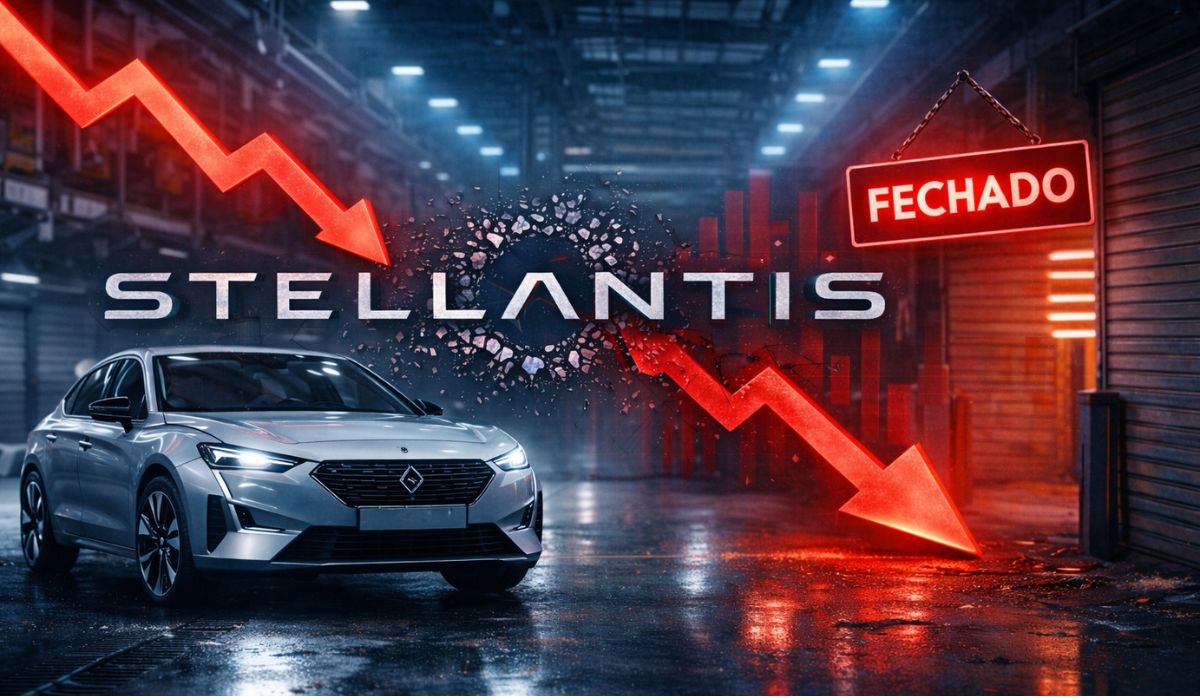
Manufacturer Revises Electrification Strategy, Records Billion-Euro Impact on Accounts, and Cancels Industrial Projects in Europe Following Demand Slowdown for Electric Vehicles and Reassessment of Investment Plans for the End of the Decade.
Stellantis has revised its electrification plan and recognized an accounting impact of € 22.2 billion related to the reassessment of assets and projects linked to electric vehicles.
The announcement was followed by a strong market reaction.
On February 6, the group’s shares fell by about 27% in a single day following the disclosure of new financial projections.
-
A French brand placed a car on four huge red balloons to prove that its suspension made the vehicle “float,” and the surreal scene became one of the most iconic and unusual images in automotive history.

-
Jeep Avenger begins production in Brazil, debuting as the brand’s new entry-level SUV and inaugurating an unprecedented phase by becoming the first national Jeep manufactured outside of Goiana, as part of a R$ 3 billion plan.
-
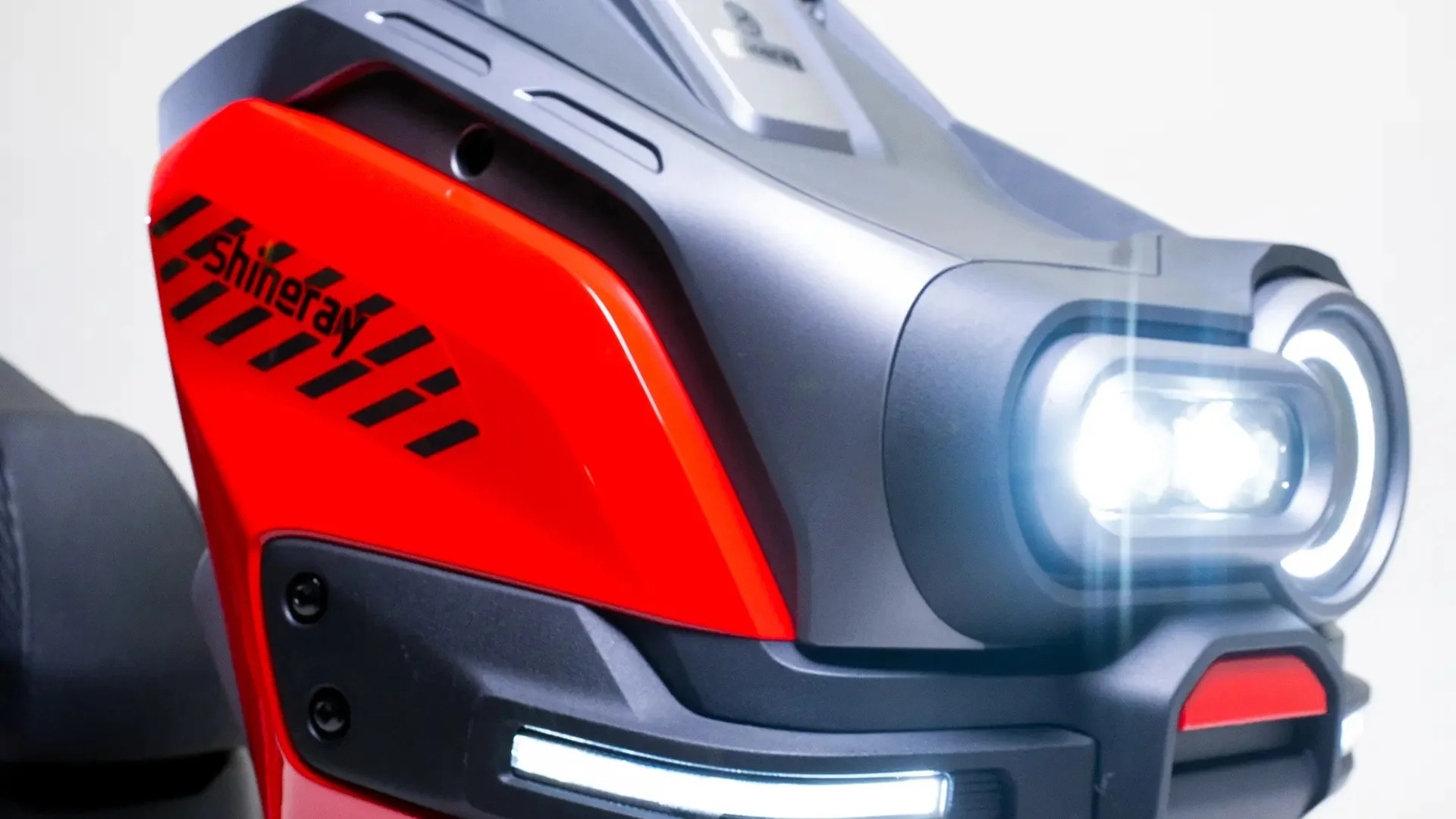
Costing R$ 12,490, the new Shineray Urban Lite 150 “cheap one” arrives in Brazil with a CVT transmission, digital dashboard, and LED lights, making it more affordable than the Biz and targeting those who want to abandon the bus.
-
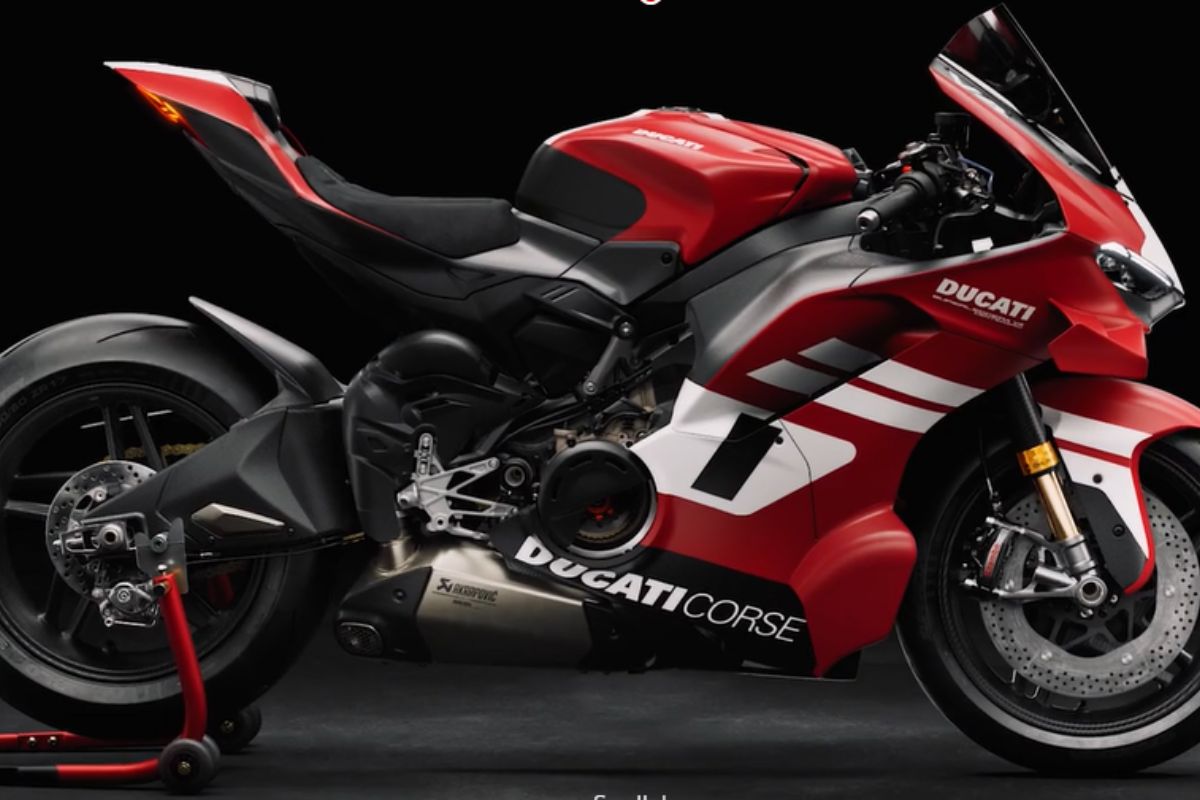
Ducati brings to Brazil the Superleggera V4 Centenario: 228 hp that become 247 with a track kit, carbon fiber and carbon-ceramic brakes, estimated price between R$ 1.5 and 2 million, deliveries only in 2027.

The company had previously set ambitious targets for the end of the decade.
The goal was to sell only fully electric cars in Europe by 2030 and have these models represent half of sales in the United States during the same period.
However, the pace of demand has lagged behind the initial estimates made by the company and other manufacturers in the sector.
The slowdown led to a reassessment of investments and the halting of projects that were previously considered strategic.
Financial Impact and Asset Review
The amount of € 22.2 billion includes accounting and financial effects resulting from the review of industrial and commercial plans.
A significant portion of the value corresponds to the repricing of assets and the projection of revenues that will no longer be counted with the reduction or cancellation of programs.
Additionally, Stellantis reported that € 6.5 billion represents expected cash outflows over the next four years.
These amounts are associated with contract cancellations, productive restructuring, and other operational adjustments.
According to market analysts, announcements of this magnitude tend to directly impact perceptions of future profitability and investment capacity.
The immediate reaction of the shares reflected this scenario.
In a statement published by the Financial Times, Stellantis CEO Antonio Filosa stated that “the amounts announced today reflect the cost of overestimating the pace of the energy transition, which distances us from the real needs, resources, and desires of many car buyers.”
Gigafactories for Batteries in Italy and Germany
The strategic review also affected the battery supply chain.
The Automotive Cells Company (ACC), a joint venture supported by Stellantis, Mercedes-Benz, and Saft, confirmed the cancellation of planned gigafactories in Termoli, Italy, and Kaiserslautern, Germany.
Both projects had already been suspended since 2024 while the company reassessed technology, costs, and demand.
With the formal cancellation decision, the planned expansion for these industrial hubs is no longer part of the short- and medium-term planning.
ACC had structured its capital with a planned share of 45% for Stellantis, 30% for Mercedes-Benz, and 25% for Saft.
The initial expectation was to build three large battery cell production units in Europe.
Meanwhile, the French plant in Billy-Berclau/Douvrin remains operational with an initially announced capacity of 13 GWh.
Future expansion is contingent upon market behavior and the economic viability of investments.
Electrification Strategy and Goals for 2030
Since its establishment in 2021, Stellantis has adopted electrification as the central focus of its strategy.
The group was formed from the merger of Fiat Chrysler Automobiles and PSA, bringing together 14 brands and increasing its presence in different regions.

In the early years, the company recorded margins considered high for the automotive sector.
The rationalization of platforms and the standardization of components were part of the plan to sustain profitability while advancing the technological transition.
However, the growth of electric vehicle sales did not occur uniformly across markets.
Issues such as final price, range, and charging infrastructure have begun to decisively influence the rate of adoption.
Industry experts point out that the combination of strict regulatory goals and cost-sensitive consumers has made the scenario more complex than initially anticipated by various global manufacturers.
Changes in Brands and Global Portfolio
In the United States, Stellantis has expanded its offering of electrified models, including the Fiat 500e.
At the same time, it has made changes to the Ram pickup line, gradually phasing out the Hemi V8 engine in some models starting in 2025.
In the luxury segment, Maserati announced in March 2025 the cancellation of the electric sports car project MC20 Folgore, citing limited demand expectations.
At the same time, the group recorded an accounting adjustment related to the Italian brand.
These decisions are part of a broader portfolio review process.
The company aims to align its offering with actual market demand in a context of increasing competition and regulatory changes.
In the European Union, the prohibition on the sale of new vehicles with internal combustion engines from 2035 remains formally established, although interim rules have been relaxed following pressure from the industry.
In light of this environment, Stellantis is undergoing a phase of strategic recalibration, focusing on the financial sustainability of projects and adapting to the actual pace of the energy transition.
The ongoing reconfiguration indicates that the company will continue adjusting investments and production capacity according to market performance.









-

-

4 pessoas reagiram a isso.