





 English
  Francês
  Alemão
  Italiano
  Japonês
  Norueguês
  Portuguese
  Spanish
 4 min of reading
  0 comments



Supreme Court Ruling Reinforces Legal Security for Taxpayers and Exposes Divergences Over Effects of Tax Reform
The First Panel of the Supreme Federal Court (STF) rejected on September 19, 2025 the attempt by the state of São Paulo to apply the ITCMD (Death and Donation Transfer Tax) on assets located abroad. The decision reaffirms that state laws already declared unconstitutional cannot automatically become valid again, even after the alteration of the Constitution with Constitutional Amendment 132/2023.
Timeline of the Controversy
The dispute over the taxation of inheritances abroad evolved from previous decisions of the Supreme Court.
- 2021: The STF considered unconstitutional state laws that taxed ITCMD on assets abroad. The understanding was that this type of taxation depended on a complementary law approved by the National Congress, as determined by the Constitution.
- 2023: Governors seized the tax reform to alter the constitutional text and authorize the tax, even without a complementary law. The change opened new legal discussions.
- 2024 and 2025: São Paulo insisted on applying the tax based on its previous legislation, understanding that the constitutional amendment would have automatically renewed the regulation.
However, the majority of the ministers concluded that a law deemed unconstitutional cannot “resurrect”. Thus, states need to enact new state laws to resume taxing.
-
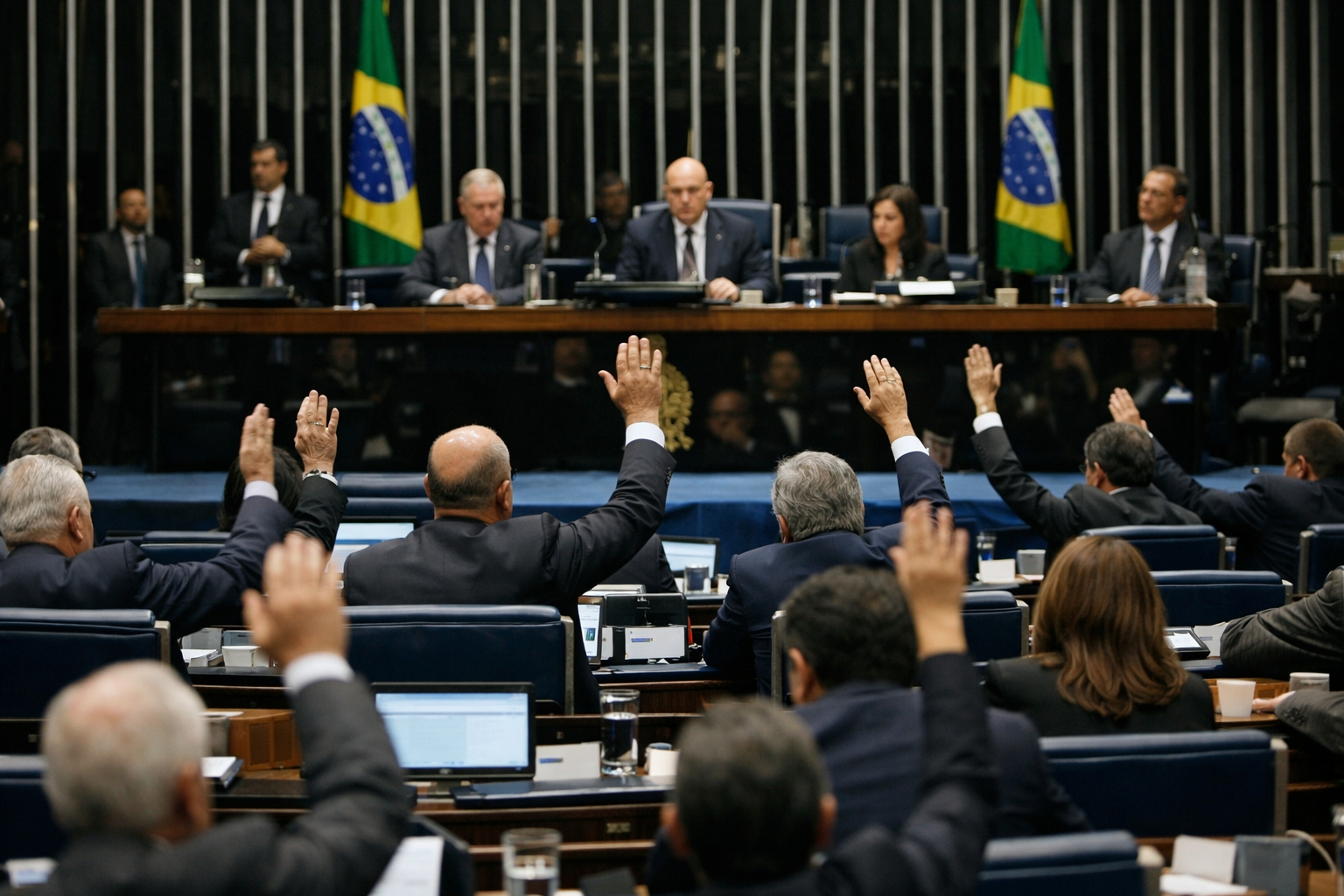
The Senate approves a bill that criminalizes misogyny, hatred, or aversion towards women, and includes the crime in the Racism Law with a penalty of up to 5 years.
-
Chamber Approves Bill That Allows Pepper Spray for Women Over 16 and Imposes Strict Rules for Purchase, Possession, and Use as Self-Defense

-
Chamber Approves Law to Combat Leucaena, Fast-Growing Plant That Dominates Land and Threatens Native Species in Various Regions of the Country

-
Asset Division: Know What Cannot Be Divided in Case of Divorce

How the Trial Went
The case reported by Minister Cármen Lúcia consolidated the position already adopted by the STF. She received support from ministers Cristiano Zanin and Alexandre de Moraes. Although votes from Luiz Fux and Flávio Dino are still pending, the majority has already formed.
The trial in the virtual plenary began on September 19 and will end on September 26, 2025. Additionally, in August 2025, the same panel had already dismissed the ITCMD tax in another similar case.
Impacts and Legal Repercussions
The decision brought divergent interpretations. On one hand, the Attorney General’s Office of the State of São Paulo (PGE-SP) announced that it will appeal to try to restore the tax. In a statement, it declared that the rulings do not affect other actions and that it remains convinced that the tax reform expanded the validity of state legislation.
“This means that the state tax legislation was not invalidated for other cases, nor did they authorize the extension of its effects to other taxpayers,” highlighted the PGE-SP.
On the other hand, tax law specialists believe that the STF’s position strengthens legal security for taxpayers.
- Gabriel Paranaguá, partner at Felsberg Advogados, explained that state laws do not “constitutionalize” automatically after changes to the Constitution.
- Matheus Piconez, partner at Veirano Advogados, emphasized that the decision is positive because it confirms the need to create new laws.
- Fernanda Rizzo, associate at Vieira Rezende Advogados, pointed out that an unconstitutional law at the time it was created cannot become valid again years later.
Connection to High-Impact Cases
The controversy in São Paulo is related to high-impact processes, such as the one involving the inheritance of television host Silvio Santos, who passed away in 2024. This case became a symbol of the dispute over the application of ITCMD in international situations.
Therefore, the current decision reinforces that the Supreme Court will not allow the immediate taxation of the tax without the establishment of new state regulations.
What to Expect Moving Forward
The trend is that the STF will finalize the trial confirming that states can only tax inheritances abroad after approving new laws in their Legislative Assemblies. Until then, taxpayers remain supported by the Court’s position, which blocks direct taxation and ensures predictability for wealth planning.
However, lawyers warn that the scenario may change quickly if states approve new legislation based on EC 132/2023. Therefore, experts recommend that those with assets abroad take advantage of the current window of opportunity to reorganize their assets without tax incidence.
What do you think should be a priority for the states: to quickly create new laws to tax inheritances abroad and bolster their revenues, or to prioritize legal security and due legislative processes to avoid new conflicts in the STF?










-

-

2 pessoas reagiram a isso.