





 English
  Francês
  Alemão
  Italiano
  Japonês
  Norueguês
  Portuguese
  Spanish
  7 min of reading
  0 comments


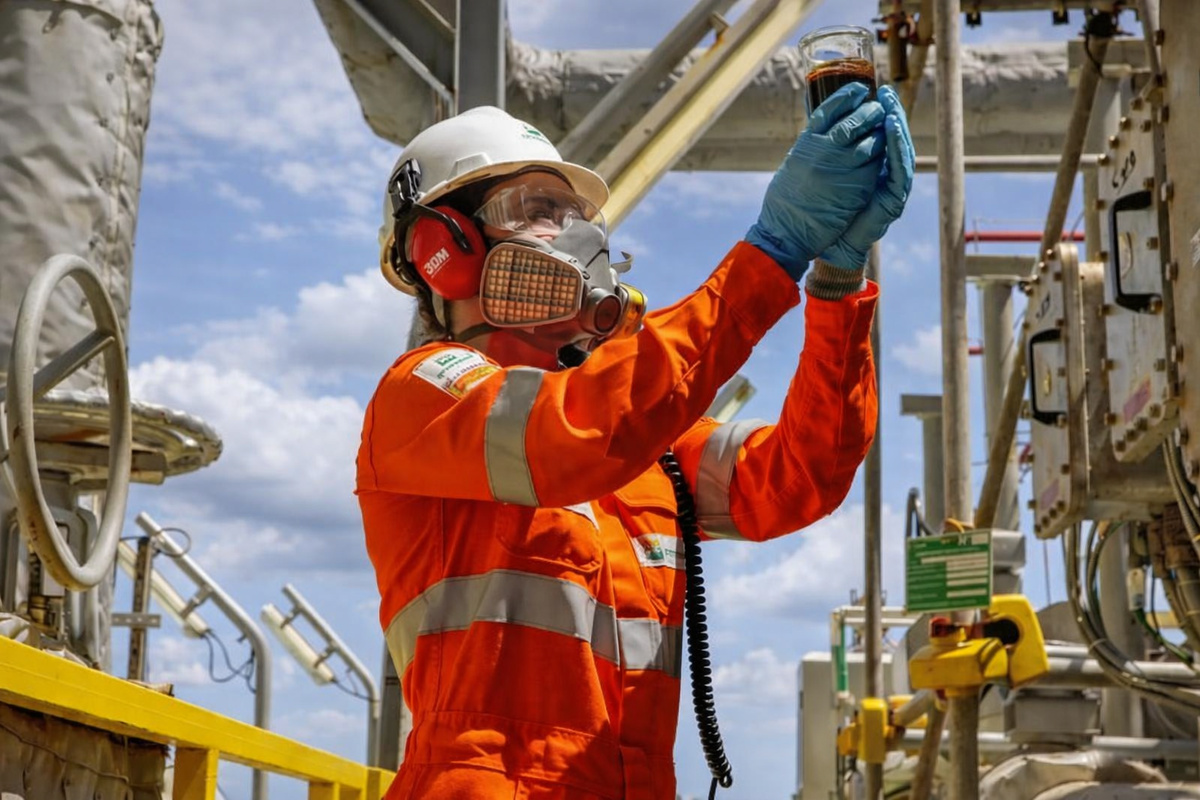
The Brazilian government and the Bolivian administration signed a technical cooperation treaty that prioritizes the expansion of natural gas, aiming to increase the flow of fuel through the Brazil-Bolivia gas pipeline (Gasbol) to meet national energy demand.
Brazil and Bolivia sealed a strategic commitment that alters the course of the energy sector in South America by enabling the expansion of natural gas throughout the national territory. The bilateral agreement focuses on utilizing existing infrastructure, such as the Gasbol pipeline, and exploring new reserves in Bolivian soil with Brazilian technical support.
This initiative arises as a direct response to the need to reduce the “Brazil cost.” Offering a more economical and less polluting alternative than diesel oil and coal for large national industries.
By ensuring a constant and substantial supply, the treaty reinforces Brazilian energy security and paves the way for new thermoelectric plants to come online, balancing the electrical matrix during periods of water scarcity. The infrastructure market welcomes the announcement with optimism, anticipating a cycle of new pipeline and processing unit projects in the next ten years.
-
Petrobras announces new oil discovery in the pre-salt of the Campos Basin and reinforces Brazil’s prominence with high-quality reserves that can increase production and energy revenues.

-
Alert in the fuel market: Analysts and a former director of ANP warn that oil prices may worsen in the coming months due to global instability.

-
Ocyan brings executives and digital solutions to Macaé Energy 2026 and highlights offshore expansion with Nexio and a new base in Macaé.

-
Petrobras advances 4.6% with rising oil prices and the dollar, reigniting the debate on macro risks, pricing policy, and fiscal impact in Brazil.
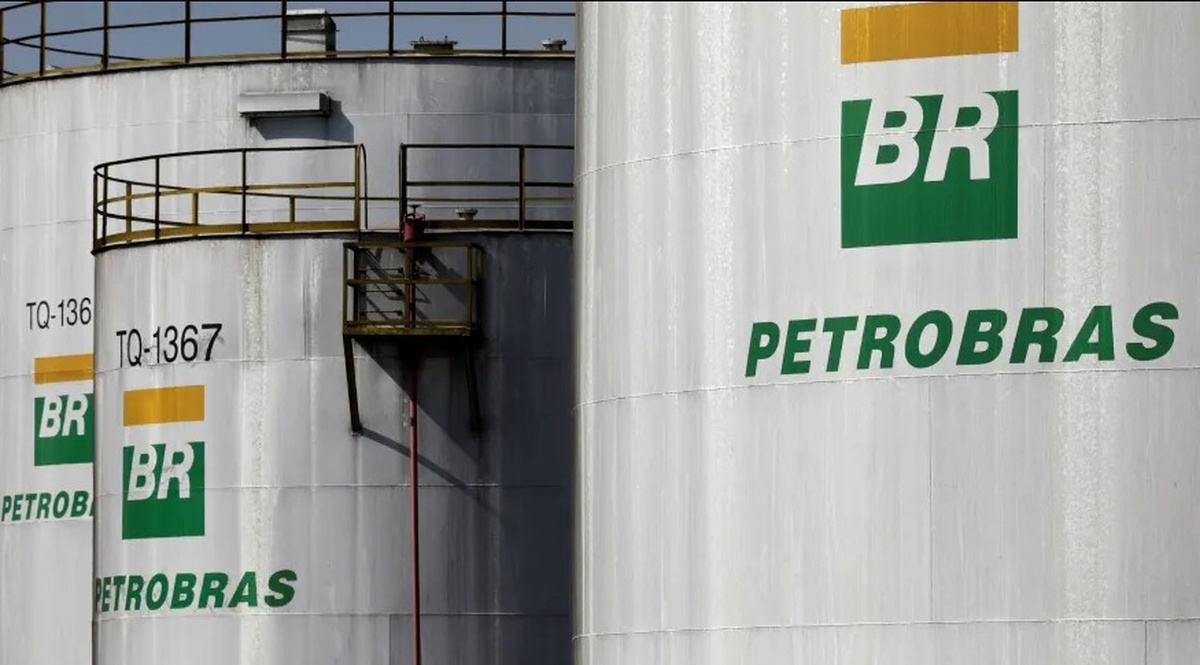

The immediate impact of the expansion of natural gas on the infrastructure market
The signing of this binational agreement generates a positive ripple effect throughout the heavy construction and engineering sector in Brazil. The expansion of natural gas requires the modernization of compression stations and the construction of secondary lines to deliver fuel to regions currently lacking service.
Industry experts estimate that this movement should unlock billions of reais in private investments, as natural gas serves as the ideal “transitional energy” for the country. Major construction companies and logistics firms are already positioning their resources to compete for new expansion bids for the pipeline network, which promises to connect the interior of Brazil to the major production centers in Bolivia and the oceanic basins.
In addition to physical works, the regulatory infrastructure also gains new contours with this treaty. The federal government is working to harmonize transportation and commercialization regulations, allowing private companies to purchase gas directly from Bolivian producers. This movement breaks the old monopoly and introduces the necessary competitiveness to reduce final prices for consumers.
The infrastructure market sees this opening as an opportunity to create new distribution and storage centers for liquefied natural gas (LNG). Increasing the flexibility of the national system and ensuring that economic growth does not suffer interruptions due to a lack of reliable energy.

Economic benefits and cost reduction for the industrial sector
The Brazilian industrial sector stands as the largest beneficiary of the expansion of natural gas. Fertilizer factories, glass industries, ceramics, and steel mills depend on gas as a fundamental input in their production processes.
With the increase in supply from Bolivia, production costs are expected to drop drastically, making Brazilian products more competitive in the international market. Currently, the price of gas in Brazil is among the highest in the world, which discourages the establishment of new industrial plants.
The agreement with Bolivia reverses this trend, signaling to global investors that Brazil now has an abundant and financially sustainable energy source.
The real economy feels the impact of this cooperation through the creation of direct jobs in border areas and in the construction sites of new pipelines. Cities in Mato Grosso do Sul, through which the main artery of Gasbol passes, for example, are already experiencing an increase in demand for industrial maintenance and logistics services.
The expansion of gas supply also allows Brazil to reduce the import of nitrogen fertilizers, producing them internally from natural gas. This strengthens the national agribusiness, which now has cheaper and locally produced inputs. Closing a cycle of prosperity that begins in Bolivian extraction and ends at the Brazilian consumer’s table.
The strategic relevance of Gasbol in the Brazil-Bolivia connection
The Brazil-Bolivia Gas Pipeline (Gasbol) reassumes its role as a protagonist in the energy geopolitics of Latin America with the expansion of natural gas project. Inaugurated decades ago, the pipeline has a technical capacity that can be expanded with new investments in compression technology.
The new agreement stipulates that technicians from Petrobras and YPFB (the Bolivian state-owned company) will work together to optimize the flow of molecules. Reducing losses and increasing transport efficiency. This technical cooperation ensures that the existing infrastructure operates at its maximum capacity, justifying the construction of new sections that expand the network to Southeast and South Brazil.


The strengthening of Gasbol also attracts the interest of other South American neighbors, such as Argentina, which has vast reserves in Vaca Muerta and could use the Bolivian network to export gas to Brazil.
Thus, the current agreement serves as the cornerstone of an integrated energy network on the continent. The expansion of pipeline infrastructure transforms Brazil into a gas logistics hub, allowing the country to manage the flow of energy according to seasonal needs.
The infrastructure market monitors every planned kilometer of pipeline, aware that the continent’s energy security depends on the stability and modernization of this binational connection.
Energy transition and the sustainability of natural gas
Although it is a fossil fuel, natural gas plays a crucial role in the transition to a low-carbon economy, and the expansion of natural gas accelerates this process in Brazil. It emits significantly fewer pollutants and greenhouse gases than coal or fuel oil.
By replacing dirtier sources in thermoelectric plants, Brazil improves its environmental indices while maintaining the stability of the electrical system. Natural gas serves as the “faithful partner” of renewable sources, such as solar and wind, coming into play when the sun sets or the wind stops blowing.
The sustainability of the binational project also lies in the use of cutting-edge technologies for leak detection and remote monitoring of pipelines. The new phase of gas infrastructure in Brazil prioritizes maximum efficiency and the least possible environmental impact along the pipeline routes.
Moreover, the development of the biogas industry, gas generated from organic waste, can utilize the same infrastructure for the expansion of natural gas. This creates a hybrid system where Bolivian gas and Brazilian biogas circulate through the same network. Maximizing the decarbonization of the economy and promoting a green and resilient infrastructure for future generations.
Regulatory challenges and the future of the pipeline network
The advancement of the expansion of natural gas depends on overcoming regulatory bottlenecks that still persist in the Brazilian scenario. The new legal framework for gas has brought advances, but the integration between states and federal regulations needs refinement to attract more private capital.
The agreement with Bolivia pressures regulatory bodies to accelerate the granting of environmental licenses and construction authorizations. The infrastructure market demands clear rules and legal stability to sign long-term contracts, essential for projects that take years to complete and decades to yield financial returns.

The future holds a much denser and branched pipeline network. The trend indicates that natural gas will cease to be an exclusivity of coastal areas and large capitals to become a reality in industrial hubs in the interior.
The federal government plans gas transportation corridors that will interconnect the pre-salt basins with the Bolivian supply. Thus creating a redundant system that eliminates supply risks. For infrastructure professionals, this means a job market heated for decades, with constant demand for services in geology, civil engineering, mechanics, and management of complex energy projects.
The role of technology in the modernization of gas infrastructure
Digital technology occupies a central space in the modern expansion of natural gas. The Brazil-Bolivia agreement includes the exchange of experiences in asset digitalization and the use of artificial intelligence to predict consumption demands.
Smart sensors installed along the thousands of kilometers of pipelines allow real-time monitoring of pressure, temperature, and structural integrity of the network. This reduces operational costs and increases safety for communities living near the pipeline right-of-ways. Technological innovation makes natural gas an even more competitive option compared to other less digitized energy sources.
The use of “digital twins” to simulate the behavior of the gas network helps engineers plan the expansion with millimeter precision. This technological approach avoids material waste and accelerates the construction schedule. A determining factor for the success of public-private partnerships in the infrastructure sector.
Modernization is not limited to pipes but extends to control rooms and gas commercialization systems, which now operate on blockchain platforms to ensure transparency and traceability of each molecule traded between the two countries.
A new era for South American energy infrastructure
The treaty between Brazil and Bolivia for the expansion of natural gas marks the beginning of a chapter of unprecedented integration and economic growth. By uniting the abundance of resources on one side with the industrial strength and consumer market on the other, the two countries create a development engine that benefits the entire region.
The gas infrastructure ceases to be just a transportation system to become the foundation of a stronger, more competitive, and sustainable national industry. Thus, the infrastructure market, driven by billions in new projects, takes center stage in building this new Brazil.
The renewed trust between neighboring nations signals that energy cooperation is the shortest path to economic recovery and regional sovereignty. With the expansion of the gas network, Brazil prepares for a future of abundant energy, fair prices, and technological innovation.
The sun and wind remain fundamental, but it is natural gas that offers the solid foundation for the energy transition to occur safely and prosperously. The agreement with Bolivia proves that when infrastructure and diplomacy walk hand in hand, the result is a more productive country ready for the global challenges of the 21st century.









Seja o primeiro a reagir!