





 English
  Francês
  Alemão
  Italiano
  Japonês
  Norueguês
  Portuguese
  Spanish
  4 min of reading
  0 comments


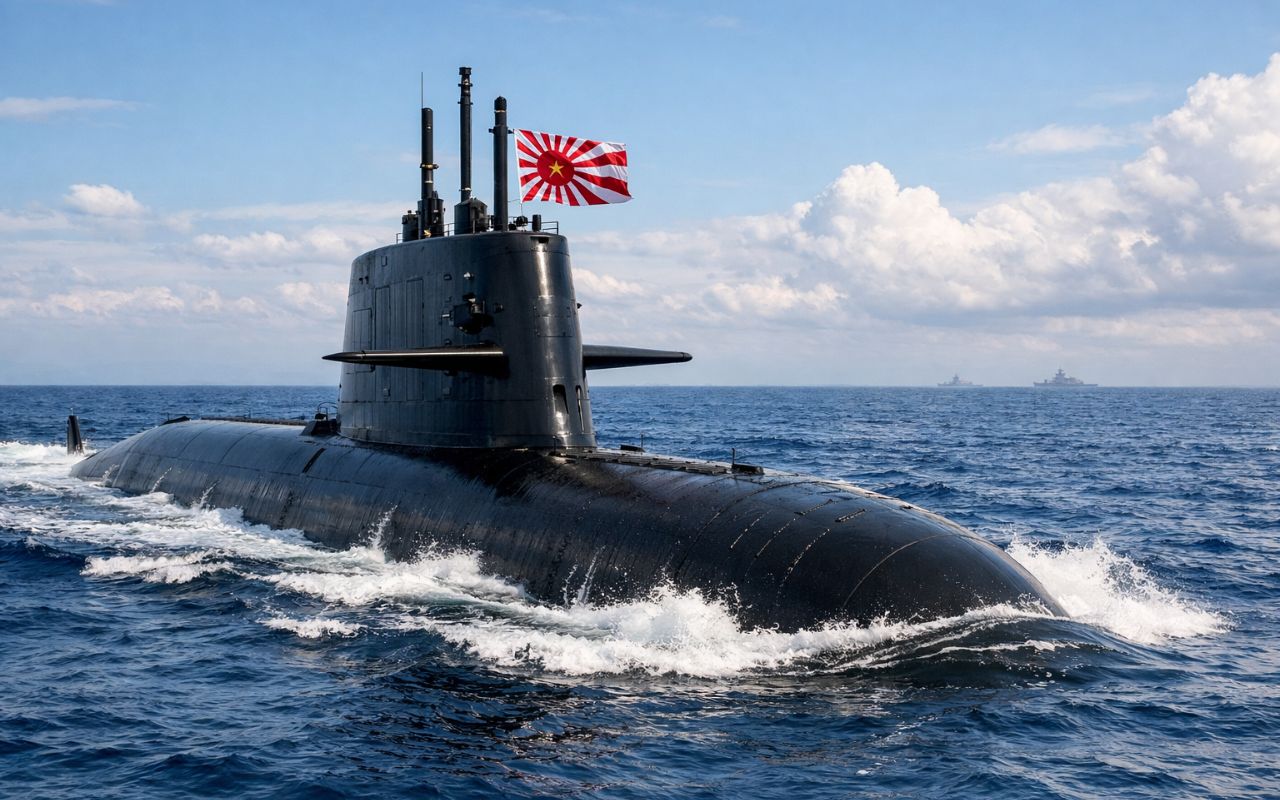
The Submarine JS Chōgei Entered Service in Japan and Became Part of the Modern Taigei Class, Expanding Submarine Capacity and Naval Strategy in the Indo-Pacific.
Amid the increasingly relevant strategic landscape of the Indo-Pacific, Japan reinforced its naval strength with the entry into service of a new submarine. The vessel, identified as JS Chōgei (SS-517), officially joined the fleet of the Japan Maritime Self-Defense Force (JMSDF).
The incorporation took place on March 10, 2026, following a ceremony held at Mitsubishi Heavy Industries facilities in Kobe.
With this, the new submarine became part of the modern Taigei-class submarine, regarded as the latest generation of conventional submarines developed for the country’s navy.
-
Brazil presents the first national F-39 Gripen fighter and redefines air defense with technological advancement, job creation, and strengthening of the defense industry on the global stage.
-
The construction of the Polar Ship Almirante Saldanha is progressing ahead of schedule and strengthens Brazil’s presence in Antarctica; the vessel will be 93 meters long, have a two-month autonomy, and technology to face ice.

-
The United States Army has an armored vehicle that reaches speeds of up to 100 km/h, capable of operating normally on different types of terrain and also on asphalt without causing damage; equipped with a 350 hp engine, it can transport up to 9 soldiers — meet the Stryker.
-
Gepard 1A2: the armored vehicle that fires 1,100 rounds per minute and became a shield against drones in Brazil.

Taigei Class Is Part of the Renewal of Japan’s Submarine Fleet
The Taigei class represents an important step in Japan’s naval modernization. The project was designed to gradually replace older submarines of the Sōryū class and introduce new technologies into the fleet.
These vessels were developed to operate with greater efficiency, autonomy, and detection capability.
In this way, each new submarine incorporated strengthens Japan’s maritime presence in strategic areas.
Furthermore, the program follows a continuous expansion plan, with new units being incorporated almost every year since 2022.
Technical Characteristics of the JS Chōgei Submarine
Designed to meet the demands of modern naval operations, the submarines of the Taigei class incorporate technologies that enhance their efficiency and operational capability in various maritime scenarios.
Highlights include advanced sonar and data processing systems, along with the ability to deploy Japanese heavyweight torpedoes or anti-ship missiles launched from the submarine itself.
The vessel also features six 533-millimeter torpedo tubes and utilizes a diesel-electric propulsion system combined with lithium-ion batteries.
This modern technology allows for greater submerged endurance and improves operational performance during extended missions.
In the case of JS Chōgei (SS-517), these capabilities are operated by a crew of about 70 specialized personnel.
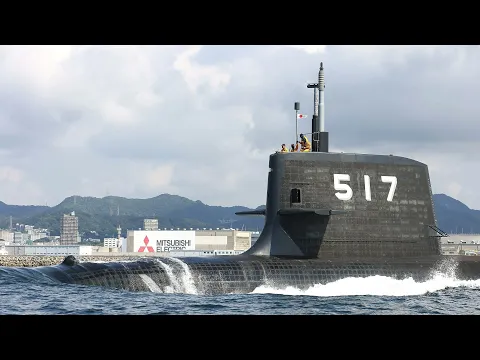

The submarine is approximately 84 meters long and displaces about 3,000 tons, characteristics that contribute to balancing size, autonomy, and combat power.
With this set of resources, the submarines of the class become highly versatile platforms, capable of operating in both surveillance missions and maritime defense and combat operations.
Construction of the Submarine Began in 2022
Before being incorporated into the Japan Maritime Self-Defense Force (JMSDF), the JS Chōgei submarine underwent an extensive sea testing phase, a crucial step to validate its systems’ functionalities.
During these evaluations, components such as navigation, propulsion, and combat systems were analyzed in real conditions, ensuring that the submarine met the rigorous operational standards of the Japanese navy.
This process occurred after the vessel’s launch, which took place on October 4, 2024.
From that moment on, the equipping and technical preparation period began, during which various systems were installed and adjusted before the maritime tests.
The construction of the JS Chōgei had begun years earlier, on April 19, 2022, at the Mitsubishi Heavy Industries shipyard in Kobe.
Only after completing all testing and certification stages was the submarine officially delivered to the JMSDF, which occurred in March 2026.
Taigei Class Continues Gradual Expansion of the Japanese Fleet
The arrival of the JS Chōgei submarine is part of a continuous plan for expanding the Taigei class, adopted by the Japanese navy to gradually renew its submarine fleet.
Since the entry into service of the first submarine of this class in 2022, new units have been incorporated sequentially in the following years.
This model of progressive introduction allows the country to update its naval strength in a balanced manner, maintaining operational capability while replacing older vessels.
At the same time, each new submarine of the Taigei class brings significant technological improvements.
As a result, the Japanese navy operates increasingly quieter, more efficient submarines, prepared for complex missions in strategic maritime environments.
Submarine JS Chōgei Reinforces Japan’s Strategic Presence
The strengthening of the submarine force is part of Japan’s maritime defense strategy, especially in light of the geopolitical situation in the Indo-Pacific.
Submarines are considered key assets in this type of strategy, as they can operate discreetly and monitor large ocean areas without being easily detected.
Thus, the operational deployment of the JS Chōgei submarine enhances the surveillance and deterrence capability of the Japanese navy.
At the same time, the progress of the Taigei class program demonstrates the country’s commitment to maintaining one of the most modern submarine forces in the world.
Source: Naval Power









-

-

-

-

-

7 pessoas reagiram a isso.