





 Portuguese
  English
  Spanish
  4 min of reading
  0 comments


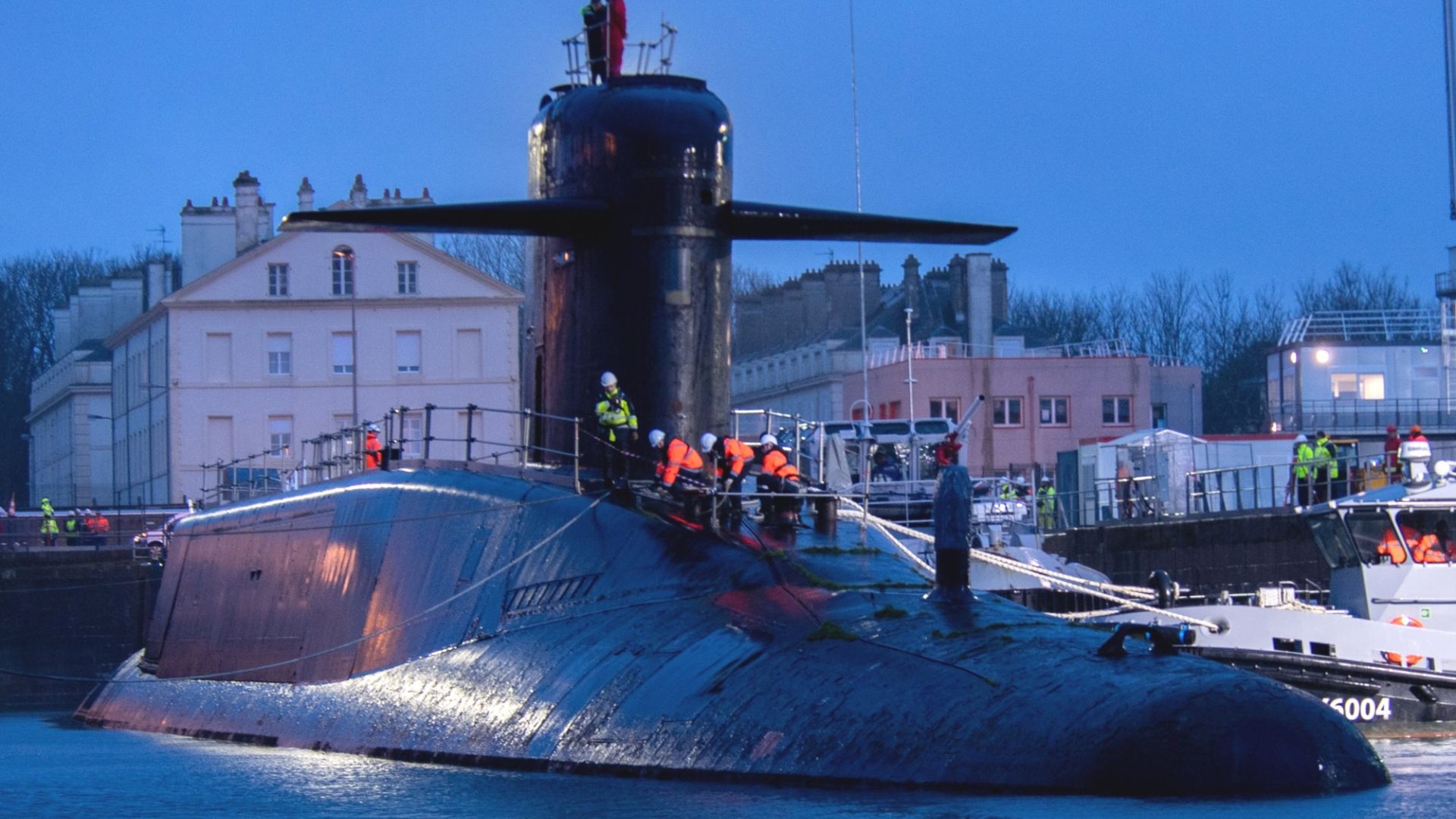
French Nuclear Deterrent Giant Turned Historical Attraction In Normandy Reveals Technical And Human Behind-The-Scenes Of Patrols That Lasted Up To 75 Days Under The Sea, With 135 Crew Members And 16 Ballistic Missiles On Board During The Most Tense Period Of The Cold War.
A 128.7-meter nuclear submarine that was part of the core of French strategic deterrence during the Cold War is now an open attraction to the public in Cherbourg-en-Cotentin, Normandy, where visitors walk through its compartments at La Cité de la Mer.
Known as Le Redoutable, it was the first French nuclear submarine capable of launching ballistic missiles and, according to the museum, is the largest visitable submarine in the world, presented with a guided tour via audio guide that lasts about 35 minutes.
Visit To The Interior Of The Nuclear Submarine
The visit was designed to show how daily life was organized in a confined, technical, and strictly controlled environment, where each space had a defined function and any routine depended on safety rules, discipline, and operational silence.
-
A “silent skill” is allowing Brazilians to earn up to R$ 22,000 per month without a degree and become indispensable for companies that rely on millions of data to survive.

-
Researchers at the Toyota Research Institute found that if a human uses robotic arms to flip a pancake 300 times in an afternoon, the robot learns to do it on its own the next morning, and this is currently the most promising method to solve the biggest bottleneck in modern robotics.

-
Goodbye iron: a common item in households is starting to lose space to technology that smooths clothes in minutes without an ironing board and with less energy consumption.

-
Antarctica reveals an unusual clue high in the Hudson Mountains, and what appeared to be just an isolated rock began to expose a secret hidden under the ice for ages.



On the route described by La Cité de la Mer, the audience traverses areas related to life and work onboard, including engine room, command post, dining hall, crew and officer cabins, and torpedo room, in a narrative that highlights the human aspect.
Dimensions And Capacity Of Le Redoutable
The numbers help to scale why the submarine impresses even out of the water: widely consulted records about the ship point to 8,080 tons on the surface and 8,920 tons submerged, in addition to a crew of 135 military personnel.
In institutional material released by La Cité de la Mer itself, Le Redoutable is also associated with “chiffres clés” that highlight its scale and strategic function, mentioning 16 missiles and two crew groups, “blue” and “red,” with 135 men each.
Strategic Armament And Deterrence In The Cold War
The logic behind the project was simple and harsh: to maintain a platform in the ocean capable of launching ballistic missiles, supporting French nuclear deterrence with discreet presence, high autonomy, and permanent readiness, within the Force océanique stratégique.

Technical records of the ship describe the main armament as 16 ballistic missiles (MSBS), while the defensive set includes torpedo launch tubes and associated munitions, making up the typical design of a nuclear missile-launching submarine of its time.
Patrols Of Up To 75 Days And 80 Thousand Hours Submerged
The operational routine depended on the rotation between two crews, so the submarine could remain available for long periods, and historical records indicate that patrols varied from 55 days at the beginning to 75 days at the end of its career.
Over approximately 20 years of service, a frequently cited count attributes to Le Redoutable 51 patrols, with 3,469 days at sea and 83,500 hours of diving, although institutional materials from the museum also mention 58 patrols and 90,000 hours, indicating divergence between compilations.
Life On Board And Habitability Conditions
The prolonged isolation required practical solutions to reduce wear and maintain performance, and a testimonial reproduced in museum material attributes to the technological leap of Le Redoutable the possibility of daily hygiene thanks to desalination, described as “douches à volonté.”

The same publication highlights that life onboard needed to balance minimum comfort and functionality, and gathers examples of how the vessel was designed to withstand weeks of continuous operation, with internal routines adapted to a world without sunlight.
From Active Duty To Museum In Cherbourg
Le Redoutable was retired from service in the early 1990s and, according to records of its trajectory, returned to Cherbourg in December 1991, starting a decommissioning process and preparation for a new phase, now outside the military logic.
The opening to the public took place in 2002, after adaptations to receive visitors safely, and La Cité de la Mer began to frame the submarine as an immersive historical and technical experience, transforming a strategic piece of equipment into a monument of memory.
Between what was secret and what became accessible, the visit focuses on the concrete details: narrow corridors, panels, valves, compartments, and routines that had to function precisely to sustain long missions, without room for improvisation.






Seja o primeiro a reagir!