





 Portuguese
  English
  Spanish
  4 min of reading
  0 comments


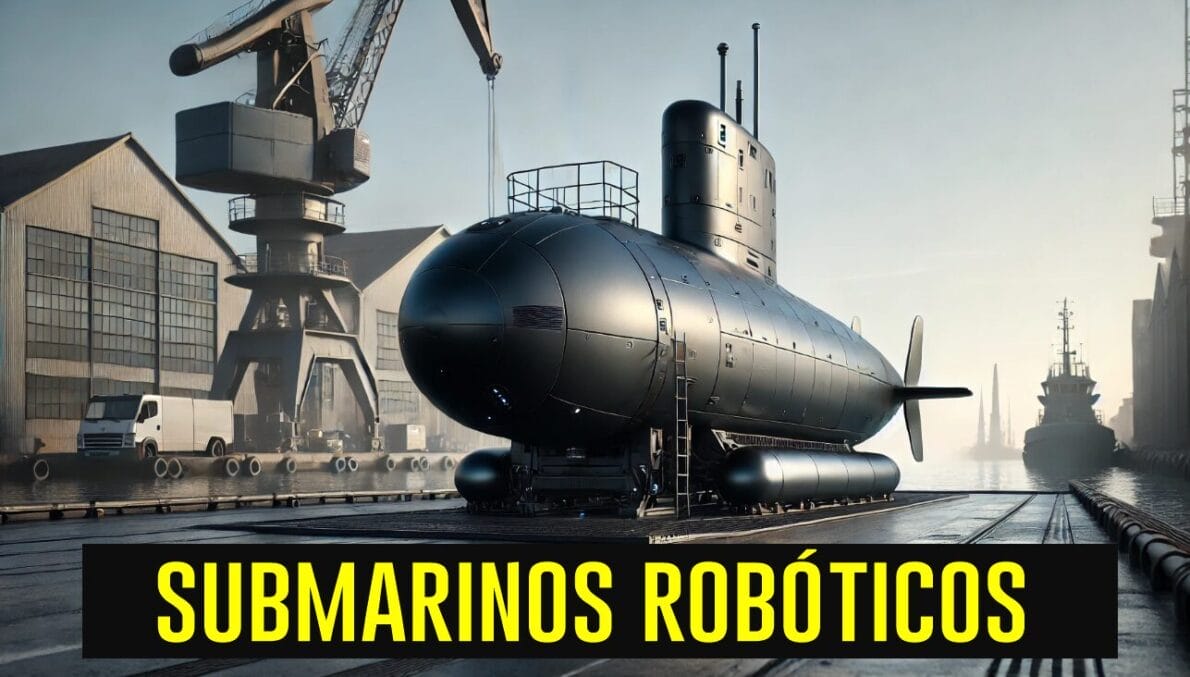
Robotic Submarines Are the Next Big Innovation in Naval Warfare! Smaller and More Efficient, They Do Not Require Human Crews, Becoming the New Strategic Weapon at Sea
The use of robotic submarines, also known as autonomous underwater vehicles (AUVs), is transforming the landscape of underwater military tactics. These machines offer similar benefits to conventional submarines but go beyond in efficiency and capability.
Robotic submarines, or AUVs, are part of a broader category of unmanned underwater vehicles (UUVs), which include military, research, and civilian variants.
These vehicles are designed to operate without the need for direct human control, making them especially useful in long-term operations and in difficult access.
-
Man builds functional 5-meter submarine in his garage using gas cylinders, PVC pipes, and a refrigerator motor, and navigates with the vessel on a lake in Colombia.
-
Millions of people have been eating yam for centuries without knowing that this humble tuber contains a compound called diosgenin, which scientists have now discovered can improve memory and help control blood sugar levels.

-
Scientists from an international project drill 1,800 meters of ice in Antarctica using hot water and discover details about one of the most intriguing places on planet Earth.
-
Seen from space, a colossal volcano nearly 5,000 meters high in Russia has released 1,600 km of smoke over the Pacific, forming “devil’s horns” of lava and revealing the brutal force of the Ring of Fire.


Though there are different types of UUVs, AUVs are specialized vehicles for specific missions. In the military context, these vessels are used for various tasks, including attacking other vessels or submarines, detecting and removing mines, and supporting special operations. They have been developed since the 1950s when the first AUV, the “Self-Propelled Underwater Research Vehicle” (SPURV), was created by the University of Washington.
Since then, the technology of robotic submarines has evolved drastically, allowing for the use of these machines in more complex and challenging operations, with applications that go well beyond scientific research.
Advantages of Robotic Submarines
One of the most common questions is why use robotic submarines when there are already manned submarines that perform similar functions. The answer involves a number of factors that make AUVs a more attractive choice for many military operations.
1. Lower Cost: AUVs are significantly cheaper to build and maintain than conventional submarines, such as attack submarines. Since there is no need to accommodate human crews on board, they can be smaller and simpler, reducing production and maintenance costs.
2. Greater Flexibility: Because they are unmanned, AUVs can be deployed on high-risk missions without the concern of human losses. This also allows military forces to consider riskier operations, where success is more important than the survival of the vessel.
3. Prolonged Operations: Depending on the power source, robotic submarines can operate for long periods without needing to refuel or rest. This makes them ideal for long-duration surveillance missions or operations in remote areas, where conventional submarines would need to return to base for maintenance or refueling.
4. Lower Detection: Being smaller, AUVs are harder to detect by radar and maritime defense systems, such as anti-submarine nets. They can approach enemy vessels without being detected, allowing them to conduct surprise attacks or break naval blockades more easily.
5. Force Multipliers: AUVs can act as force multipliers in joint operations with conventional naval assets. Their ability to operate in large numbers or in “swarms” allows a small fleet of AUVs to provide a significant advantage against larger naval forces.
The Current State of Robotic Submarines
Currently, several navies are investing in the development of robotic submarines as part of their naval strategies. These vehicles provide a way to level the playing field, allowing nations with fewer military resources to confront large naval powers more effectively.
A prominent example is the Orca robotic submarine project, being developed by Boeing and Huntington Ingalls Industries for the United States Navy. This large AUV (XLUUV) will be capable of operating autonomously for several months and can be used for a variety of missions, including surveillance, electronic warfare, and mine sweeping.
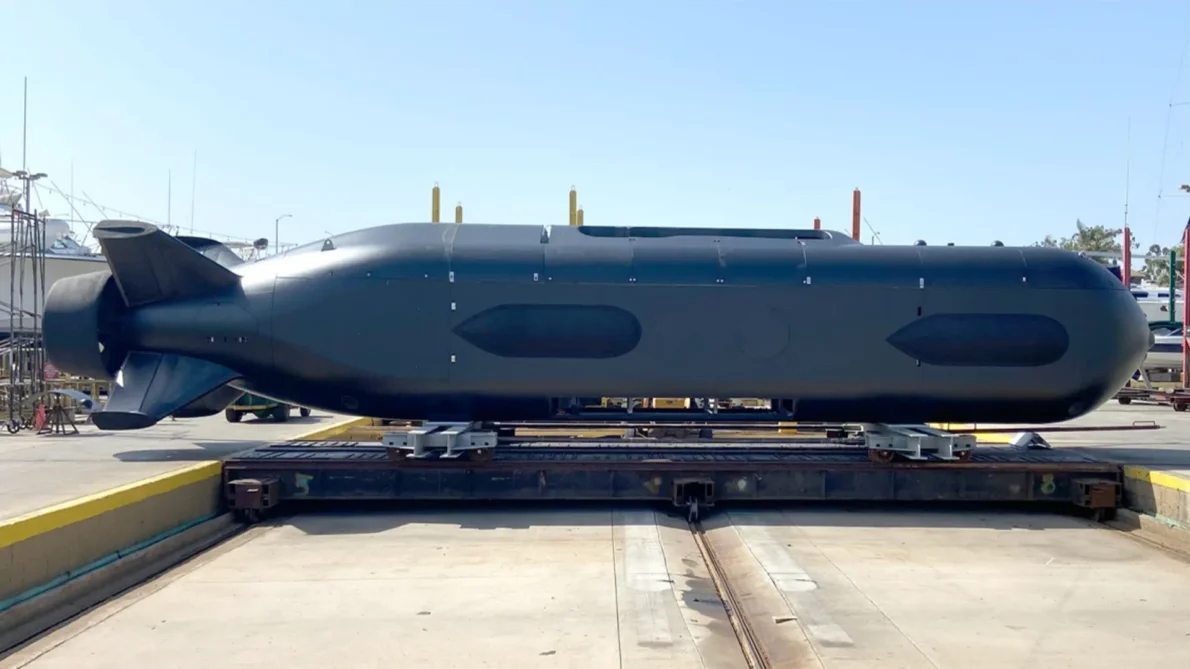
The Orca will be powered by a hybrid lithium-ion battery and diesel generators, allowing for a range of up to 10,500 km and the ability to operate for months without needing to refuel. It is expected to have a maximum speed of 8 knots (15 km/h), with a cruise speed of 3 knots (5.6 km/h).
Although the Orca is one of the most advanced projects currently, other nations, such as China and Turkey, are also developing their own versions of robotic submarines. China, for example, is working on a large unmanned underwater vehicle (LDUUV), the HSU-001, which is likely to be used for deep-sea warfare and other specialized military operations.
The Future of Robotic Submarines
The future of robotic submarine technology promises to be even more impactful. With the ongoing development of these vehicles, we are likely to see a significant proliferation in terms of numbers and types of available AUVs.
In addition to operating independently, robotic submarines will be able to be integrated into conventional naval fleets and coordinate joint operations with aircraft, ground forces, and surveillance satellites. This will create a more efficient network of communication and operation, enhancing the reach and effectiveness of military forces on different fronts.
AUVs can also be used in peacekeeping operations, search and rescue, patrolling, and anti-piracy, as well as playing a crucial role in protecting underwater infrastructure, such as telecommunications cables and pipelines.
The proliferation of these vehicles will also bring strategic challenges. The capability to use “swarms” of robotic submarines in combat will require new thinking in terms of offensive and defensive tactics.
Defense against these vehicles will be an area of intense development in the coming decades as more nations adopt this technology.
Robotic submarines represent a revolution in underwater military tactics. With their advantages in cost, flexibility, and operational efficiency, these vehicles are rapidly becoming a vital component of modern naval forces.
As their technology continues to evolve, we will certainly see an increasing impact on the naval battlefield and a transformation in global naval strategies.






Seja o primeiro a reagir!