





 English
  Francês
  Alemão
  Italiano
  Japonês
  Norueguês
  Portuguese
  Spanish
  3 min of reading
  0 comments


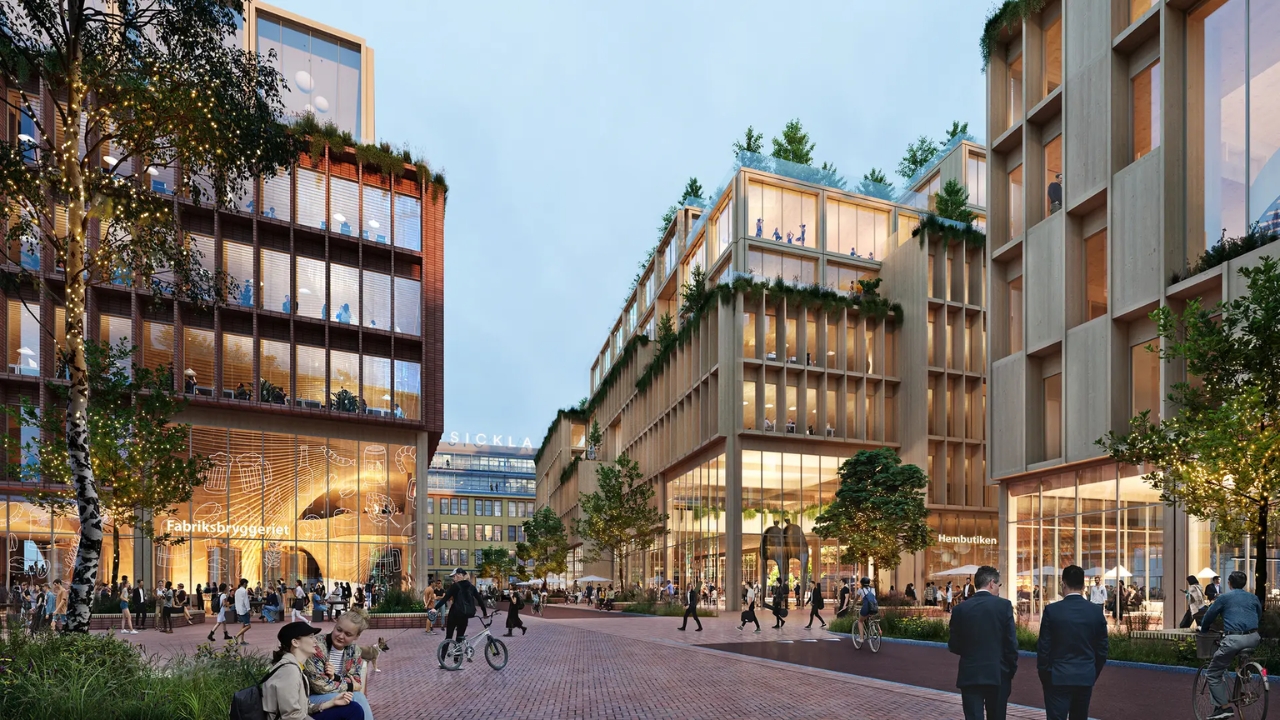
In Sickla, in the Stockholm region, a new wooden neighborhood is advancing with housing, offices, commerce, and services integrated into public transport, showing that low-carbon construction can achieve urban scale
Sweden has initiated one of the most ambitious urban projects in sustainable construction. In Sickla, in the Stockholm region, a new wooden neighborhood is advancing with 250,000 square meters, 2,000 homes, and 7,000 jobs.
The movement draws attention because wood is no longer just present in isolated buildings but occupies the scale of an entire neighborhood. In practice, this combines housing, work, commerce, and services in a single urban expansion with a lower carbon footprint.
Project occupies 25 blocks and brings wood to the scale of an entire neighborhood
The plan includes 25 blocks and around 30 buildings in a complete urban area. The proposal does not treat wood as an aesthetic detail but as a structural base for a new front of city growth.
-
For 45 years, Spain and Morocco have been trying to connect Europe to Africa through a project of just 14 kilometers in the Strait of Gibraltar, and an active tectonic fault on the seabed continues to make the project nearly impossible.

-
Goodbye expensive water tank: residents replace traditional system with a cheaper and more efficient solution that reduces water consumption and reuses rainwater.

-
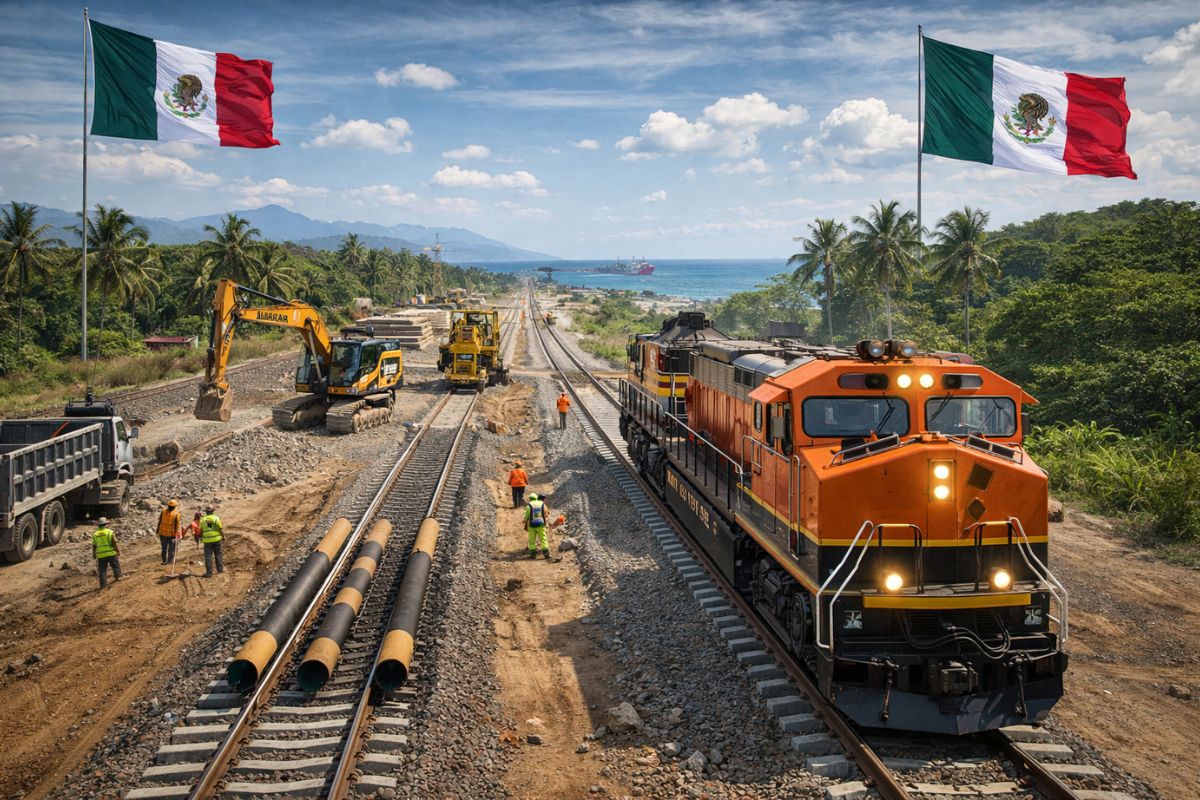
Mexico is building a 300-kilometer railway corridor that connects the Pacific to the Atlantic in just seven hours and wants to compete directly with the Panama Canal, which is already facing water scarcity issues.
-
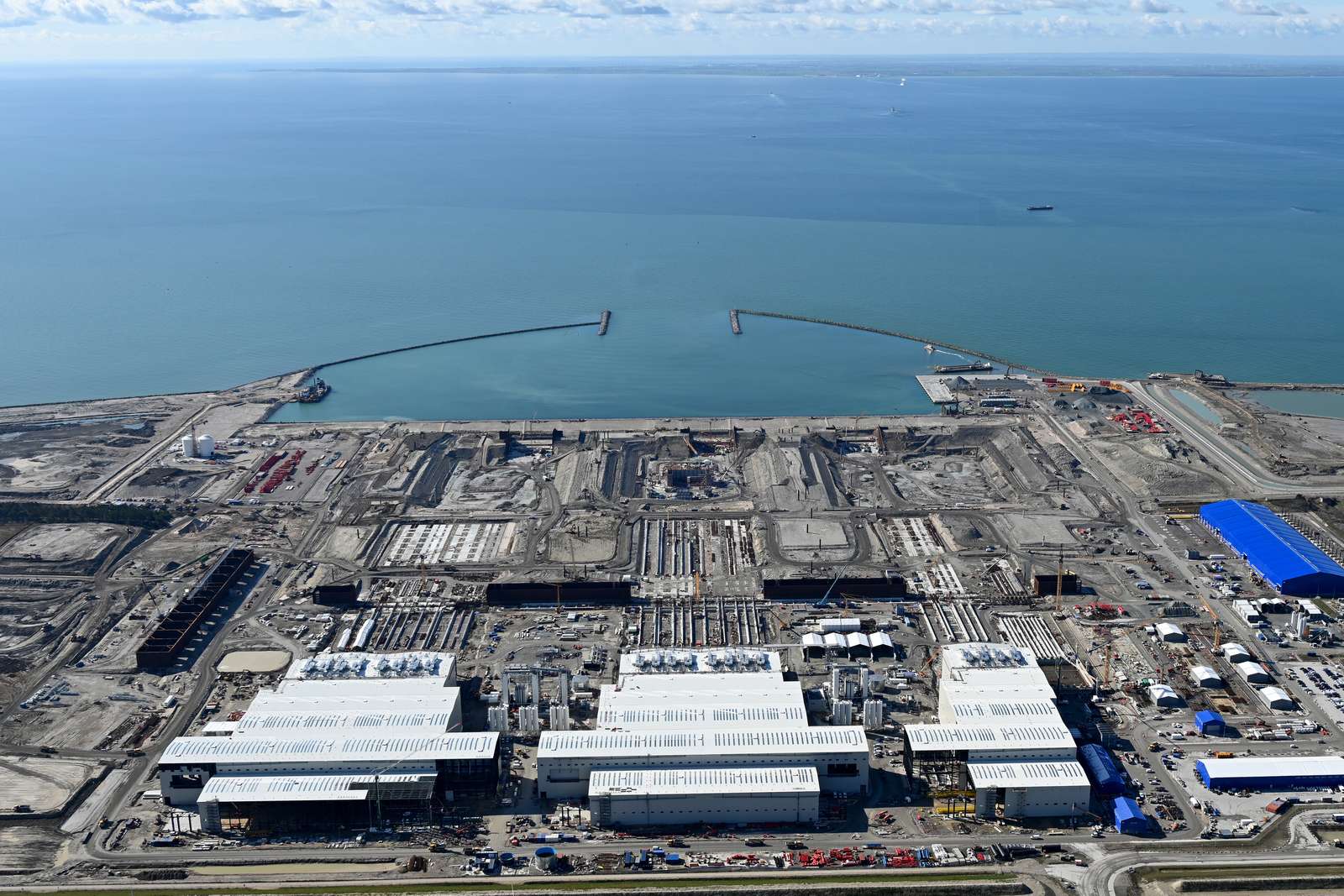
The largest tunnel module factory in the world was built from scratch on a beach in Denmark to produce 89 concrete blocks and will be demolished after the project: each structure weighs up to 10 times the Eiffel Tower and will be installed on the bottom of the Baltic Sea with an accuracy of 12 millimeters in a tunnel that will halve the travel time between Hamburg and Copenhagen.

This dimension changes the debate about sustainable construction. Instead of small and isolated solutions, the project aims to show that engineered wood can support a modern, dense, and functional neighborhood.

Construction began in 2024 and the first buildings will be ready between 2025 and 2026
The construction started in 2024, ahead of the initial schedule that indicated a start in 2025. The early progress reinforces that the proposal has moved from the conceptual phase to actual construction.
The first buildings will appear on the horizon between late 2025 and early 2026. This places the project in a concrete phase and brings the delivery of the first residential and corporate areas closer.
Neighborhood brings together 2,000 homes, 7,000 jobs, shops, restaurants, and services
The new urban section is designed to mix daily functions in one place. The neighborhood combines housing, offices, shops, restaurants, and other services to create a lively area throughout different times of the day.
This format reduces long commutes and strengthens the urban routine of proximity. For those who live or work there, the impact is seen in greater convenience and a city less dependent on extensive travel.

Wood reduces carbon and also improves the internal environment of buildings
The choice of wood addresses the environmental weight of traditional construction, one of the sectors with the greatest impact on global emissions. By increasing the use of this material on a large scale, the project aims to reduce carbon without sacrificing urban density.
The gain is not only in the climate account. Wood is also associated with more pleasant indoor environments, with a cozier thermal sensation and a more comfortable experience for living and working.
Sickla gains new momentum with transport, commerce, and integrated urban expansion
The neighborhood is born in an area that already concentrates commerce, services, and mobility connections. The location in Sickla helps to fit the new expansion into an urban structure that already operates with public transport and significant economic activity.
This avoids the logic of an isolated enclave. The project connects to the existing city and reinforces the idea of integrated urban growth, rather than a disconnected intervention from the rest of the metropolitan area.

Wood construction moves from niche to large-scale urban showcase
One of the strongest points of the project lies in the change of scale. Wood, often treated as an alternative for smaller buildings, now occupies the center of a broad and visible urban operation.
This repositioning amplifies the symbolic weight of the project. The construction transforms a material seen as simple into a central piece of a modern urban strategy, with a direct impact on how the next neighborhoods will be built.
The Swedish initiative shows that the decarbonization of construction can advance without sacrificing size, density, and economic activity. By combining 250,000 m², 2,000 homes, and 7,000 jobs, the project brings sustainability to a scale that few cities have attempted to achieve.
With the construction underway and the first deliveries approaching, the wooden neighborhood reinforces a new perspective on urban growth. It is not just about changing materials but about redesigning the city with a different environmental and productive logic, which alters the strategic reading.
Sources: Atrium Ljungberg / official announcement, Henning Larsen / official project page










Seja o primeiro a reagir!