





 Portuguese
  English
  Spanish
  4 min of reading
  0 comments


New Technology Center of Syngenta Promises to Accelerate the Development of Innovative Solutions for Agriculture in Latin America, Focusing on Biological Products and Sustainability.
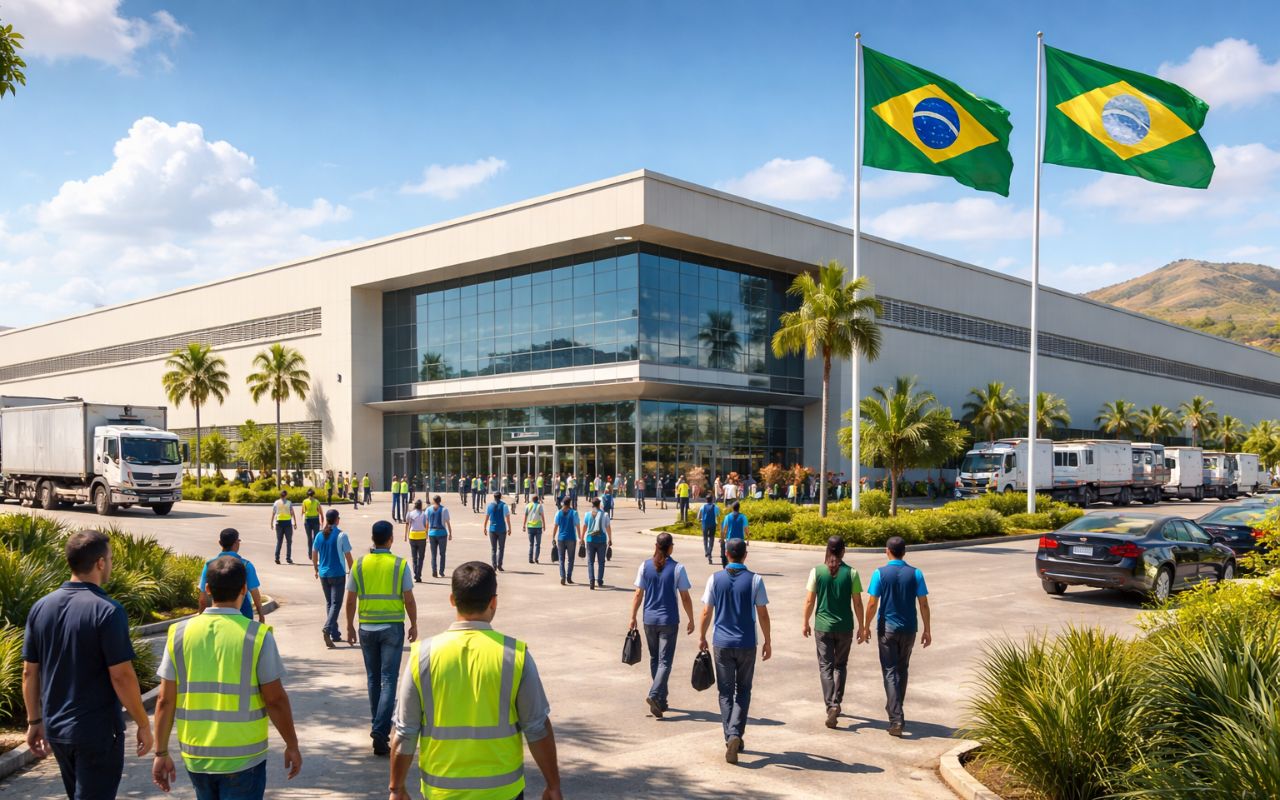
Syngenta, a giant in the agrochemical sector, is about to take another big step in Brazil. On the next October 23, the company’s largest formulation technology center will be inaugurated, located in Paulínia, in the interior of São Paulo. This investment represents not only Syngenta’s bet on the Brazilian market but also its prominent position in the development of innovative solutions for agriculture throughout Latin America.
With an investment of R$ 65 million and a construction time of 18 months, the new technology center joins six other company hubs spread across the globe, including units in the United States, Switzerland, England, China, India, and Singapore. Brazil, as one of the largest global agricultural producers, is a strategic location for the expansion of these technologies.
The Importance of the Technology Center for Syngenta
The Technology and Product Engineering Center for Latin America arrives with a fundamental role: to bring more proximity between the development of new products and the local market needs. According to Rodrigo Marques, Director of Engineering and Product Technology at Syngenta, before 2018, product development mainly took place in Switzerland and England. However, starting that year, Syngenta decided to decentralize innovation, bringing the process of creating new products closer to its clients, such as Brazil.
-
Historic bankruptcy of Centauro shocks the market, and the century-old company puts more than 500,000 products, machines, and complete infrastructure up for online auction.

-
New shoe factory in Ceará is expected to create 400 jobs and strengthen the local economy.
-
No one imagined it, but a mixture of sawdust with a mineral that fights fires surprises scientists with a result that changes the course of fire-resistant construction.

-
From empty land to a high-end house, wooden construction uses a lightweight system, metal structure for the foundation, ventilated ceramic cladding, and special windows to create an efficient and comfortable living space throughout the year.

This change places Brazil on the same level as countries like Switzerland and United States in terms of technological development, strengthening the ability to respond quickly to the needs of local and regional farmers.
Investments and Expansion of Production
Although Syngenta’s new technology center was not designed to increase the company’s production capacity, it represents a step forward in the development of new products, including insecticides and fungicides. Ricardo Corrêa, General Manager of the Paulínia unit, highlighted that the local factory is expected to produce 200 million liters of products this year alone.
With this new structure, Syngenta is preparing to accelerate the formulation and introduction process of new products into the market, which used to take up to 18 months and can now be done in just six. This ensures more agility and competitiveness, especially in the context of Brazilian agriculture, which is constantly evolving.
Open Innovation and Collaboration at the Technology Center
The new center was built on the concept of “open innovation,” where collaboration between engineers and scientists is encouraged through interconnected laboratories. The building, which spans 2,500 square meters, was designed to be sustainable, featuring natural lighting, water reuse, and photovoltaic energy.
The location is also strategic. Situated in the petrochemical hub of Paulínia, the center is close to other Syngenta units, such as experimental stations in Holambra and factories in Indaiatuba and Ribeirão Preto. This facilitates quick access to field tests and controlled trials, making the development of new products even more efficient.
New Technology Center Will Meet Demands from Brazil, Argentina, Colombia, and Mexico
The choice of Paulínia as the headquarters for this major investment by Syngenta was not by chance. In addition to being an important industrial hub, the location positions Brazil as a strategic hub for Latin America. The technology center will meet demands not only from the Brazilian market but also from countries like Argentina, Colombia, and Mexico, strengthening Syngenta’s presence throughout the region.
According to Marques, the research on new molecules is still concentrated in England, but the development of new products from these molecules is now decentralized. This means that the seven technology centers of Syngenta around the world work to meet regional and local needs, enabling more customized solutions for each market.
The New Frontier of Agriculture
One of the main focuses of Syngenta’s new technology center is the development of biological products. These products are based on microorganisms, such as fungi and bacteria, that can be used in pest and disease control in a more sustainable way. The biological laboratory at the Paulínia technology center is focused on creating solutions that complement traditional management, such as nematode control and seed treatment.
The challenge for Syngenta, according to its executives, is to develop and test new biological products while also increasing the production capacity of these products over the next two years. This research area has gained prominence as the demand for more sustainable solutions in agriculture grows globally.
More Investments on the Horizon
The inauguration of the technology center in Paulínia is just the beginning. Syngenta has already announced plans to invest an additional R$ 40 million over the next five years starting in 2025. These new resources will be allocated to expanding innovation capacity and developing new technologies that can bring even more efficiency and sustainability to agriculture.
Furthermore, the company continues to focus on research and development of solutions that meet global food demands, always with an emphasis on sustainability and responsible use of natural resources.








Seja o primeiro a reagir!