





 Portuguese
  English
  Spanish
  3 min of reading
  0 comments


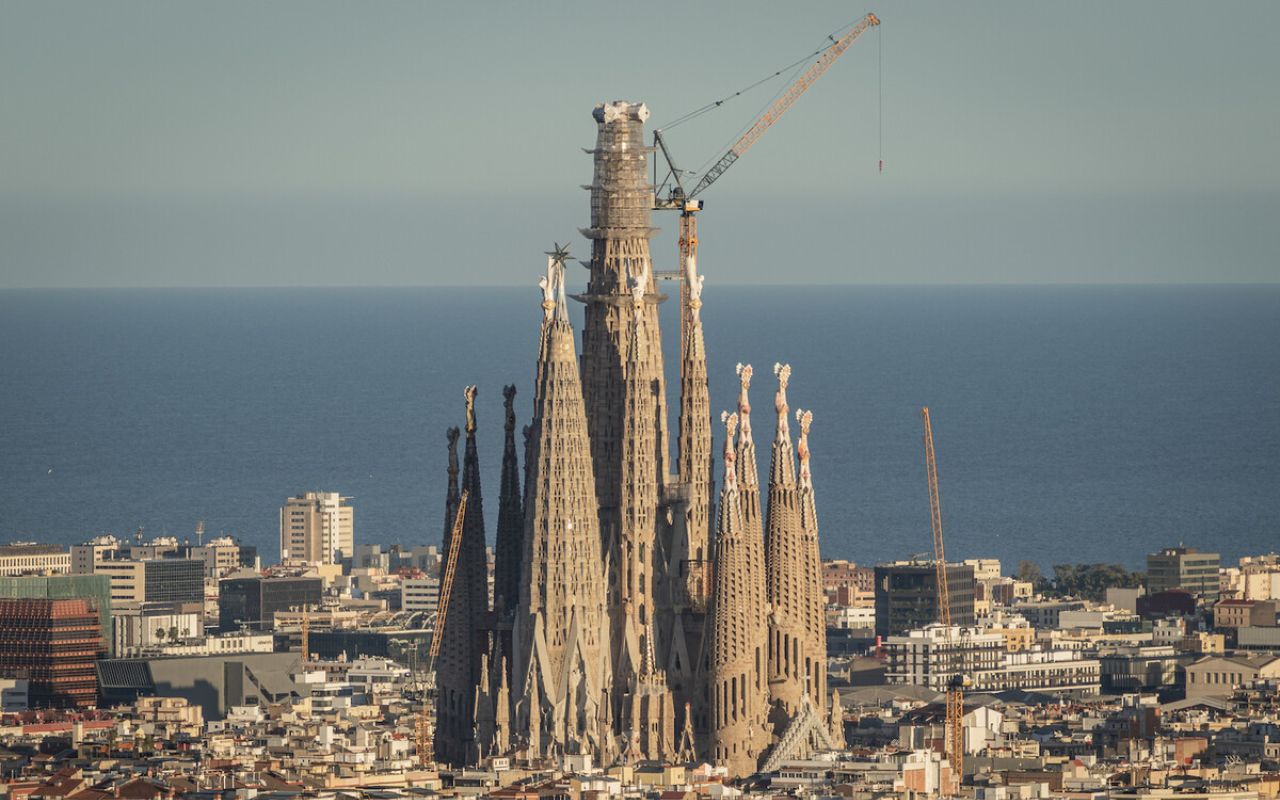
Sagrada Família Basilica Surpasses Ulmer Münster by Reaching 172.5 Meters with the Installation of the Cross on the Tower of Jesus Christ.
The Sagrada Família Church in Barcelona, Spain, reached a historic milestone last Friday (20) by achieving a height of 172.5 meters, officially becoming the tallest church in the world.
This achievement was made possible by the installation of a 17-meter cross at the top of the Tower of Jesus Christ, completed 144 years after the construction began in 1882, following the original design by architect Antoni Gaudí.
The advancement solidifies the basilica as one of the greatest symbols of world architecture and reinforces its importance as a UNESCO World Heritage Site.
-
Friends have been building a small “town” for 30 years to grow old together, with compact houses, a common area, nature surrounding it, and a collective life project designed for friendship, coexistence, and simplicity.

-
This small town in Germany created its own currency 24 years ago, today it circulates millions per year, is accepted in over 300 stores, and the German government allowed all of this to happen under one condition.

-
Curitiba is shrinking and is expected to lose 97,000 residents by 2050, while inland cities in Paraná such as Sarandi, Araucária, and Toledo are experiencing accelerated growth that is changing the entire state’s map.

-
Tourists were poisoned on Everest in a million-dollar fraud scheme involving helicopters that diverted over $19 million and shocked international authorities.


Historic Milestone of the Sagrada Família Church
The new height represents the maximum point — literal and symbolic — of the construction of the Sagrada Família.
With this, the temple definitively surpasses Ulmer Münster in Germany, which stands at 161.53 meters.
Since October of last year, when it exceeded 162 meters, the basilica had already led the ranking, but now it officially consolidates the title.
The Cross Crowning the Tower of Jesus Christ
At the top of the main tower, a four-armed three-dimensional cross was installed, covered in glass and vitrified white ceramic.
The material was chosen to reflect natural light during the day and artificial lighting at night.
Thus, the Sagrada Família gains a striking visual effect, appearing to shine continuously over the urban landscape of Barcelona.

Although the temple is a Spanish icon, the installed cross is the result of an international operation. The structure was manufactured in Germany and transported in parts to Spain.
Subsequently, it was pre-assembled 54 meters above the central nave before being raised by a large crane. Each arm of the cross weighs about 12 tons, requiring rigorous technical planning.
Fidelity to Antoni Gaudí’s Design
The cross design follows the double torsion geometry, a hallmark feature used by Gaudí in the basilica’s internal columns.
Thus, even after more than a century, the Sagrada Família maintains aesthetic and structural coherence with the original vision of the Catalan architect.
Work Still Not Completed
Despite the completion of the six central towers, the Sagrada Família is still not finished. The next challenge will be the construction of the Glory Facade, the last one planned in the project.
This phase involves significant urban interventions, such as the creation of a large staircase and a front square, which may lead to the demolition of residential buildings.
Uncertainties About the Future of the Construction
In addition to residents’ resistance, the progress of this phase depends on negotiations with the Barcelona city hall, especially amid the city’s housing crisis.
Another decisive factor is financing. The work is sustained by private donations and ticket sales, which totaled 4.8 million visitors in 2024.
With no official completion date, the expectation is that the work may extend until 2034, unless new obstacles arise.
With information from Xataka.









Seja o primeiro a reagir!