





 English
  Francês
  Alemão
  Italiano
  Japonês
  Norueguês
  Portuguese
  Spanish
  7 min of reading
  0 comments


After Losses In 1973, Israel Created A Tank With The Engine In The Front To Increase Crew Protection, Prioritizing Survival On The Battlefield.
On October 6, 1973, on Yom Kippur — the holiest day on the Jewish calendar — Egypt and Syria launched a simultaneous surprise attack against Israel. The Israel Defense Forces were caught off guard. In the first 48 hours of fighting, the Israeli armored corps lost an estimated 40% of its tanks on the southern front, destroyed by wire-guided Sagger anti-tank missiles and RPG-7 rockets that the Egyptians mass-distributed among the infantry. The shock was profound. Israel had the best army in the Middle East — and its tanks were catching fire in series.
The Man Who Saw The Problem Up Close
General Israel “Talik” Tal commanded the 84th Armored Brigade in the Six-Day War of 1967, in which Israel destroyed the Egyptian forces in the Sinai in less than a week. He knew armored vehicles like few others.
And it was exactly for this reason that, upon analyzing the wreckage of the Yom Kippur War, Tal reached a conclusion that contradicted decades of tank design doctrine: the number one priority was not firepower or mobility — it was bringing the soldiers back alive.
-
Brazil presents the first national F-39 Gripen fighter and redefines air defense with technological advancement, job creation, and strengthening of the defense industry on the global stage.
-
The construction of the Polar Ship Almirante Saldanha is progressing ahead of schedule and strengthens Brazil’s presence in Antarctica; the vessel will be 93 meters long, have a two-month autonomy, and technology to face ice.

-
The United States Army has an armored vehicle that reaches speeds of up to 100 km/h, capable of operating normally on different types of terrain and also on asphalt without causing damage; equipped with a 350 hp engine, it can transport up to 9 soldiers — meet the Stryker.
-
Gepard 1A2: the armored vehicle that fires 1,100 rounds per minute and became a shield against drones in Brazil.

In 1970, three years before the war, Tal had already been appointed by the Ministry of Defense to lead the development program for the first entirely Israeli tank. Yom Kippur transformed the project from an industrial ambition into a national urgency.
Why The Engine Was Always At The Back
Any military engineering student learned the same principle: the engine goes in the back. The reason is simple. With the engine in the back, the frontal armor can be thicker, as all the weight is concentrated at the front of the silhouette. The turret is in the center, with wider fields of view.
If the tank is hit in the front — which happens in most combat situations — the crew survives while the hull remains intact. That was the standard for the US M1 Abrams. The German Leopard 2. The British Challenger. The Soviet T-72. All modern tanks worldwide followed this logic.
Tal’s Radical Reversal
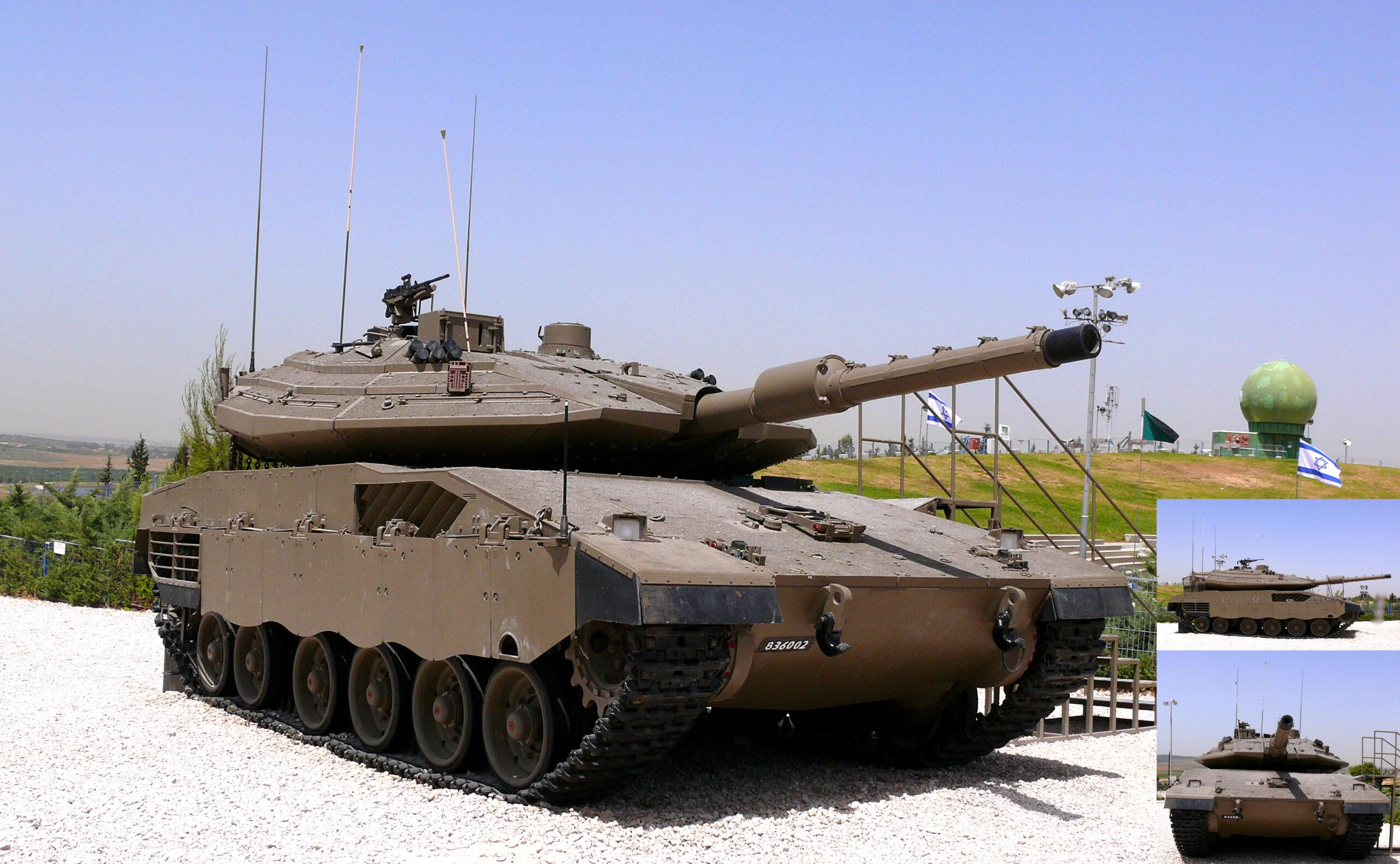
Tal did the opposite. In the Merkava — whose name in Hebrew means “chariot” — the engine and transmission were installed at the front of the hull, next to the driver. At first glance, it seems like a mistake. The engine block is exposed to enemy fire, which always comes from the front. A shot that penetrates the front will destroy the propulsion and immobilize the tank.
But that was exactly Tal’s calculation. If the enemy shoots at the front of the Merkava, the projectile must first pass through the composite armor, then through the massive metal and steel block of the engine before reaching the crew. The engine becomes a second level of protection — an extra layer of tons of iron between the shell and the men.
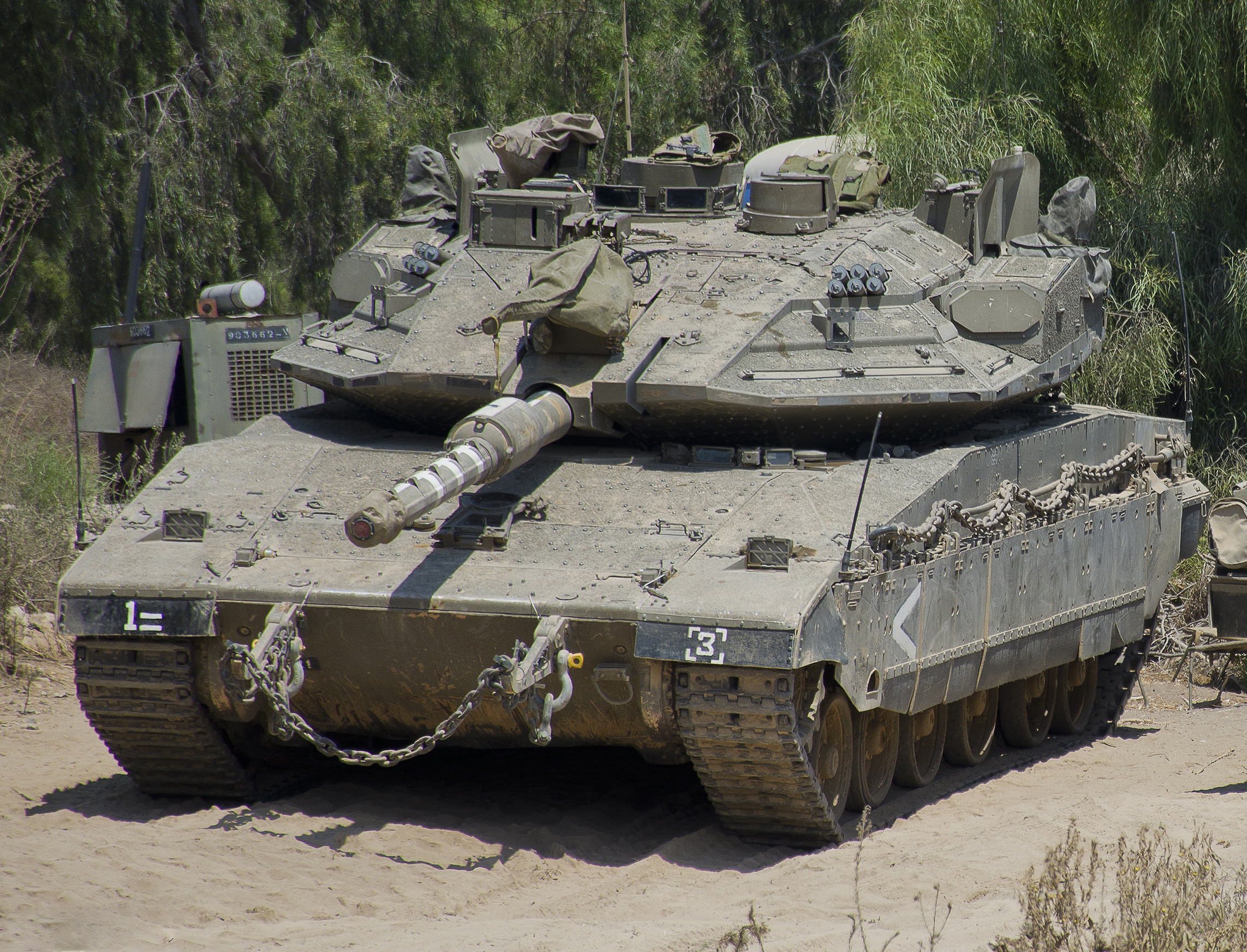
The trade-off is that the tank stops. But the soldiers get out alive. This reversal of priorities reflected a unique demographic reality in Israel: a country of 3 million people in 1973, surrounded by enemies with much larger armies. Every dead soldier weighed differently than in a superpower with 200 million inhabitants.
The Rear Hatch That No One Else Has
The decision to place the engine in the front freed up considerable space at the rear of the hull. Tal took advantage of this space to install a double rear access hatch — an opening that allows the crew to escape under fire without exposing their heads to the enemy.
More than that: the rear compartment can accommodate up to ten infantry soldiers or three wounded on stretchers. The Merkava is the only main battle tank in the world that simultaneously functions as an armored personnel carrier and as an armored ambulance.
During the 1982 Lebanon War, when the accompanying M113s proved too vulnerable for urban terrain, the tanks were improvised into evacuation vehicles — extracting the wounded directly through the rear compartment without needing to exit the protection of the hull. No designer had planned this. The design simply allowed it.
The Baptism Of Fire In 1982
The Merkava Mk 1 officially entered service in December 1979 and saw combat for the first time in June 1982, during the Israeli invasion of Lebanon. Israel deployed 180 units. The result was revealing. In the Bekaa Valley, the Merkavas encountered Syrian T-72 tanks — then considered cutting-edge equipment — and the Israeli units claimed superiority in all direct engagements. More importantly: the crew survival data showed the concrete effect of Tal’s design.
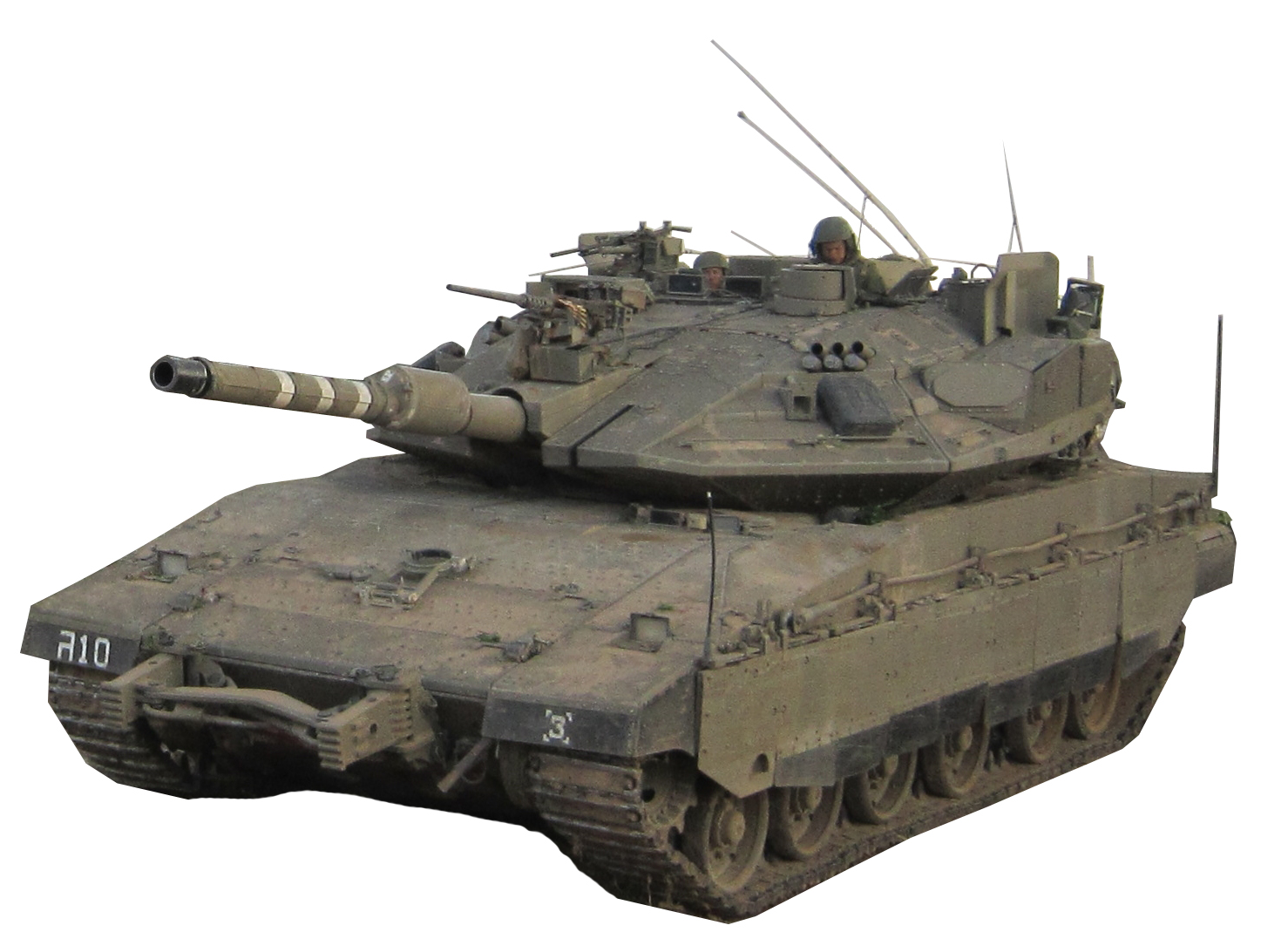
The internal bulletin of the Armored Corps compared consecutive wars: in the Yom Kippur War of 1973, each tank penetrated by a missile or rocket killed an average of 2 crew members. In the 1982 Lebanon War, with the Merkava Mk 1, that number dropped to 1.5. In the Second Lebanon War in 2006, with the Merkava Mk 4, it reached 1. In 30 years of improvements, while anti-tank missiles became progressively more lethal, the Merkava continued to reduce the number of deaths per penetration.
Four Generations, One Philosophy
The Merkava evolved through four main versions over 45 years, each incorporating lessons from real combat. The Mk 2, delivered starting in 1983, improved the fire control system and added reactive armor. The Mk 3, introduced in 1990, replaced the 105mm cannon with a 120mm — aligning Israel with NATO standards — and installed a more powerful 1,200-horsepower engine.
The Mk 4, in service since 2004, was the most radical leap. In addition to modular composite armor that can be replaced in the field, it was the first tank in the world to be serially equipped with the Trophy active protection system — developed by the Israeli company Rafael Advanced Defense Systems.
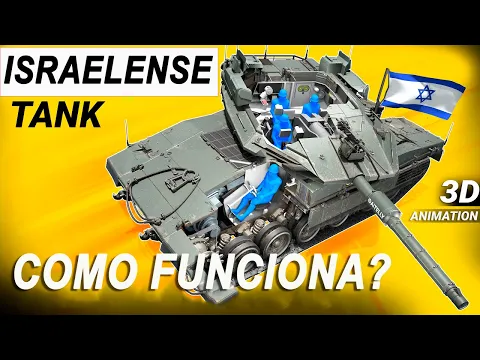

The Trophy uses four radar antennas to create a 360-degree protection bubble around the tank. When it detects a missile or RPG on a collision trajectory, it calculates the interception point and fires a metal charge that destroys the projectile in the air, meters away from the hull.
On March 1, 2011, a Merkava Mk 4 equipped with Trophy intercepted a missile fired from the Gaza Strip for the first time in real combat — the operational debut of an active protection system on any tank in the world.
During Operation Protective Edge in 2014, the Trophy successfully intercepted more than a dozen anti-tank missiles in three weeks of intense urban combat, with not a single penetration in the protected tanks.
Why No One Copied
Since 1979, the Merkava has been the only main battle tank in service in the world with a front engine. It is not for lack of knowledge. Every army on the planet knows what Israel has done. The reason no one has copied is that the trade-off Tal accepted — mobility for crew survival — does not make sense for most military doctrines.
A tank immobilized by a frontal shot to the engine is a serious tactical weakness in any maneuver warfare scenario, like the one NATO planned against a Soviet invasion of the plains of Germany. In a retreat under fire, a tank that stops is a captured or destroyed tank.
Israel never planned for retreat wars. Each conflict has been fought on immediate territory or borders, where mobility matters less than in operations spanning hundreds of kilometers. The Israeli solution was Israeli — developed by a small country, with finite human resources, for a specific battlefield.
The Merkava 4 Barak And The Limits Of Design
The latest version in service, the Merkava Mk 4 Barak, was introduced in 2023 with integrated artificial intelligence for target acquisition and 360-degree camera coverage without blind spots. It weighs 66 tons, mounts a 120mm cannon, reaches 64 km/h, and carries a V12 diesel engine of 1,500 horsepower developed by the German MTU and manufactured under license.
But Gaza tested Tal’s design in ways that 1982 never did. In November 2024, a Merkava Mk 4 Barak was destroyed by a large-scale improvised explosive device in northern Gaza. Three of the four crew members died.
The only survivor was the driver — sitting next to the engine compartment, in the position Tal had favored half a century earlier. The engine in the front did not save the tank. But it separated the survivor from the dead exactly as the design intended.
A Question Without An Answer In The Manual
The Leopard 2, the Abrams, the Challenger, and the T-90 will continue with engines in the back. The Merkava will continue with the engine in the front. Fifty years after Israel Tal reversed the conventional tank diagram, no other country has reached the same conclusion he did — or accepted the same trade-off.
The difference is not one of engineering. It is of human arithmetic: what is the acceptable cost of bringing a soldier back? Tal’s answer was to put that in the tank’s design. And to build the only modern armored vehicle in the world that answers that question differently from all the others.









-

-

2 pessoas reagiram a isso.