





 English
  Francês
  Alemão
  Italiano
  Japonês
  Norueguês
  Portuguese
  Spanish
  4 min of reading
  0 comments


The Chrysler TV-8 Was An Experimental Nuclear Tank Created By The U.S. In The 1950s With A Capsule Tower That Combined Crew, Engine, And Armament In A Single Module.
In the 1950s, when the Cold War dominated international politics, military engineers began to imagine what future weapons would look like. It was in this context that the Chrysler TV-8 emerged, an experimental tank project developed for the United States Army.
The proposal was radical. Instead of the traditional separate hull and turret design, the engineers imagined a vehicle in which nearly all systems would be housed within a large capsule-shaped turret. This structure would contain the engine, the crew, ammunition, and electronic equipment.
The idea was part of a period in which many military projects sought to incorporate technologies from the so-called “atomic age”, including compact nuclear reactors capable of generating power for military vehicles.
-
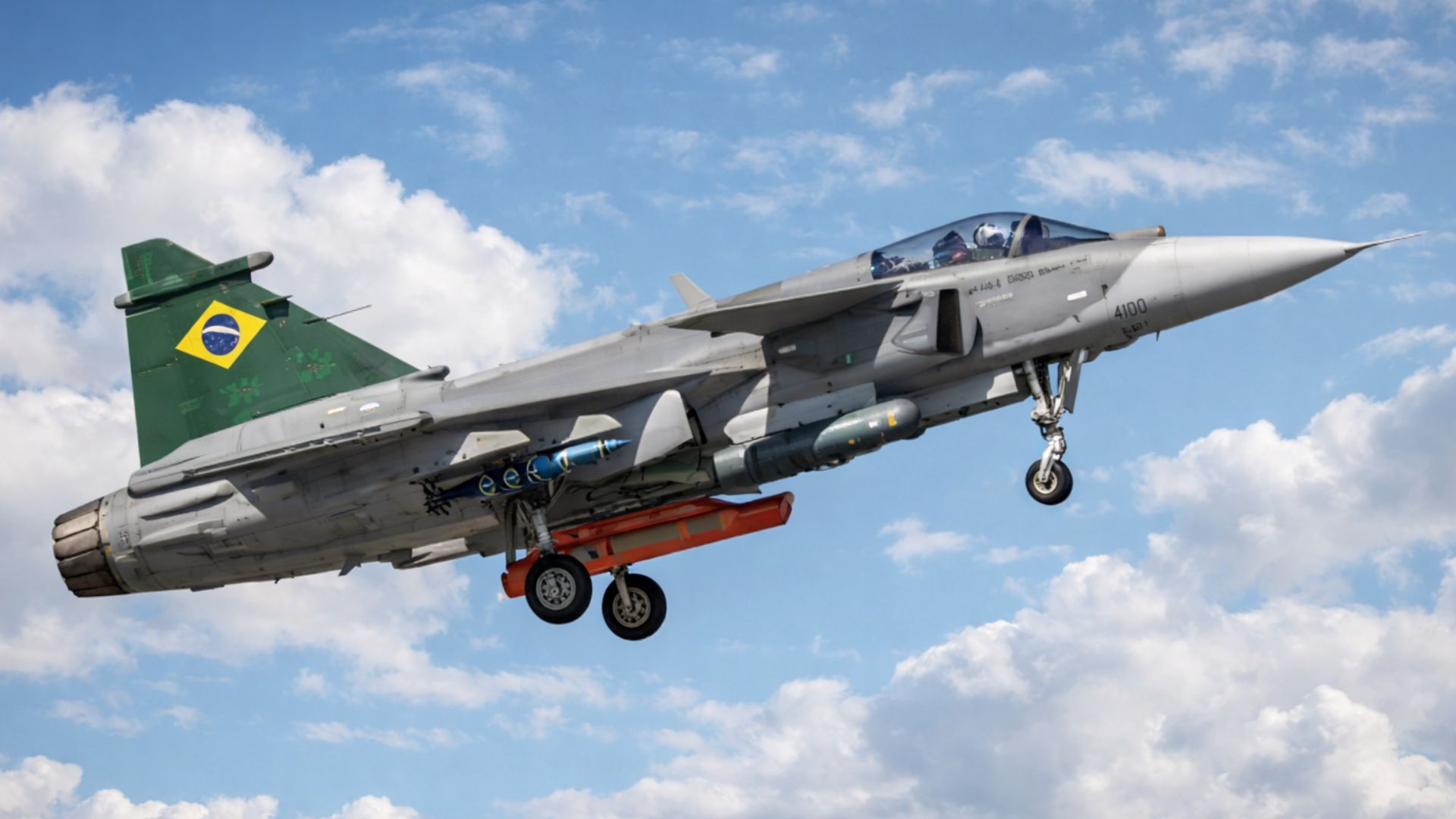
Brazil presents the first national F-39 Gripen fighter and redefines air defense with technological advancement, job creation, and strengthening of the defense industry on the global stage.
-
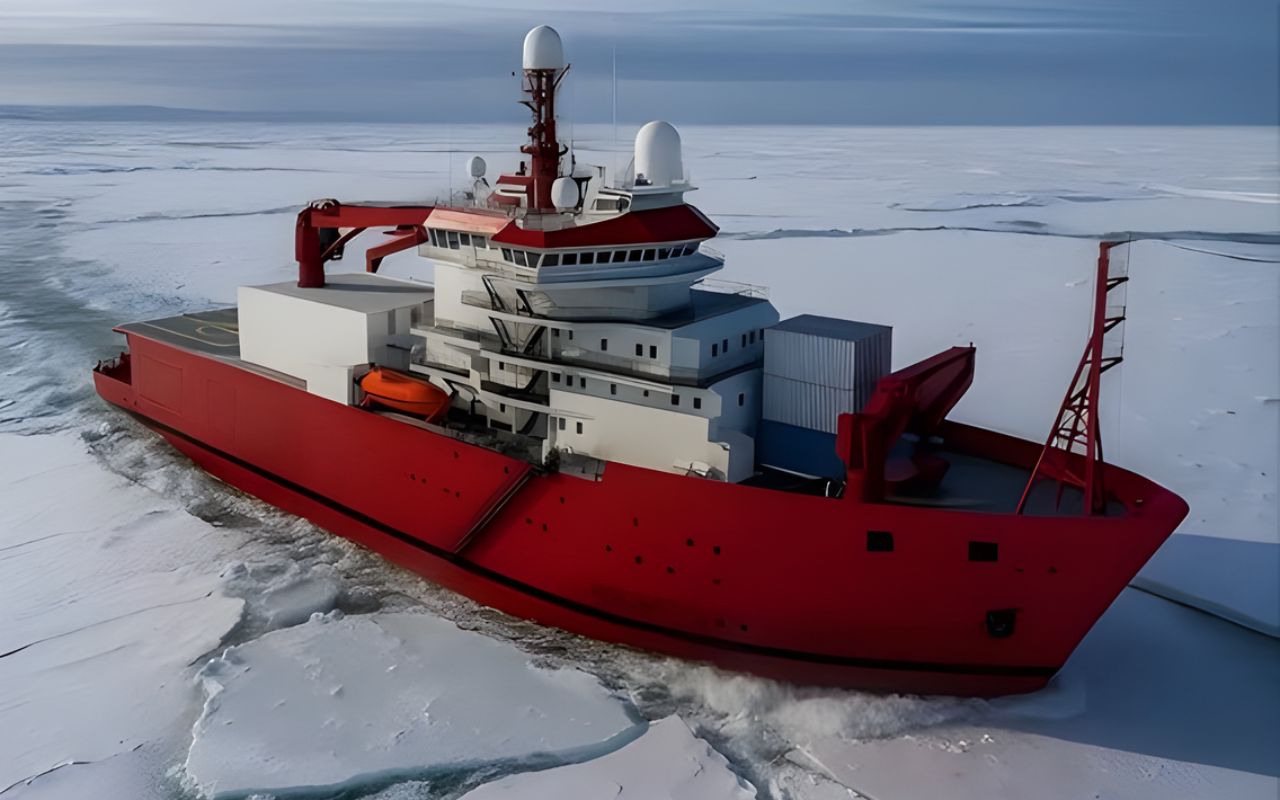
The construction of the Polar Ship Almirante Saldanha is progressing ahead of schedule and strengthens Brazil’s presence in Antarctica; the vessel will be 93 meters long, have a two-month autonomy, and technology to face ice.
-
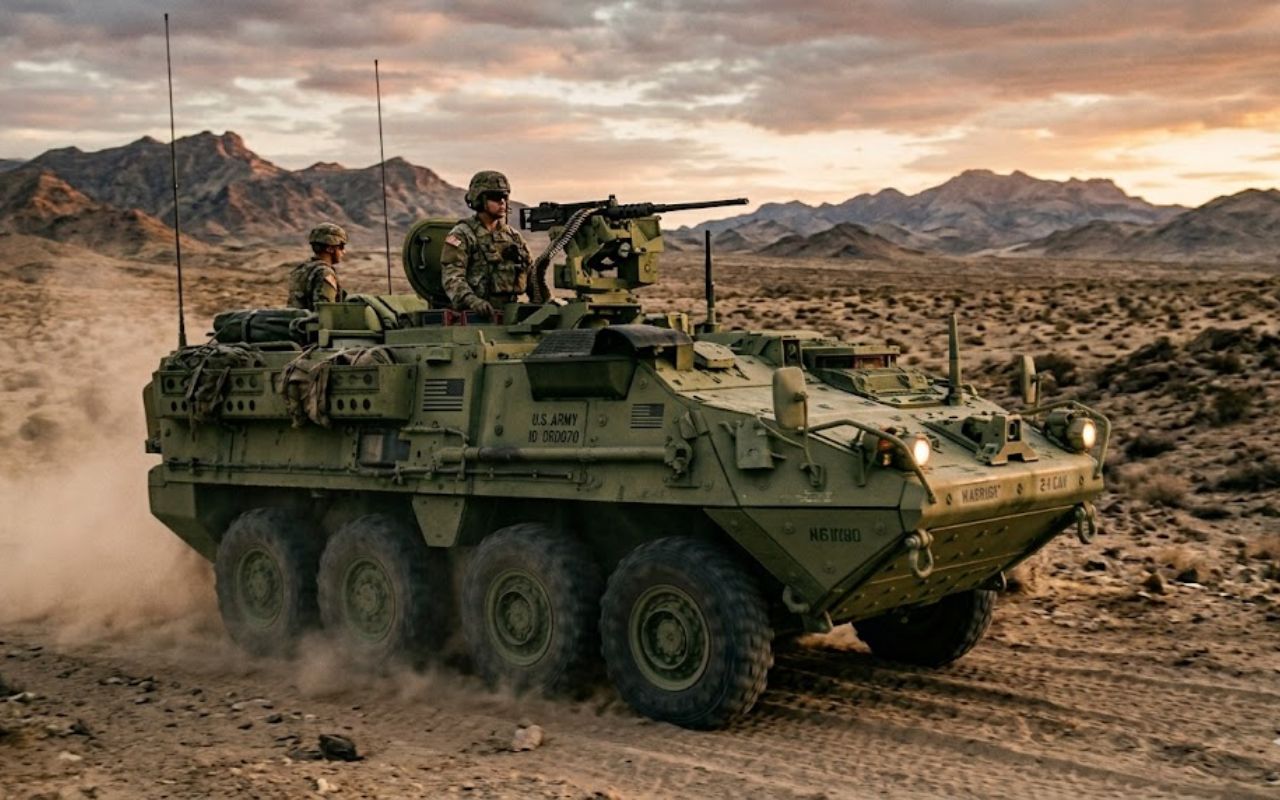
The United States Army has an armored vehicle that reaches speeds of up to 100 km/h, capable of operating normally on different types of terrain and also on asphalt without causing damage; equipped with a 350 hp engine, it can transport up to 9 soldiers — meet the Stryker.
-
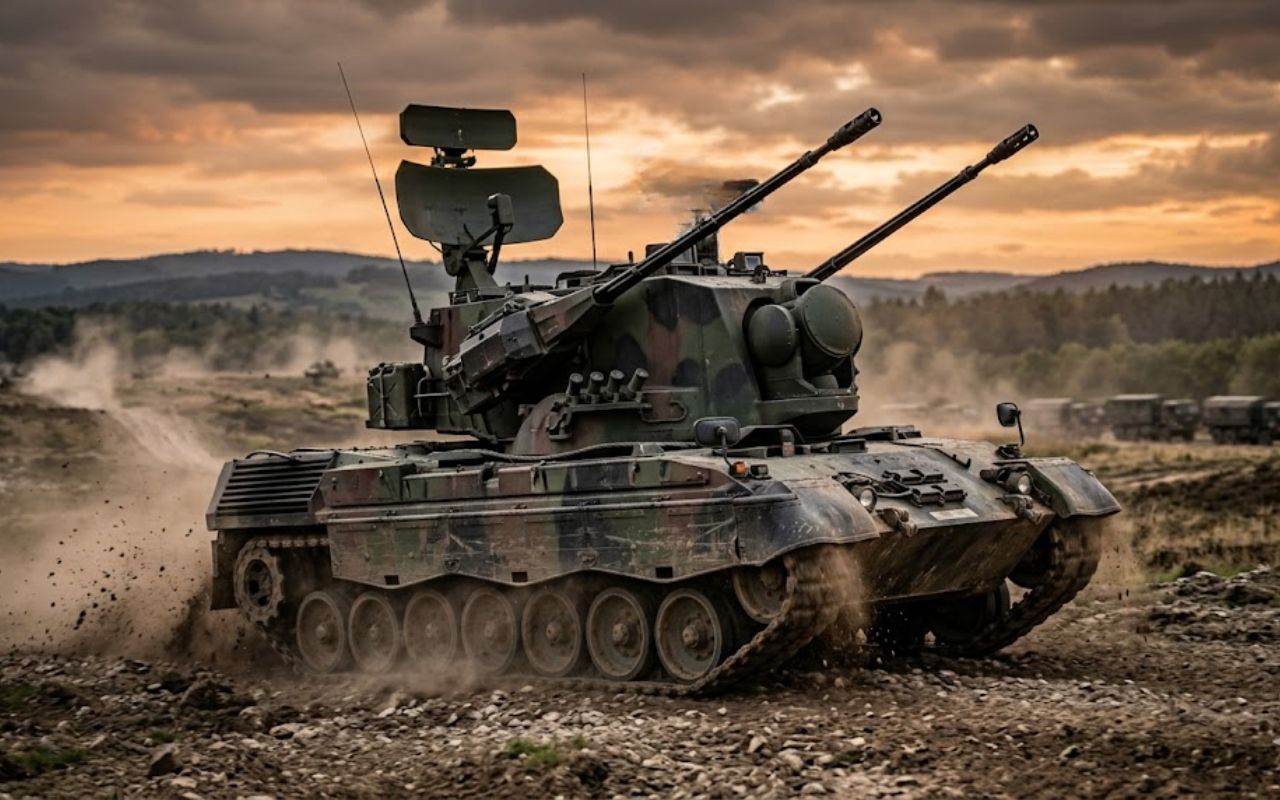
Gepard 1A2: the armored vehicle that fires 1,100 rounds per minute and became a shield against drones in Brazil.

The Capsule Tower That Concentrated The Entire Tank
The design of the Chrysler TV-8 was completely different from traditional tanks. While most armored vehicles divide their systems between hull and turret, in the TV-8 the giant turret functioned almost as the entire tank. The lower chassis served only for mobility and support. Inside this armored capsule would be: a crew of four soldiers, a propulsion system, armament, ammunition, and electrical systems.
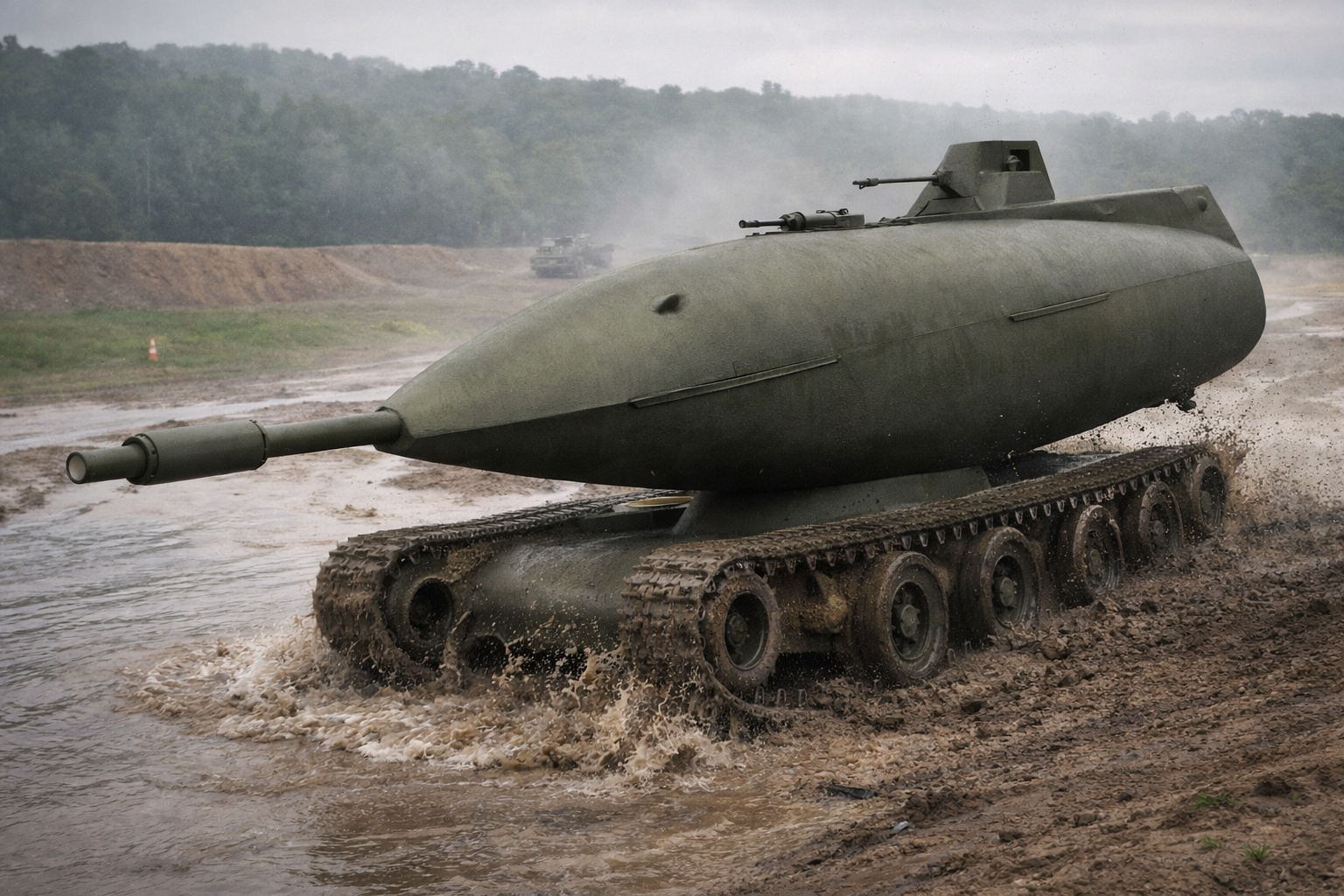
This architecture even allowed for separating the turret from the chassis for air transport, something the military considered useful in rapid mobilization scenarios during the Cold War. The rounded shape of the capsule also had an important function: to increase resistance to explosions and reduce the impact of shock waves.
An Amphibious Tank Capable Of Floating
Another interesting aspect of the project was the amphibious capability. The capsule tower was fully sealed and would function as a floating hull. This would allow the tank to cross rivers and flooded areas without needing bridges or engineering vehicles.
To move in water, the vehicle would utilize water jet propulsion, similar to the system used in some boats. In theory, this would transform the TV-8 into an extremely versatile armored vehicle, capable of operating in varied environments.
Planned Armament For The Chrysler TV-8
Despite its futuristic design, the armament of the TV-8 followed common standards of the time. The vehicle would be equipped with a 90 mm main gun, capable of engaging enemy tanks and destroying fortifications. Additionally, secondary armaments were planned, including coaxial machine guns of 7.62 mm and a heavy machine gun of 12.7 mm.
Another advanced detail was the use of camera observation systems, allowing the crew to operate with greater protection inside the turret.
The Boldest Plan: A Nuclear-Powered Tank
The most ambitious element of the Chrysler TV-8 was its potential power source. Engineers studied various propulsion options, including conventional engines and turbines. But the boldest proposal involved a small nuclear reactor installed within the capsule tower.
This reactor would produce heat to generate steam, which in turn would drive the tank’s propulsion system. The advantage would be enormous autonomy. Estimates indicated that a nuclear tank could travel about 4,000 miles (over 6,400 kilometers) without refueling. In practice, this would allow the vehicle to cover long distances without relying on traditional fuel.
The Risks Of Placing A Nuclear Reactor In A Tank
Despite the ambition of the project, the idea raised serious issues. The main risk was radioactive contamination on the battlefield. If the tank were hit and the reactor damaged, radiation could endanger nearby troops.
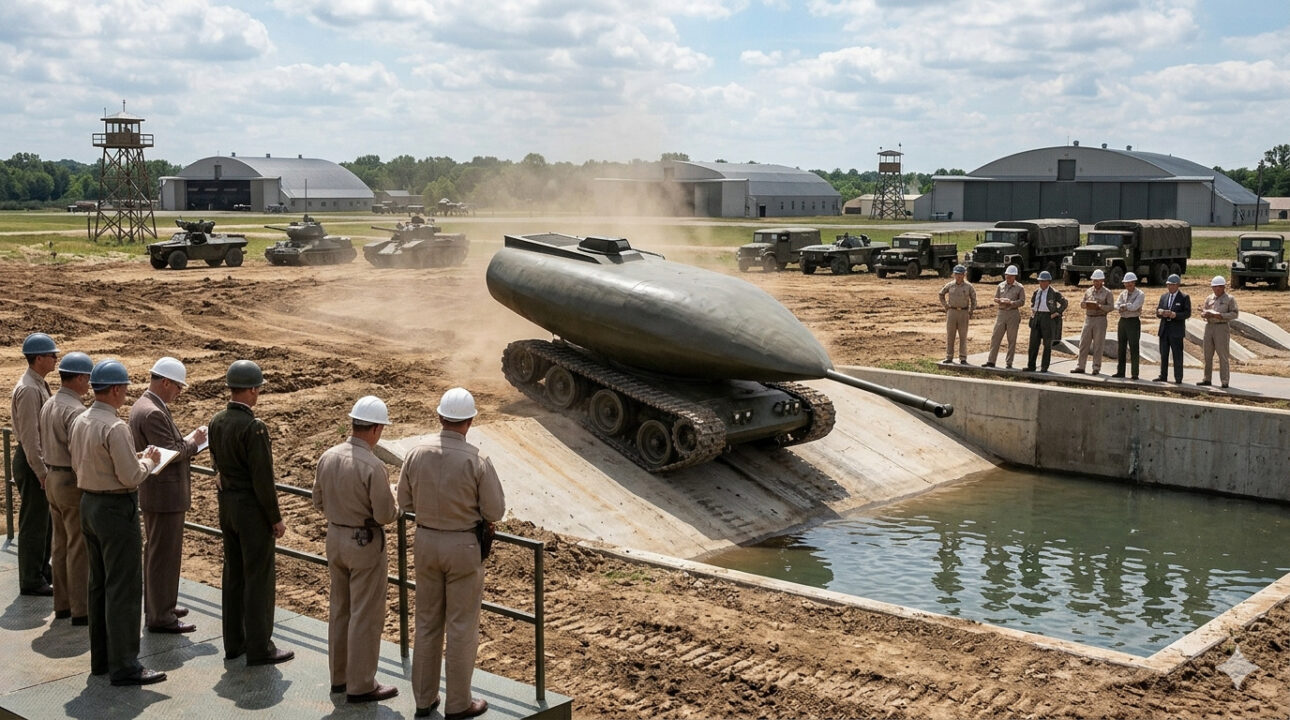
Another challenge was to protect the crew from the radiation produced by the reactor itself. This would require additional shielding, increasing the vehicle’s weight. Furthermore, maintaining a nuclear reactor in a mobile military vehicle would be extremely complex. These factors made the military question whether the project was truly worth pursuing.
Why The Project Was Abandoned
After detailed technical studies, the United States Army decided to cancel the Chrysler TV-8. The project was never built on a full scale. Only conceptual models and engineering studies were produced.
The reasons for the cancellation included radiation risks, technical complexity, high costs, and doubts about the real battlefield advantage. Thus, the nuclear tank ended up becoming just another experimental project of the Cold War.
A Symbol Of Military Engineering From The Atomic Age
Even without entering production, the Chrysler TV-8 remains one of the most curious projects in armored vehicle history. It represents a period when scientists and engineers believed that nuclear energy could revolutionize nearly all types of technology, including military vehicles.
In the 1950s, various similar ideas emerged, such as nuclear airplanes, nuclear locomotives, and submarines with near-unlimited autonomy. The Chrysler TV-8 never made it beyond the drawing board, but it continues to be remembered as one of the strangest and most ambitious tanks ever conceived during the Cold War.









Seja o primeiro a reagir!