





 Portuguese
  English
  Spanish
  4 min of reading
  0 comments


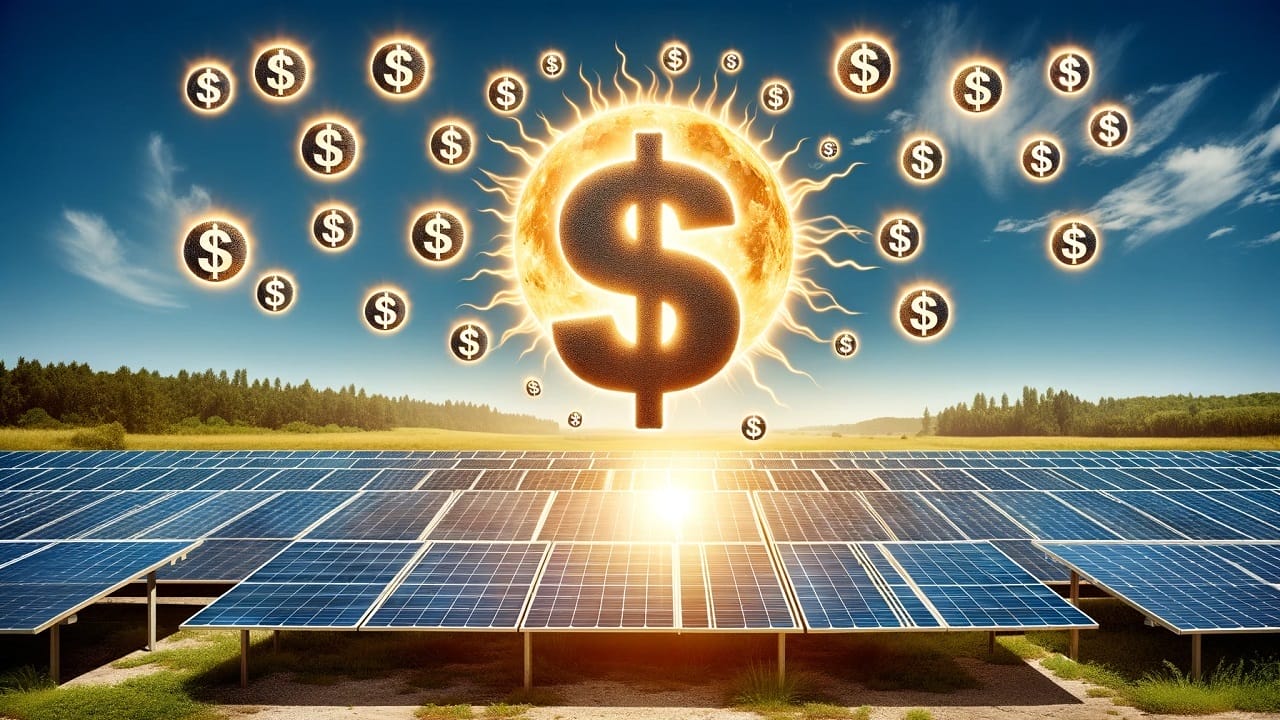
Discover How Solar Energy Taxation in 2024 Affects Your Investment and Get Ready to Make the Best Decision.
In effect since 2023, the Distribution System Usage Fee (TUSD Wire B) or as it has become popularly known: Sun Tax, impacts the solar photovoltaic energy market. The fee, which is applied to distributed generation, can increase electricity bills and reduce the attractiveness of solar energy for some consumers. This article explains the changes in TUSD Wire B, its effects in different scenarios, and how to prepare for the new energy landscape, based on data from the Brazilian Association of Photovoltaic Solar Energy (ABSOLAR).
Understand How the Sun Tax Works in 2024


To begin with, it is essential to understand the context in which the Law 14.300 2022 was created. Given that it was based on this law that we had a recent change on January 1, 2024, in the energy tariff.
The new Legal Framework brought legal security for the solar photovoltaic sector, in fact, for the distributed generation sector, but we cannot deny that there was also an impactful change due to the charge of part of the TUSD Wire B in the energy tariff injected into the concessionaire’s power grid.
-
Brazilian city gains industrial hub for 85 companies that is equivalent to 55 football fields.
-
Peugeot and Citroën factory in Argentina cuts production by half and opens a layoff program for more than 2,000 employees after Brazil drastically harmed purchases of Argentine vehicles.

-
A Brazilian city gains a factory worth R$ 300 million with the capacity to process 200 thousand tons of wheat per year, a mill of 660 tons per day, silos for 42 thousand tons, and an industrial area of 276 thousand m².

-
Havan will leave the shopping mall in Blumenau to inaugurate something the chain has never done before: a megastore in half-timbered style in the Historic Center of the city, which is expected to be ready in May and change the landscape of local retail.


To understand Wire B, one must first comprehend how the electricity tariff is formed. The tariff consists of two components, the first being TE, or energy tariff, which refers to the generated energy, and the second component is what we call TUSD, the tariff for the use of the distribution system, which pertains to the transportation of energy to the consumer.
The TE component of the energy tariff includes energy charges, as well as other charges and losses in the electrical system. In the TUSD component, there are charges, losses, and the so-called Wire A, which represents on average 6% of the total tariff.
Wire B, which represents the amount charged for transporting energy in the distribution network, has an average weight of 28% of the energy tariff.
What Changes Were Brought About by the New Solar Energy Tax?
In addition to the details mentioned above, it is also necessary to know that the sun taxation law determined that all distributed generation projects filed after January 7, 2023, will be classified as GD2 and GD3.
In practical terms, this means that solar energy projects classified as GD2 will pay for the transportation of energy injected into the distribution grid, represented in the energy tariff as Wire B, and this will be progressively discounted over the years.
This discount works as follows: in 2023, a charge of 15% of Wire B was initiated, now, in 2024 this percentage has risen to 30%. In 2025 it will be charged at 45%, 2026 at 60%, and so on. Therefore, the change in sun taxation in 2024 was an increase of an additional 15% in the charge of Wire B, rising from 15% to 30%.
Example of How the New Taxation Will Work
To facilitate understanding of the impact of this change on solar energy installations, we provide a small example. Knowing that Wire B has an average weight of 28% on the energy tariff throughout Brazil, the 30% discount imposed by the sun tax in 2024 on Wire B will result in an 8.4% devaluation of the energy injected into the power grid.
Thus, considering that the kWh hypothetically costs R$ 1, for example, in 2023 it was possible to discount only 95 cents with excess energy, that is, a payment related to Wire B of approximately 4 cents. In 2024, for each R$ 1 charged for kWh consumed, it is possible to discount 91 cents with the excess solar energy, paying approximately 8 cents for each kWh discounted.
Suppose the kWh from your utility costs R$ 1, also consider that your monthly consumption is 1,800 kWh for the month and your solar energy system injects 2,000 kWh of excess electricity into the power grid. Thus, 1,800 kW of this excess energy will be used to offset the consumption.
This will result in a charge of R$ 1,800 on your electricity bill. Then you will use 1,800 kW of the injected excess energy, multiplied by the energy tariff with the discount of Wire B which is 91 cents. This results in a balance of R$ 1,648.8 to offset the consumed amount, in this case, you will pay R$ 151.20 to the utility.








Seja o primeiro a reagir!