





 Portuguese
  English
  Spanish
  9 min of reading
  0 comments


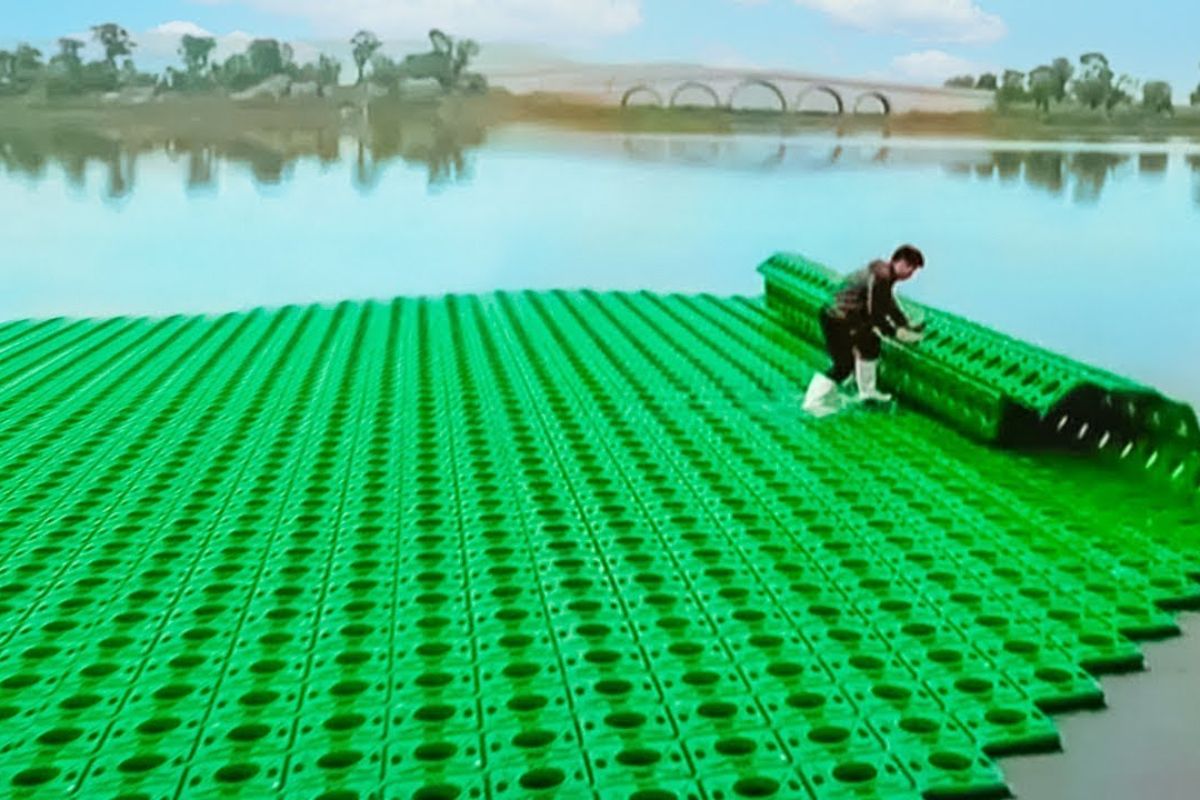
In The Routine, Agricultural Techniques Combine Simple Inventions and Compact Equipment: Feed Grinder for Corn Silage, Manual Silo Packaging, Scythe Cutter, Grader, and Root Removal. In Planting, Rice Planters and Floating Rice Emerge. In Harvesting, Hazelnut Harvesters, OB 50, and OB 70 Come In.
The agricultural technique presented in the survey brings together inventions that may seem improvised but follow a logic of efficiency: reducing time, simplifying tasks, and lowering costs with a sequence of machines, grinders, and manual tools aimed at daily work in the field.
From preparing feed and silage to planting in difficult areas, the list covers compact solutions for digging, cutting, transplanting, and harvesting. The set also includes grinding plant residues, transplanting with paper pot, and an adjustable manual cover layer for different beds.
What Defines the Described Agricultural Technique

The agricultural technique begins with a simple observation: technology and inventions in agriculture save time by turning repetitive tasks into predictable routines.
-
Son of a seamstress from the rural area of Ceará who did not speak English wins a scholarship of over 2 million reais at Williams College, one of the top 10 universities in the United States, covering everything including dormitory, meals, and annual trips to Brazil.

-
Bill Gates revealed that the true secret behind every great achievement is not a brilliant leap but rather small improvements repeated over the years, and the data from his own career and the fight against climate change prove that he is right.

-
With 22 thousand tons of steel, a height nearly three times greater than the Eiffel Tower, and a cost of R$ 1.6 billion, China is building the highest bridge on the planet over a colossal canyon, reducing a crossing time of over 2 hours to just over 2 minutes.

-
With more than 635,000 doctors, Brazil sees competition increasing in large cities, and recent graduates are competing for shifts at an accelerated pace while the countryside still faces shortages.


The survey gathers examples where the machine is small, the drive is direct, and the operator maintains control of the process from start to finish without relying on large structures, complex workshops, or numerous teams.
The sequence also makes it clear a method choice.
Instead of concentrating everything in a single expensive piece of equipment, the agricultural technique presents itself as a chain of specific solutions: a grinder for feed, a manual package for silage, a cutter for vegetation, a grader for trenches, a mini machine for roots, and so on.
The result is a rural production line on a reduced scale, focusing on operational efficiency.
Throughout the set, the agricultural technique is organized in stages.
First, grind and store animal feed.
Then, cut vegetation and clear space. Next, carry out planting and transplanting with precision.
Finally, harvest and separate what matters, with minimal mess and losses along the way.
It’s a logic that doesn’t eliminate work but tries to reduce wasted time between tasks.
Grind Feed and Store Silage with Manual Packaging

The first block of the agricultural technique highlights a feed grinder associated with corn silage.
The machine used to make silage is presented as capable of performing grinding well, a stage that determines the quality of the material to be stored.
Next comes the manual component: the packaging, described as a low-cost alternative to put the silage in a usable and storable condition.
The manual silage bagger is described as ideal for packaging and storing silage quantities easily and practically, with low cost and high performance.
By placing the packaging next to the grinder, the survey points out a detail of routine: grinding without being able to store halts the process; storing without grinding reduces efficiency.
The agricultural technique tries to align both ends.
Another possible reading is of scale. The manual packaging appears as a response to situations where the volume does not justify industrial solutions.
Within the agricultural technique, this type of invention operates as a complement to a larger machine or as the main tool on smaller properties, where the priority is to maintain predictability and reduce waste.
Scythe Cutter, Grader, and Root Removal

The list includes a scythe cutter, presented as a fun version of cutting grass.
The focus is on functionality: cutting vegetation quickly, reducing the time spent on maintaining areas and clearing paths.
Within the agricultural technique, the cutter joins other supporting inventions that tackle wasted time in cleaning and preparation services.
Next comes the grader, described as small and practical for digging trenches for any job.
The relevant detail is portability: the agricultural technique points to equipment that fits in narrow spaces and can be easily moved, helping the farmer switch tasks on the same day without large preparations.
The same logic appears in the removal of tree roots. The survey states that it is very difficult to remove roots, but very easy for a mini machine.
It is a difference in approach: instead of increasing labor, the agricultural technique uses mechanical inventions to shorten a task that is typically slow, heavy, and subject to variation in effort, depending on the type of soil and the size of the root system.
Planting in Difficult Fields and the Rice Planter
In the planting axis, the rice planter appears, described as capable of performing practical planting in difficult fields.
The highlight is the adaptation to less predictable environments, where the terrain imposes resistance, and movement is limited.
In these scenarios, a planting machine tends to standardize movements, reduce rework, and make the outcome more consistent.
Planting emerges as the stage where the agricultural technique connects soil preparation, logistics of seedlings, and spacing control.
By mentioning the planter, the survey points a direction: the gain in efficiency depends not only on power but on well-controlled repetition.
In practice, this means carrying out the same action at the same pace, with less variation between one section and another.
Another aspect is the predictability of the schedule.
Planting is not just putting the seedling in the ground; it’s ensuring that the sequence continues, that subsequent management is possible, and that harvesting arrives on a controllable calendar.
The agricultural technique uses the machine as an instrument of regularity, not as a spectacle.
Floating Rice and the Use of Water Areas
The agricultural technique also incorporates technology for floating rice planting.
The report claims that China has a large water area and that floating rice cultivation could become a new farming model, adding value to increased food income.
The central point is the expansion of production space: when water becomes useful area, planting starts to occupy territory that would normally be seen only as a limit.
Besides production, the survey states that artificial floating islands similar to the system contribute as habitats for birds and fish.
This observation shifts the focus. Planting ceases to be just an occupation of the soil and starts to engage with water, the environment, and circulation of life around the cultivation.
In the logic of agricultural technique, floating rice enters as an example of how inventions can redefine what constitutes the field.
Instead of requiring firm land, the described method operates over water, suggesting a model where the cultivation infrastructure moves and adapts to the medium.
Harvesting with Hazelnut Harvester and OB 50 and OB 70 Harvesters
In the harvesting stage, the hazelnut harvesting machine comes in, described as easy to use and with a collective performance considered very good.
A precise data appears: up to 99% of soil or dust is not collected, indicating a focus on separating the product from dirt.
In a harvesting process, this detail changes logistics because it reduces the need for subsequent cleaning and sorting.
The set also includes the OB 50 and OB 70 fruit harvesters, pointed out as the smallest and cheapest fruit harvesting machines in the world.
The agricultural technique, here, emphasizes miniaturization: a smaller machine tends to fit in areas that large equipment can’t reach, in addition to lowering entry barriers for those needing to mechanize harvesting without migrating to a large industrial structure.
There is also an efficiency point that runs throughout the survey: harvesting is separating. The agricultural technique does not treat harvesting as merely plucking from the plant but as collecting the desired product and leaving behind what does not matter.
Therefore, the description of the hazelnut machine emphasizes low soil or dust collection, and the mention of the OB harvesters reinforces the focus on dedicated machines.
Grinding Plant Residues and the BIO 90
Another point of the agricultural technique is the grinding of plant residues. The BIO 90 grinding unit is presented as the ideal synthesis of various organic and plant waste grinding system solutions.
Here, the grinder ceases to be just a tool for feed and enters as an instrument for biomass management, with a direct impact on cleaning and organizing the area.
By bringing together feed grinders and waste grinders, the survey sketches a cycle: grind to feed, grind to clean, grind to reorganize.
It is a logic of continuity. What remains from planting and harvesting can return to management as ground residue, reducing volume and facilitating transport and storage.
The agricultural technique, in this section, also exposes the importance of processing.
Whole waste occupies space and hinders circulation; ground waste changes shape, occupies less volume, and can be directed with more control.
Even without detailing final destinations, the material highlights the grinder as a central element of efficiency.
Transplanting with Paper Pot of Spinach
The transplanting of the paper pot of spinach comes in as a solution aimed at small-scale farms. The description emphasizes that farmers can sow in the paper pot and then transplant the plants easily into the soil.
It is a simple invention but one that alters the planting sequence.
In the context of planting, this means reducing friction between the sowing stage and the transfer stage.
Instead of disorganizing the bed or interrupting the routine, transplanting with the paper pot fits as a quick and repeatable procedure.
The agricultural technique values exactly that: performing a task well that, without a method, tends to vary and delay.
The focus on small scale is not casual. The smaller the team, the greater the weight of each work hour.
By presenting transplanting in a paper pot, the survey reinforces the core theme: inventions that seem improvised, but function as gears of a production process.
Manual Cover Layer and Work in Limited Space
The manual cover layer appears as fully adjustable equipment, capable of accommodating a wide variety of bed widths and sizes of mulch.
The material also highlights the fitting in greenhouses, high tunnels, or areas where field space is limited.
In practical terms, this positions the manual machine as a tool of precision, rather than volume.
In the logic of planting, the cover organizes the soil and helps standardize beds.
The agricultural technique, in this section, focuses on fine tuning: an operator, one manual machine, one strip of soil at a time, with control over width and alignment.
This kind of control tends to reduce rework because aligned beds make subsequent tasks faster.
There is also a routine effect. When the application of cover depends on an adjustable procedure, the farmer can alternate widths without changing equipment.
The survey describes this flexibility as part of the value of the invention, especially in confined environments.
What the Sequence Suggests About Costs and Productivity
When examining the complete list, the agricultural technique does not rely on a single invention, but on a chain. A grinder prepares feed.
A machine packages. Another machine cuts. Another digs.
Planting advances with planters and transplanting. Harvesting enters with dedicated machines and compact models. Each piece resolves a specific bottleneck, and the set creates continuity.
The common thread is the reduction of friction in the routine.
Instead of resolving everything with scale, inventions appear as operational shortcuts, especially useful where the budget is tight and the farmer’s time is worth as much as any input.
This strategy also reduces dependence on long operating windows: smaller tasks can be done at the pace of the day, with fewer interruptions.
The described agricultural technique, therefore, does not promise magic.
It depicts how inventions and machines can reorganize a property around repeatable processes: grinding, packaging, cutting, digging, executing planting, transplanting, and harvesting.
The gain is the predictability of each stage and control over what goes in and out of each operation.
The agricultural technique presented brings together simple inventions that fit into concrete tasks: grinding, packaging, cutting, digging, executing planting, transplanting, and harvesting.
The set exposes a recurring point: small changes in machines and methods can shorten the workday without requiring heavy infrastructure.
If you want to apply this logic to small-scale agriculture, the realistic step is to map which stage most hinders your routine and test one invention at a time, starting with the grinder, planting, or harvesting, according to the needs of your field.
Which of these inventions would you implement first in your routine: grinder, planting, or harvesting?







-

-

-

-

-

-

46 pessoas reagiram a isso.