





 Português
  Inglês
  Espanhol
 5 min de leitura
  0 comentários


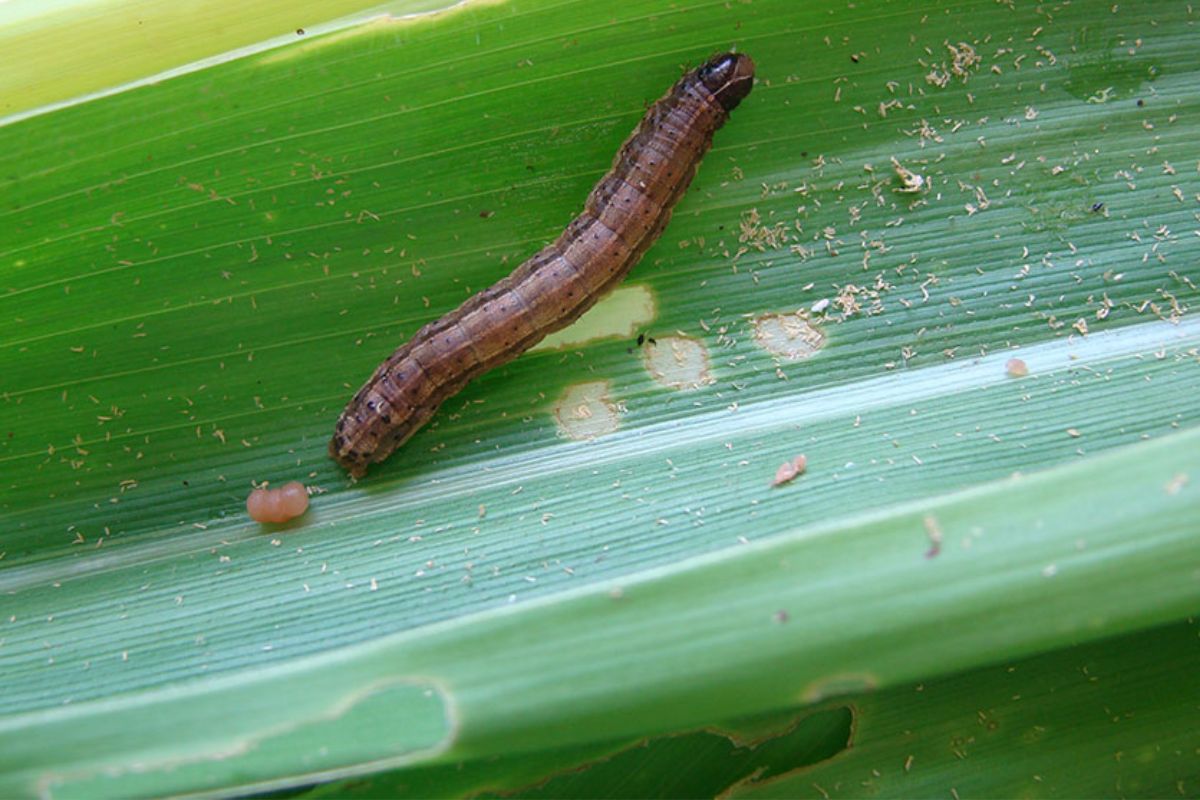
The Corn Borer Caterpillar Can Be More Accurately Identified With the Support of Artificial Intelligence, Which Uses Digital Images to Detect the Pest at Different Stages
The corn borer caterpillar is one of the biggest concerns for farmers growing this cereal.
This insect attacks both the leaves and the ear of the plant and, if not identified in time, can compromise up to 70% of the production.
For those who plant, this means a direct risk of loss and market loss. But a scientific innovation promises to change this scenario: artificial intelligence.
-
A bright yellow mushroom imported from Asia escaped from a cultivation farm in the United States in 2010 and is now aggressively spreading across 25 states, destroying entire communities of native fungi in American forests.

-
Buried under China, a colossal machine weighing 20,000 tons began operating as the largest neutrino detector on the planet and, in just 59 days, surpassed results that science took half a century to achieve.

-
Iran enters the center of a climate alert after the war emitted 5.6 million tons of CO2 in two weeks, surpassing the annual pollution of entire countries.

-
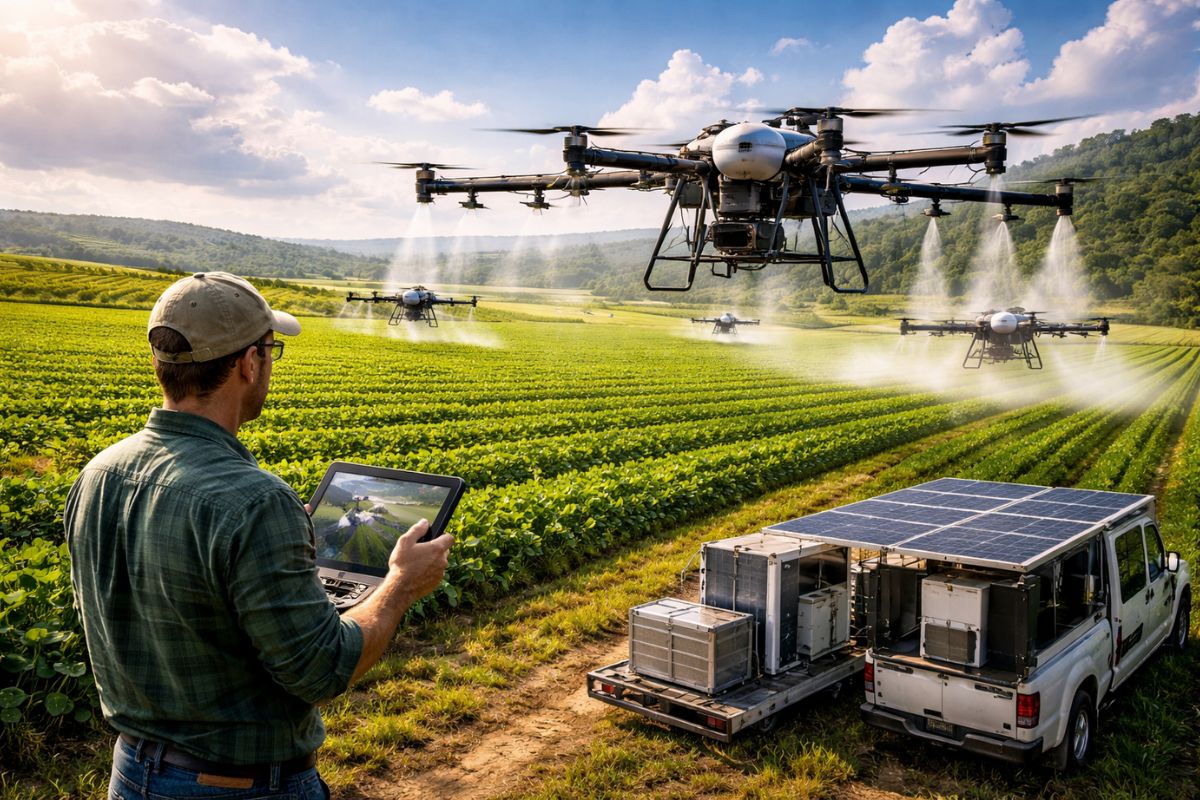
Alone, the producer applies 7,400 hectares with the T100 drone in an optimized structure, replaces the generator with a silent battery, and demonstrates how technology reduces costs, increases productivity, and even challenges the uniport in the field.

Researchers at Embrapa Instrumentação, in São Carlos (SP), created a method that uses image sensors and intelligent algorithms to detect the insect in the field, according to a news article published.
The novelty is that the system can analyze digital images and recognize different stages of the caterpillar, both in the early stages and when it is more developed.
This allows farmers to act more quickly and accurately, avoiding common mistakes when observation relies solely on the human eye.
This study involved the use of simple cameras that can be attached to agricultural machines or even drones. The idea is to facilitate the capture of images while the producer manages the crop.
And no high-cost equipment is necessary: it is enough for the camera to be able to take good quality photos.
The proposal is that, in the future, this system will be integrated directly into the implements used in the daily tasks in the field, reducing costs and increasing efficiency in pest control.
How the Technology With Image Sensors Works
The corn borer caterpillar requires constant monitoring, and this is precisely where artificial intelligence can help.
The method created by Embrapa’s team combines digital image processing, computer vision, multivariate statistics, and machine learning.
In practice, this means that the system can learn from thousands of already registered images and, based on that, recognize patterns of color, texture, and shape that identify the presence of the insect.
According to researcher Paulo Cruvinel, this type of technology uses algorithms that simulate neural networks, known as convolutional neural networks (CNNs), capable of analyzing visual data in detail.
To compare performance, the scientists also tested classifiers known as support vector machines (SVM). The goal was to evaluate which model can provide the highest accuracy in classifying each stage of the pest.
The study analyzed 2,280 images of corn plants, collected from leaves and ears. From this database, the algorithms were trained to recognize five different stages of development of the corn borer caterpillar.
The process involved stages such as image acquisition, preprocessing to remove noise, segmentation to isolate only the insect, and finally, characterization based on geometric and texture information.
With this method, human errors that were once common during identification are reduced.
This is because the final decision does not depend solely on the eye of the technician or agronomist in the field, but on a system that crosses thousands of pieces of information and generates reliable results.
Artificial Intelligence and Machine Learning in the Field
One of the central points of this work is the application of machine learning, which allows the system to evolve with each new image analyzed.
This means that the more data is input, the more the model becomes capable of recognizing the corn borer caterpillar in different situations and cultivation conditions.
In addition to machine learning, the project also utilized deep learning, which is a more advanced branch of this technology.
It works with multi-layer neural networks that can classify patterns in great detail.
It is as if the system had the ability to “see” the insect in the same way that a human does, but with the advantage of not getting tired or losing information from excessive details.
The algorithm was developed in Python, a language widely used in data science and artificial intelligence. This facilitates future adaptations, as Python is now one of the foundations for digital innovation projects in various fields.
According to the researchers, the tests showed good results in accuracy, processing time, and performance of the hardware used.
This paves the way for applications in field equipment, such as smart sprayers, agricultural drones, and even embedded sensors in tractors.
Future Paths for Digital Agriculture
The integration of artificial intelligence in monitoring the corn borer caterpillar is still in its initial stage, but it already points to significant advancements.
The goal of the scientists is that, in the near future, this system will be available in real-time, embedded in drones or unmanned aerial vehicles (UAVs).
This way, it would be possible to map large areas of cultivation without the need for time-consuming manual inspections.
Another possibility is the use of multispectral cameras that enhance the capacity to identify the pest under different lighting conditions and plant growth.
This could increase accuracy and bring more security to farmers who rely on corn as their main source of income.
The study also reinforces the importance of integrating different areas of knowledge, such as computer science, agronomy, and engineering.
This connection creates applicable solutions that help reduce costs, increase productivity, and ensure greater sustainability in food production.
In summary, the corn borer caterpillar remains a challenge for farmers, but artificial intelligence tools show that it is already possible to tackle the problem more efficiently.
With the support of technology, the field gains not only speed in the detection of the pest, but also new ways to protect strategic crops such as corn, soy, and cotton.





Seja o primeiro a reagir!