





 English
  Francês
  Alemão
  Italiano
  Japonês
  Norueguês
  Portuguese
  Spanish
  4 min of reading
  0 comments


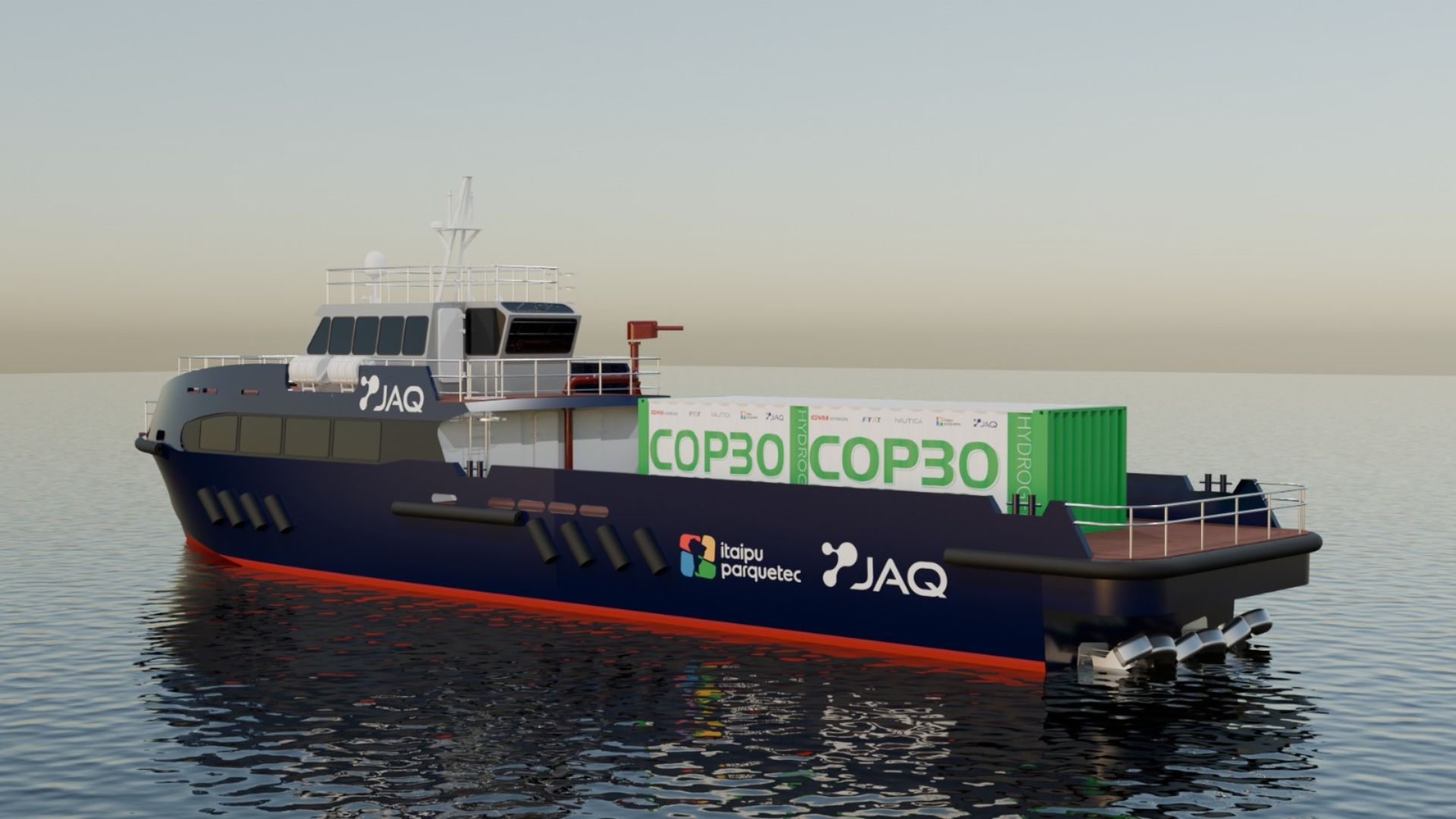
GWM Takes Its Technology to the Nautical Sector and Marks Its Presence at COP30 with Green Hydrogen-Powered Vessels, Reinforcing Innovation, Sustainability, and the Future of Clean Mobility
On Tuesday (23), GWM announced its participation in a revolutionary project that will be officially presented at COP30 in Belém-PA. These are the world’s first green hydrogen-powered vessels, resulting from a collaboration between Grupo Náutica, the JAQ Hydrogen Project, Itaipu Parquetec, and GWM itself. The initiative represents a milestone in the energy transition and the search for real sustainability solutions for the nautical sector.
According to Ernani Paciornik, president of Grupo Náutica and the JAQ Hydrogen Project, the nautical industry shows that it can effectively contribute to environmental preservation. Sailing without causing pollution is a possible reality, and Brazil is ready to lead this sustainable transformation.
GWM Technology: Pioneering Green Hydrogen-Powered Vessels
The project will be presented in two phases. The first vessel, called Explorer H1, will be moored at an artificial floating island during COP30. All hospitality services aboard the vessel — including lighting, climate control, kitchen, laundry, and entertainment systems — will be powered exclusively by green hydrogen, ensuring zero carbon emissions during the event.
-
Renewable energy advances over protected areas in Brazil, and a survey by the Energy Transition Observatory reveals silent impacts that challenge environmental conservation and pressure sensitive traditional territories.

-
Rio Grande do Sul accelerates energy transition: State invests in renewable technologies and consolidates decarbonization strategies and pathways to attract billions in new industrial investments.

-
With 160,000 m² of collectors, an area larger than 20 football fields, Silkeborg, in Denmark, hosts a solar thermal plant that heats 19,500 homes and could become the largest solar heating plant in the world.

-
With earth, bamboo, straw, and lime mortar, a specialist builds a house for just over $460 and draws attention for its cost being much lower than traditional construction.


In addition to the immersive experience on board, the space will include an auditorium for up to 50 guests, reinforcing the scientific and educational character of the initiative. The second phase, scheduled for 2027, will bring the Explorer H2, a vessel capable of producing hydrogen on board, making the system completely self-sufficient.
GWM Hydrogen FTXT: Clean and Strategic Technology
The onboard technology is provided by GWM Hydrogen FTXT, a division specialized in clean solutions from GWM. The system has been developed to enable the use of hydrogen as an energy source in vessels, focusing on efficiency, safety, and scalability.
Davi Lopes, Head of GWM Hydrogen FTXT, emphasizes that this project demonstrates that hydrogen-based technology has the potential to become one of the main pillars of the energy transition across various modes of transportation.
GWM reinforces its global prominence by applying its expertise in sustainable mobility to a new sector: water transportation. The initiative also shows how Brazil can become a global reference in environmental innovation.
Sustainability and Decarbonization: Concrete Goals by 2027
The project for green hydrogen-powered vessels aligns with the UN Sustainable Development Goals (SDGs), especially those related to climate action, clean energy, and innovation. The goal is to significantly reduce carbon emissions by the beginning of 2026, with the introduction of hybrid engines on the vessels.
COP30, which will take place in November 2025, will be the stage for the official presentation of the Explorer H1. The international event is considered the most important forum for discussing climate change and sustainable policies, gathering global leaders, scientists, and companies committed to the planet’s future.
Green Hydrogen as an Energetic Solution for Maritime Transport
According to a report by the International Energy Agency (IEA), the maritime transport sector is responsible for about 3% of global greenhouse gas emissions. Replacing fossil fuels with alternatives like green hydrogen can significantly reduce that impact.
Studies by BloombergNEF indicate that the global green hydrogen market could generate up to US$ 700 billion by 2050, with applications across various sectors, including transportation, industry, and energy generation. GWM’s entry into this segment reinforces the potential for growth and innovation.
JAQ Hydrogen Project: Strategic Collaboration and Environmental Education
The JAQ Hydrogen Project is led by Grupo Náutica and receives technical support from Itaipu Parquetec. The initiative seeks to develop sustainable vessels and promote environmental education through immersive experiences and scientific events.
The debut at the São Paulo Boat Show served as a preview of the presentation at COP30, showcasing technological advancements and the benefits of using hydrogen as a clean energy source to the Brazilian public.
Impact of GWM Technology in Brazil
GWM’s participation and that of Brazilian companies at COP30 reinforces the country’s role as a leader in sustainable solutions. The production of green hydrogen in Brazil has been growing, driven by the abundance of renewable sources such as solar and wind energy.
Additionally, the country has one of the largest freshwater reserves in the world, facilitating electrolysis — the process used to generate hydrogen from water. With investments in infrastructure and technology, Brazil could become one of the main exporters of green hydrogen in the coming years.

COP30 and the Future of Green Hydrogen-Powered Vessels
The debut of hydrogen-powered vessels during COP30 represents a significant advancement in the fight against climate change. With GWM technology, the project shows that it is possible to unite innovation, efficiency, and sustainability in real solutions for water transportation.
The initiative reinforces the importance of strategic partnerships, investments in clean technology, and the role of companies in building a greener future. COP30 will undoubtedly be a milestone in the history of sustainable mobility — and GWM will be at the center of this revolution.









Seja o primeiro a reagir!