





 English
  Francês
  Alemão
  Italiano
  Japonês
  Norueguês
  Portuguese
  Spanish
  2 min of reading
  0 comments


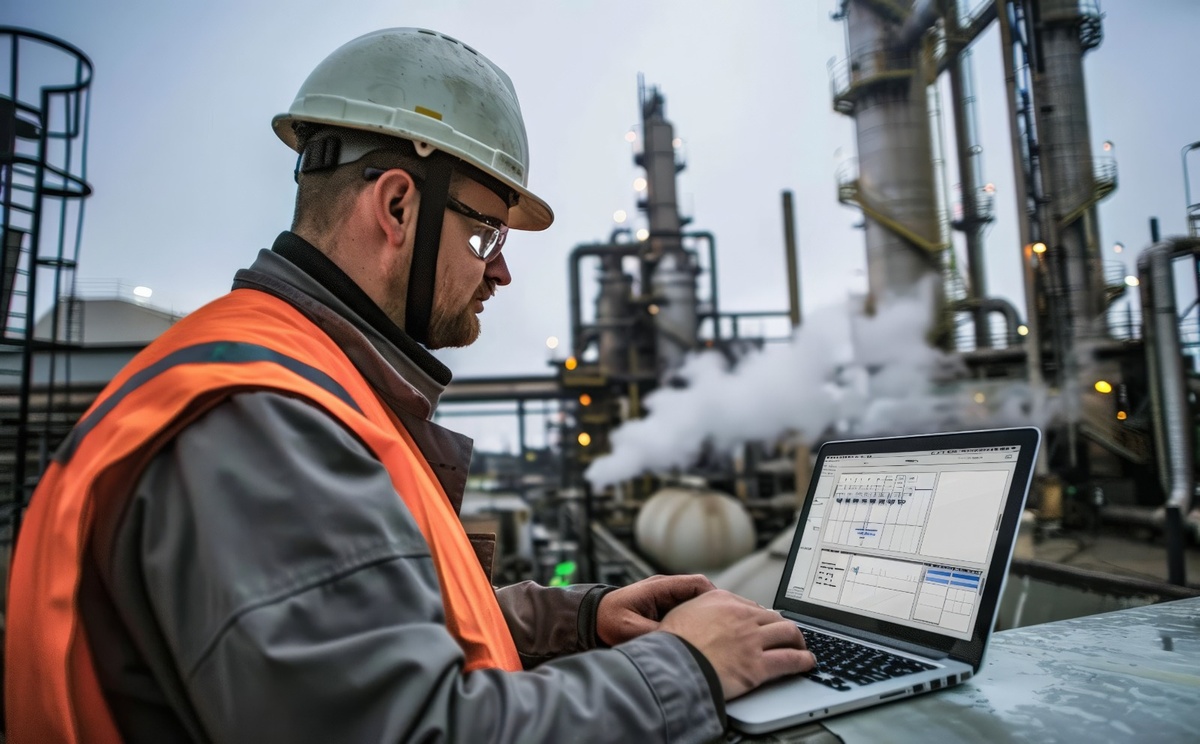
Digitalization, IoT, and Logistics Optimization Assume Strategic Role in the Energy Industry in a Cycle of Consolidation and Greater Environmental Responsibility.
In 2026, the oil and gas sector enters a cycle of consolidation. In this context, technology, data, and logistics assume a central position in the competitive strategy. Furthermore, given price volatility and pressure for efficiency, digitalization becomes essential infrastructure. Therefore, the transformation occurs consistently and systematically.
According to the International Energy Agency (IEA), in a report released in 2024, companies that invest in digitalization in the energy sector can reduce operational costs by up to 20%. Additionally, according to the agency, the reliability of operations tends to increase significantly. Thus, the industry’s focus is not on abrupt disruptions. On the contrary, the emphasis is on continuous gains in operational efficiency.
Moreover, technological tools enhance management capacity. Among them, the following stand out:
-
GoodWe Launches SEMS+ and Solidifies Digital Energy Management with Intelligent Monitoring, Artificial Intelligence, and Data Analysis in the Brazilian Electric Sector

-
Digital Transformation in Industry by 2026: Prescriptive Maintenance, Massified IoT, Integrated Asset Management 4.0, and All-in-One Solutions Accelerate Operational Efficiency

-
Nomus Start Industrial Expands Access to Industrial ERP for Companies under Simples Nacional with Free Implementation, Low Operating Costs, and Video Training

-
ValeCard Restructures Management, Invests Over R$ 50 Million in Technology and AI, and Grows 49% in 2025 Despite Changes in PAT and Regulatory Pressure in the Benefits and Fleet Market


- Internet of Things (IoT) applied to industrial assets;
- Integrated operational management systems;
- Advanced data analytics for decision-making;
- Predictive monitoring to anticipate failures;
- Data-driven logistics optimization.
Consequently, failures can be anticipated. Additionally, unplanned downtime is reduced. At the same time, logistics routes become more efficient. Therefore, asset management gains financial predictability. Thus, operations become leaner and less wasteful.
Despite the advancement of renewable energies, global demand for oil remains high. According to the IEA, in a projection published in 2023, worldwide consumption is expected to remain above 100 million barrels per day in the coming years. Therefore, the challenge is not the immediate replacement of fossil fuels. Instead, the priority is on a more efficient and responsible model of production and usage.
In this scenario, integrated logistics gains strategic prominence. According to a study by McKinsey & Company, published in 2022, logistics optimization combined with data usage can increase efficiency in the energy sector by up to 15%. Thus, the integration of technology and the supply chain becomes decisive.
Moreover, in Brazil, reports from the World Economic Forum, published in 2023, reinforce that data-driven companies are better prepared for cycles of greater regulatory and environmental demand. Therefore, transparency, control, and predictability become structural pillars. In this way, the sector advances based on operational intelligence.
In 2026, therefore, the transformation of the industry is not marked by sudden disruptions. On the contrary, it is driven by gradual and consistent advances. Thus, technology and logistics no longer operate behind the scenes. Instead, they begin to lead the competitiveness strategy.
Consequently, operations become smarter. Moreover, processes become more connected. Finally, efficiency is treated as a strategic asset. Thus, the oil and gas sector consolidates a data-driven model, environmental responsibility, and integrated management.










-

Uma pessoa reagiu a isso.