





 Portuguese
  English
  Spanish
 5 min of reading
  0 comments


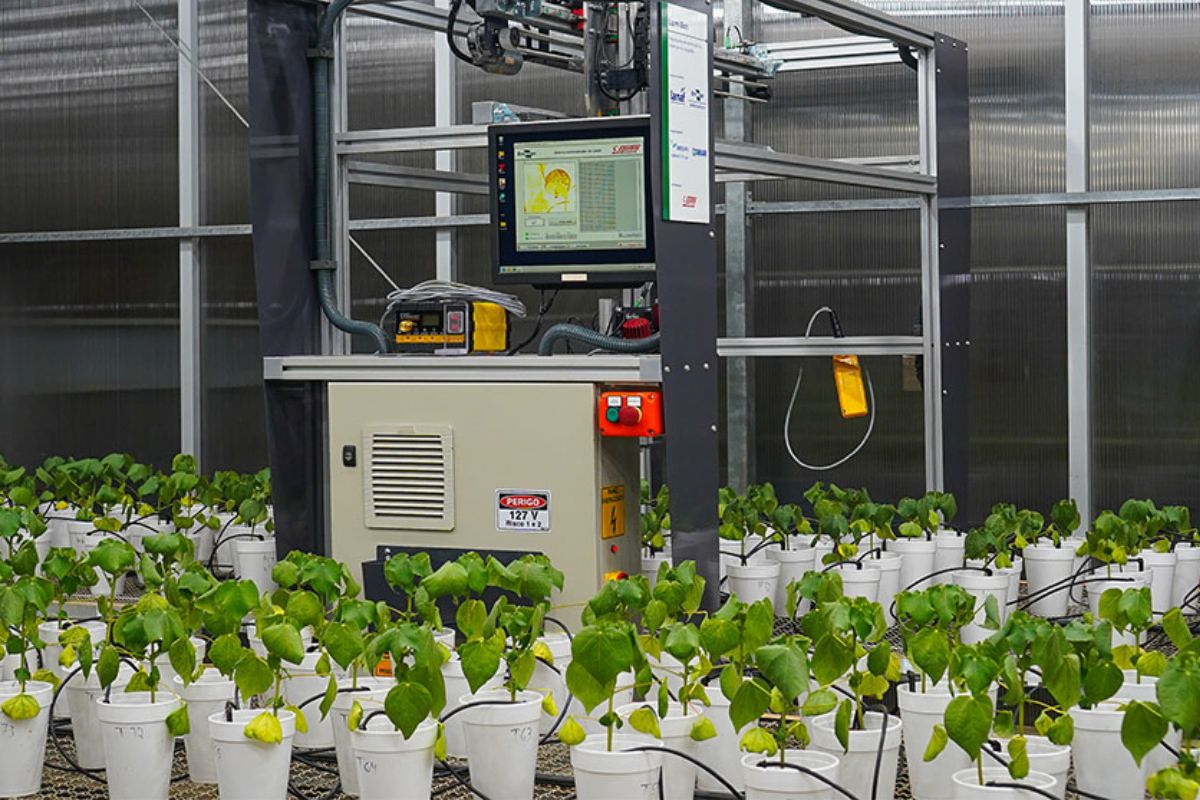
LumiBot Robot Combines Technology in Agriculture with the Use of Photonics and Artificial Intelligence to Detect Early Diseases in Soybean and Cotton Crops, with Economy, Precision, and Rigor
In the first few seconds of a plant’s life, the presence of nematodes can compromise the entire crop.
To prevent losses totaling billions of reais, EMBRAPA researchers created a robot that utilizes the power of light and intelligent algorithms to identify diseases even before visible symptoms appear, according to a report published.
This innovation shows how technology in agriculture can transform old practices into precise, economical, and sustainable operations.
-
What can really trigger large volcanic eruptions? Research suggests that gas returning to the magma may be more dangerous than gas escaping from it.

-
Found in one of the most radioactive places on Earth, this Chernobyl fungus may be doing something with radiation that no one has been able to explain to this day.
-
A bright yellow mushroom imported from Asia escaped from a cultivation farm in the United States in 2010 and is now aggressively spreading across 25 states, destroying entire communities of native fungi in American forests.

-
Buried under China, a colossal machine weighing 20,000 tons began operating as the largest neutrino detector on the planet and, in just 59 days, surpassed results that science took half a century to achieve.


Next, we will detail how this prototype works, the results that already convince, and the challenges to take it to the field.
Robots with Light Detect Biotic Stress: Using Robots in the Field with Fluorescence
The prototype robot operates launched inside greenhouses, illuminating soybean and cotton leaves while photographing (in just 7 seconds) with scientific RGB cameras.
It applies a technique called LED-Induced Fluorescence (LIFI), which excites the molecules in the leaves, such as chlorophyll and secondary metabolites, to emit light back.
When the plant is under attack from nematodes or suffers stress, these emissions change pattern. LumiBot combines robotics, photonics, and trained algorithms to recognize these variations.
From these images, around 7,000 photographs have been collected in three years of study. With this data, it was possible to train models with accuracy rates above 80%, even distinguishing water stress from infections.
The remarkable precision of this system shows how integrating technology in agriculture with automation can anticipate interventions and save resources.
Spatial Ranking and Localized Application: Sustainable Precision Agriculture
One of the major current problems in nematode control is the indiscriminate use of nematicides in the soil or on the seeds before planting, often with variable efficiency.
These products are expensive and potentially harmful to the environment. The key feature of LumiBot is to generate mapping of the infestation at plant level, so that the application of pesticides is made only in affected areas.
This procedure follows the principles of sustainable precision agriculture, reducing costs and environmental impacts.
With data on location and infestation density, producers can apply localized chemical defenses or use biological controls only where necessary.
This approach directly benefits from technology in agriculture to make management smarter and less aggressive.
Photonics Applied to Agriculture: Artificial Intelligence in the Field and Early Diagnosis of Agricultural Pests
LumiBot operates at night, in a dark environment, to eliminate interference from external light and avoid influencing the results by photosynthesis.
The system travels along tracks installed between the rows, illuminating leaves with an intense beam and recording images.
The captured samples are stored in a portable SSD and individually identified for future analysis.
The algorithms process the fluorescence signals and classify patterns associated with nematodes or other diseases, distinguishing them from nutritional or water stresses.
This is where artificial intelligence in the field comes in: the models learn to recognize subtle signs before the visual manifestation of the pest.
This early pest diagnosis capability is only possible through the sensitivity and precision of photonics applied to agriculture and exemplifies a powerful alliance between light sciences and plant biology.
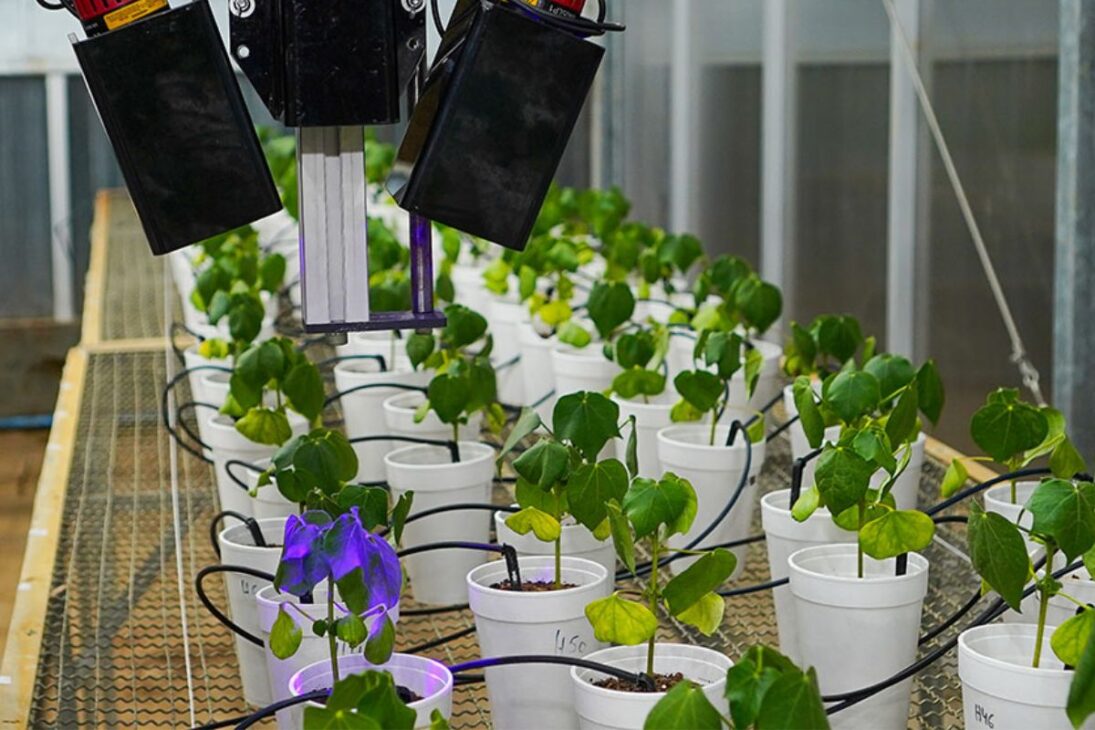
The interesting thing is that the robot is already showing solid results, even being just a prototype. The next goal is to adapt the system for use in real fields, for example, incorporating the optical apparatus into locust sprayers or rover vehicles.
When this happens, it will be a decisive leap in the actual adoption of this technology in agriculture.
Billions Saved in the Field: How Photonics Applied to Agriculture is Changing the Fight Against Nematodes
The economic impact of nematodes is very significant: it is estimated that soybeans lose more than R$ 27 billion per year, while cotton records losses exceeding R$ 4 billion in Brazil.
The country has a harvest forecast for 2025/26 of 177.67 million tons of soybeans and 4.09 million tons of cotton fiber, according to Conab. These figures demonstrate why early detection of the problem is so important.
With LumiBot, greenhouse experiments indicate accuracies above 80%. Researcher Débora Milori, project coordinator at Lanaf, emphasizes that the robot already differentiates infections from water stresses.
The team consists of a multidisciplinary network: Tiago Santiago analyzes images and trains algorithms; Bianca Barreto leads plantations and experiments; names like Vinícius Rufino, Julieth Onofre, Gabriel Lupetti, and Kaique Pereira handle instrumentation, inoculation, counting nematodes, and vegetative maintenance.
The robot’s autonomous system, operating at night along tracks installed between rows, captures fluorescence data with scientific RGB cameras.
Each leaf has its own identification for later correlation, with models that transform optical signals into reliable diagnosis. This strategy highlights how technology in agriculture represented by LumiBot can revolutionize management and control.
From the Laboratory to the Field: Artificial Intelligence in the Field Transforms Data into Sustainable Decisions
The application of LumiBot in the field will require adaptation in machines already used in agriculture, such as sprayers or rovers, so the optical apparatus can illuminate, photograph, and perform automatic mapping. This adaptation will require optical engineering, software, and mechanical adjustments.
The demand for artificial intelligence in the field will be even greater to filter noise, compensate for environmental variations, and ensure reliability in diagnosis.
By mapping infested regions, the system facilitates localized interventions, adhering to the concept of sustainable precision agriculture: less pesticides used, lower ecological impact, lower costs for producers, and better final quality of fiber or grains.
It is a clear evolution of technology in agriculture applied to integrated pest control.
Sustainable Precision Agriculture Takes Center Stage at Siagro and Projects the Future of Agricultural Robots
The presentation of LumiBot is scheduled for the National Symposium on Agricultural Instrumentation (Siagro), from October 14 to 16, at Lanapre in São Carlos (SP).
There, specialists and producers will be able to observe practical demonstrations and discuss pathways to commercialize the robot. The choice of the event reflects the importance of photonics applied to agriculture and the dialogue between science and field.
From here on, the challenge will be to move from prototype to robust field machine, but the results already validate the potential.
The combination of robotics, photonics, and algorithms reinforces how technology in agriculture is being transformed, with faster, more accurate, and economical diagnoses.







Seja o primeiro a reagir!