





 Português
  Inglês
  Espanhol
  2 min de leitura
  0 comentários


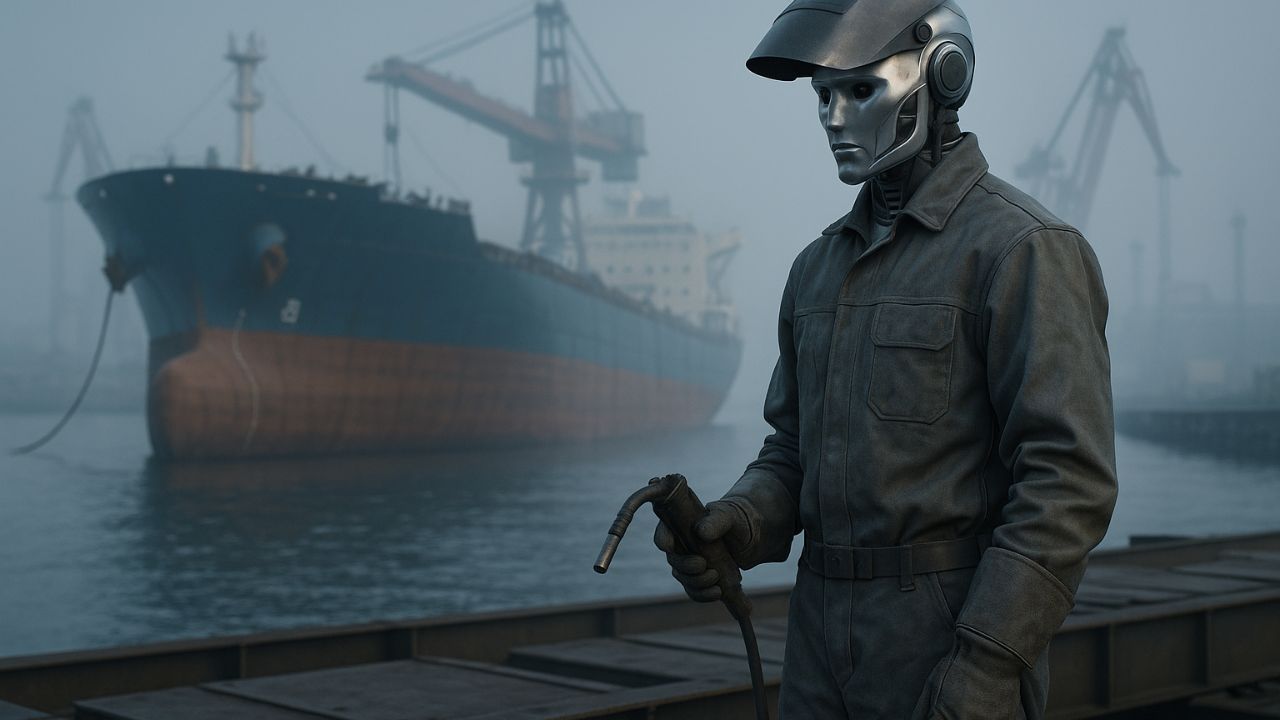
American Robots Specialized In Welding Will Be Implemented By 2027 In South Korean Shipyards To Expand Safety And Productivity In The Naval Sector
The offshore sector of South Korea is preparing for a technological leap: by 2027, the country’s shipyards will feature humanoid robots developed in the United States by Persona AI. The initiative aims to reduce operational risks and modernize the work environment in the naval industry, as reported by the Interesting Engineering portal.
Humanoid Robots Arrive In The Asian Offshore Sector
In order to address the shortage of skilled labor and enhance safety in high-risk industrial environments, Persona AI will introduce humanoid robots in South Korean shipyards. The American company bets on the automation of welding, one of the most critical and dangerous tasks in offshore shipbuilding, to ensure greater efficiency and precision in the work.
According to the article published by Interesting Engineering, the robots are expected to be operational by 2027, working side by side with human workers in an assisted collaboration format. The expectation is that this innovation will not only reduce accidents but also accelerate production timelines in a sector marked by tight deadlines and high operational costs.
-
A bright yellow mushroom imported from Asia escaped from a cultivation farm in the United States in 2010 and is now aggressively spreading across 25 states, destroying entire communities of native fungi in American forests.

-
Buried under China, a colossal machine weighing 20,000 tons began operating as the largest neutrino detector on the planet and, in just 59 days, surpassed results that science took half a century to achieve.

-
Iran enters the center of a climate alert after the war emitted 5.6 million tons of CO2 in two weeks, surpassing the annual pollution of entire countries.

-
Lunar exploration may change after a Chinese probe finds a “cavity” of radiation that reduces the impact on astronauts by up to 20% at certain times on the Moon.


Automated Offshore: A New Technological Frontier
The implementation of humanoid robots in shipyards is part of a broader trend of industrial automation in the offshore sector. According to analyses from the Korea Times, the use of smart technologies, sensors, and remote control systems has been expanding into welding, painting, inspection, and logistics operations on platforms and vessels.
In this context, the introduction of humanoid robots represents a significant advancement. Unlike conventional robotic arms, Persona AI’s humanoids possess mobility and adaptability to various tasks, allowing them to operate in tight spaces or difficult-to-access environments that are common in offshore structures.
Robot As An Ally Of Productivity And Safety
By incorporating these robots into the offshore environment, the South Korean naval industry signals a strong commitment to long-term solutions. The technology is viewed as a strategic investment to improve productivity without compromising worker safety. The robot does not eliminate jobs but takes on high-risk functions, allowing human teams to focus on analytical tasks and technical oversight.
Experts consulted by Interesting Engineering indicate that the adoption of humanoid robotics may redefine work standards in the sector, making operations more sustainable, efficient, and safe. This is an important step toward the modernization of shipbuilding in offshore environments — a movement that is likely to inspire other industrial hubs around the world.






Seja o primeiro a reagir!