





 Portuguese
  English
  Spanish
  4 min of reading
  0 comments


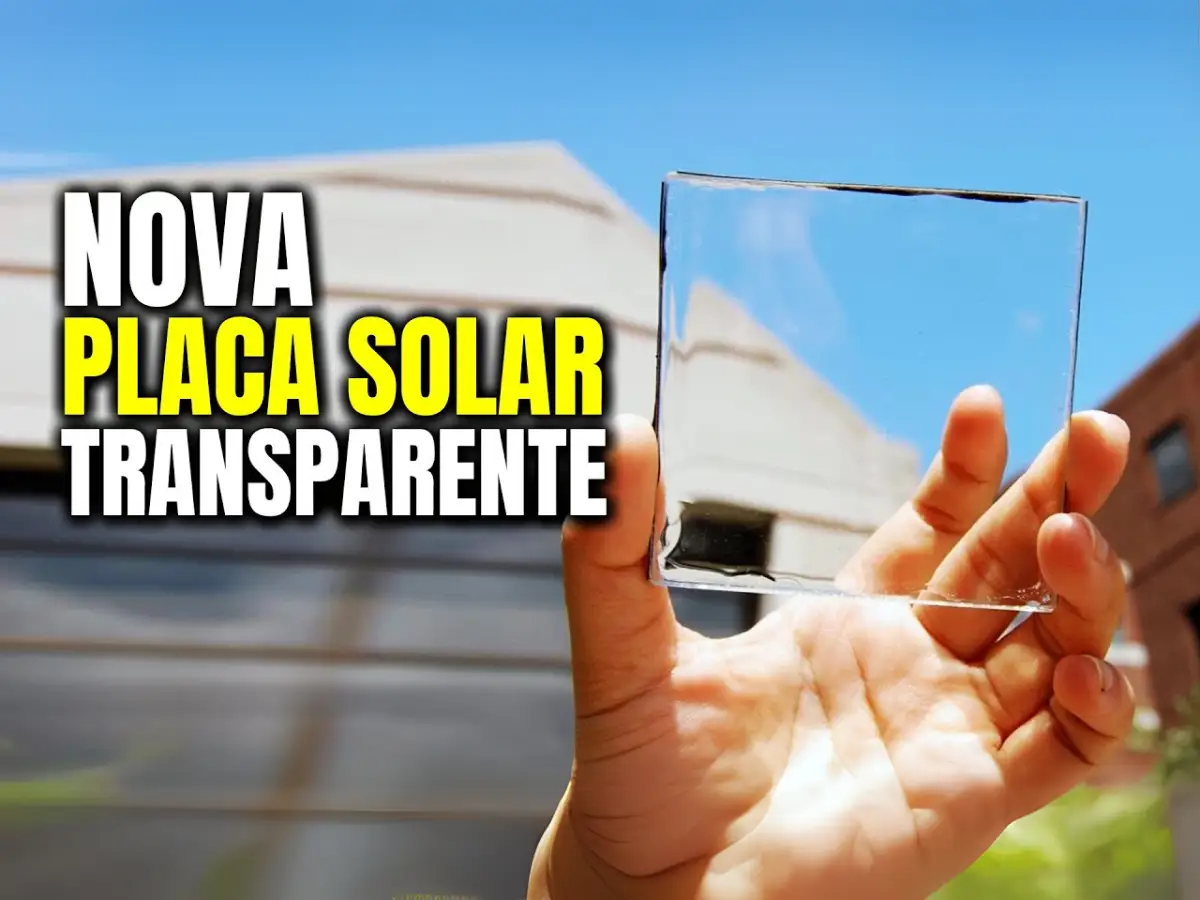
Transparent Solar Panels: The New Bet That Promises to Revolutionize Energy Generation in the World
Imagine a future where the glass facades of skyscrapers not only allow natural light in but also produce clean energy. That scenario is much closer than one might think. A group of Danish scientists has just broken a new record with a technology that could radically transform the renewable energy sector: the transparent solar panel.
The innovation is gaining momentum precisely because it solves an old dilemma: how to generate energy without compromising the aesthetics and function of windows in buildings and constructions. And the numbers achieved in this new phase of testing have even impressed the most skeptical researchers.
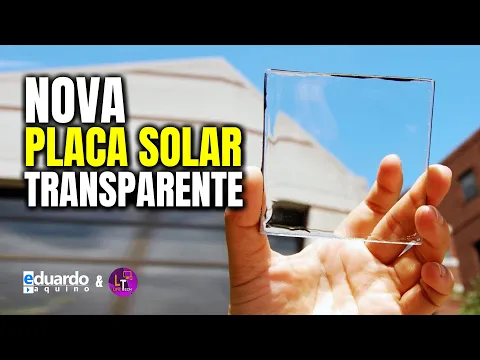

How The Technology That Turns Windows Into Energy Generators Works
The secret of the new technology lies in the smart combination of materials. The team from the CitySolar project, affiliated with the University of Southern Denmark, has managed to integrate organic solar cells with an advanced material known as perovskite. This union allows the panels to capture ultraviolet and infrared light, precisely the wavelengths that do not interfere with the visible transparency of the glass.
-
Millions of people have been eating yam for centuries without knowing that this humble tuber contains a compound called diosgenin, which scientists have now discovered can improve memory and help control blood sugar levels.

-
Scientists from an international project drill 1,800 meters of ice in Antarctica using hot water and discover details about one of the most intriguing places on planet Earth.

-
Seen from space, a colossal volcano nearly 5,000 meters high in Russia has released 1,600 km of smoke over the Pacific, forming “devil’s horns” of lava and revealing the brutal force of the Ring of Fire.

-
Expedition 501: Scientists drill into the ocean floor and discover a giant reserve of fresh water hidden beneath the sea, extracting nearly 50,000 liters and revealing an invisible system that could reshape the map of water scarcity.


In practice, this means that with the new solar panel, you can still see through the window normally while it continuously generates electricity. The current level of transparency achieved is 30%, which represents an unprecedented milestone in the industry. According to Professor Morten Madsen, who leads the project, “the large glass facades found in modern commercial buildings can now be used for energy generation without the need for extra space or structural changes,” he stated in an interview with EuroNews.
Competitive Efficiency With Traditional Solar Panels
One of the most striking points in the recent announcement was the level of energy efficiency achieved. The transparent solar panel developed by the Danish team achieved 12.3% efficiency, a rate very close to that of conventional solar panels, but with the huge advantage of maintaining the passage of natural light.
This performance makes the technology extremely promising for urban use, especially in regions like Europe, where the European Union has ambitious decarbonization goals for the construction sector by 2050.
Indeed, European authorities see the transparent solar panel project as an important tool to accelerate the use of renewable energy in dense urban contexts. So much so that the EU has already injected nearly 4 million euros into developing the initiative, which is now seeking industry partners to enable large-scale production.
What Is The Real Potential Of This Technology For The Future?
Experts in the solar technology sector have highlighted that transparent solar panels could be the next big frontier of integrated energy generation. According to a study published in Nature Communications, windows equipped with this technology could generate up to 25% of the energy demand of an average office building, depending on the location and solar orientation.
Additionally, the use of cheap and easily scalable materials makes the project highly economically viable. “We are establishing new standards of efficiency for semi-transparent solar windows,” Madsen explained.
Another factor that increases the appeal of the innovation is that it does not require the installation of external structures or sacrificing space — which has always been a bottleneck in urban centers. This means that even historic buildings and retrofit projects could adopt the technology without altering their original appearance.
What Is Still Needed For This Technology To Hit The Streets?
Although the recent advancement represents a significant leap, completely transparent solar panels still face technical challenges. Large-scale production requires refinements in manufacturing processes, especially to ensure the durability and resistance of materials over time.
Another point of concern is regulation. Many countries still lack specific standards addressing the installation of energy-generating windows, something that is expected to change as the technology becomes more popular.
But the market is already paying attention. Giants in the construction and clean energy sectors have shown a growing interest. The expectation is that in the coming years we will see the first entire buildings clad with this new generation of transparent solar panels.
A Trend That Could Redefine The Concept Of Sustainable Architecture
The application of this technology promises to profoundly transform the way architects and engineers design buildings. The so-called integrated solar architecture (or BIPV, from the English Building-Integrated Photovoltaics) is expected to gain traction, creating a scenario where every available surface — not just rooftops — is utilized to capture energy.
“What we are witnessing is the birth of a new era for renewable energy in the urban environment,” highlighted Professor Henry Snaith, a perovskite specialist from the University of Oxford, in a recent interview with PV Magazine.
With solutions like those from the CitySolar project, the old dream of transforming entire cities into sustainable power plants is closer to becoming a reality.
If the promise of transparent solar panels holds true, we will soon have buildings that not only consume energy intelligently but also actively contribute to their own generation. This paves the way for a new urban model, more sustainable and efficient, where technology and design walk hand in hand towards a greener future.
Now, the question is: would you like to live in a building or a house where even the windows help generate energy? Share your opinion in the comments








Seja o primeiro a reagir!