





 Portuguese
  English
  Spanish
  4 min of reading
  0 comments


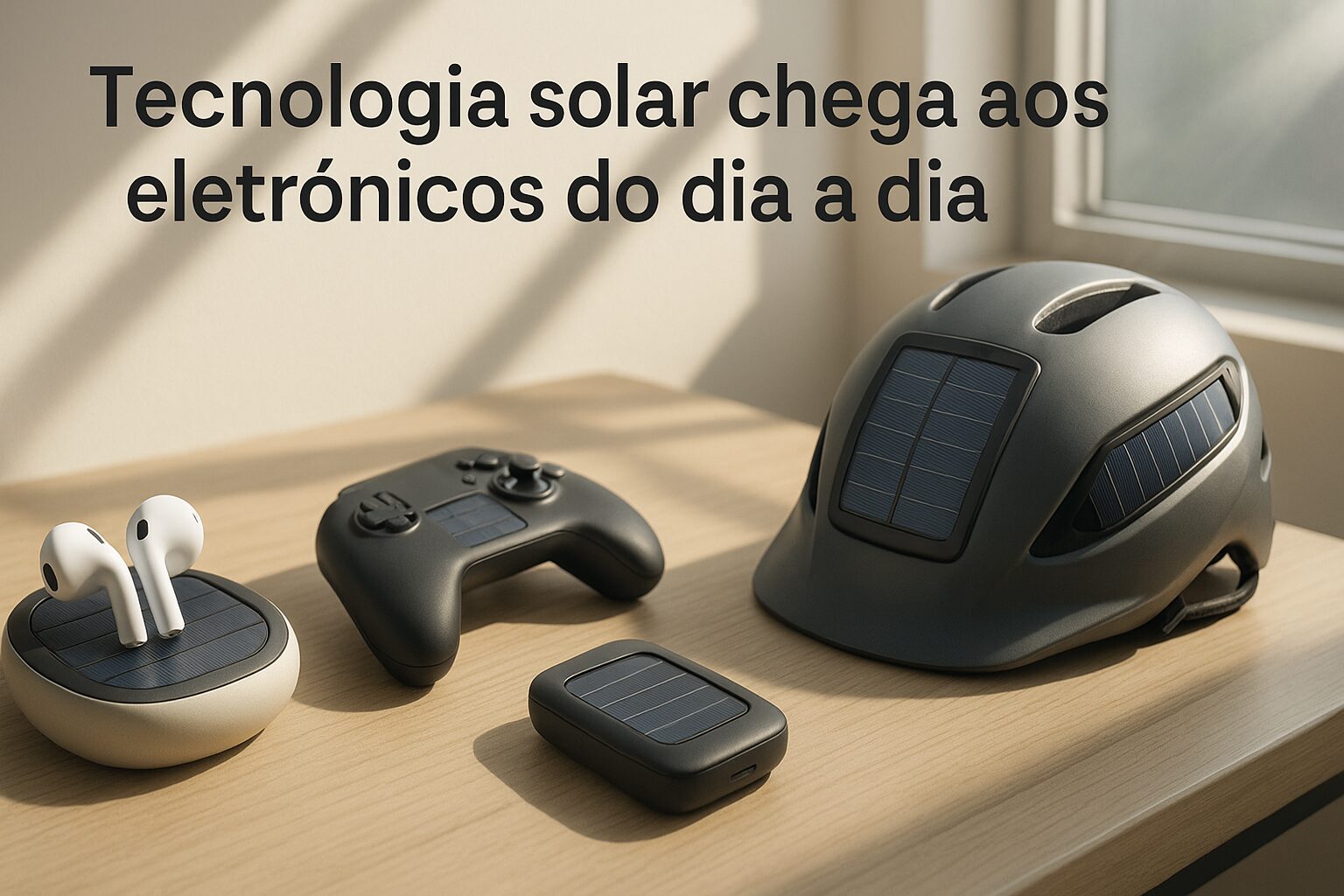
Headphones, Remote Controls, and Even Helmets Get Solar-Powered Versions With Powerfoyle Technology Advances.
The search for sustainable solutions is reaching a new level in the electronics sector. As the debate over responsible consumption grows, companies are betting on solar technology to power everyday gadgets more efficiently and with less environmental impact. The spotlight is on the use of solar energy in devices like headphones, remote controls, sensors, and even helmets, which previously relied solely on rechargeable or disposable batteries.
One of the main names behind this innovation is Exeger, a Swedish startup that developed the Powerfoyle solar cell technology. Flexible, thin, and adaptable to various shapes, it allows devices to recharge using natural or artificial light, paving the way for the use of solar energy in a wide variety of electronic products.
Solar Headphones Gain Market
Exeger caught the industry’s attention in 2021 when it launched the world’s first solar-powered headphones. Since then, Powerfoyle technology has equipped new models from Urbanista, such as the wireless Phoenix and the Los Angeles and Miami headphones.
-
Renewable energy advances over protected areas in Brazil, and a survey by the Energy Transition Observatory reveals silent impacts that challenge environmental conservation and pressure sensitive traditional territories.

-
Rio Grande do Sul accelerates energy transition: State invests in renewable technologies and consolidates decarbonization strategies and pathways to attract billions in new industrial investments.

-
With 160,000 m² of collectors, an area larger than 20 football fields, Silkeborg, in Denmark, hosts a solar thermal plant that heats 19,500 homes and could become the largest solar heating plant in the world.

-
A study reveals the expansion of renewable energy procurement in Brazil and shows how companies are taking advantage of opportunities to reduce expenses, ensure energy efficiency, and strengthen strategic environmental commitments.



Brands like Adidas and Philips have also embraced solar technology with models such as the RPT02 and A6219 GO, respectively. More recently, manufacturer Merry Electronics partnered with Exeger to adapt Powerfoyle for different lines of gadgets, focusing on headphones under US$ 100. This expands access to solar-powered products for more affordable price ranges.
The modification of solar cells to thinner shapes compatible with the design of different devices was one of the challenges overcome by Exeger’s team, as explained by Alexander Faust, the company’s partnerships director.
Helmets With Solar Technology Gain Space Among Deliverers
During CES 2025, one of the products showcased using Powerfoyle technology was a smart helmet developed for bicycle and scooter users. Primarily aimed at app deliverers in China, the helmet powers components like a microphone, speakers, and a rear LED light using solar energy.
According to Faust, there are about 15 million deliverers in China alone, representing a huge potential market for gadgets powered by photovoltaic technology. The Cosonic helmet was designed to meet precisely this audience’s needs, which relies on reliable equipment with autonomy for long work shifts.
Meanwhile, the POC Omne Eternal model, aimed at regular cyclists, incorporates solar panels to power an automatic tail light that turns on in low-light environments. Although it lacks connectivity or audio features, it is another example of how solar energy can be applied with practical purpose.
Remote Controls and Sensors Get Self-Sufficient Versions
In addition to wearables, Exeger has been investing in the integration of solar technology into domestic devices. The Swedish company has partnered with manufacturers like SMK to develop remote controls for appliances that do not require batteries.
The presented model is aimed at air conditioning systems and features an energy-efficient display, along with a charge indicator that guides the user to position the remote in the ideal spot to absorb light. This application showcases the potential of solar energy in simple products but with continuous use.
Another advancement is in solar sensors, such as the Elumian toll transponder developed by Kapsch, and the door and window sensor by Leedarson. Both utilize light to power the devices and avoid the use of disposable batteries, one of the greatest environmental challenges of electronic consumption.
Advances Enable Greater Integration of Solar Technology Into Gadgets
The application of solar technology in gadgets has progressed due to improvements in efficiency, cost reduction, and design adaptation. Until a few years ago, it was rare to find solar energy applied to electronics beyond calculators or watches. The limitations were related to the size of solar cells and the need for constant exposure to natural light.
Today, with the development of materials like Powerfoyle, the situation has changed. Cells can be integrated into the device body discreetly and functionally, utilizing both solar and artificial light to generate energy.
This evolution broadens the possibilities for the use of solar energy in various contexts, from leisure to industrial and logistical applications, such as with helmets for deliverers.
Challenges and Future of Solar Technology in Consumer Products
Despite the advances, experts recognize that solar technology still faces challenges to establish itself as a standard in the gadget market. Planned obsolescence, subscription models, and the demand for constant updates accelerate technology consumption and make it less sustainable.
Still, solutions like Powerfoyle point to a more conscious path. The integration of solar power into devices represents a real alternative to reduce battery reliance, increase product autonomy, and encourage more sustainable consumption practices.
As more manufacturers look for ways to meet the growing demand for energy efficiency and environmental responsibility, solar technology is expected to be present in an even broader range of everyday products.
Source: Techradar










Seja o primeiro a reagir!