





 Portuguese
  English
  Spanish
  5 min of reading
  0 comments


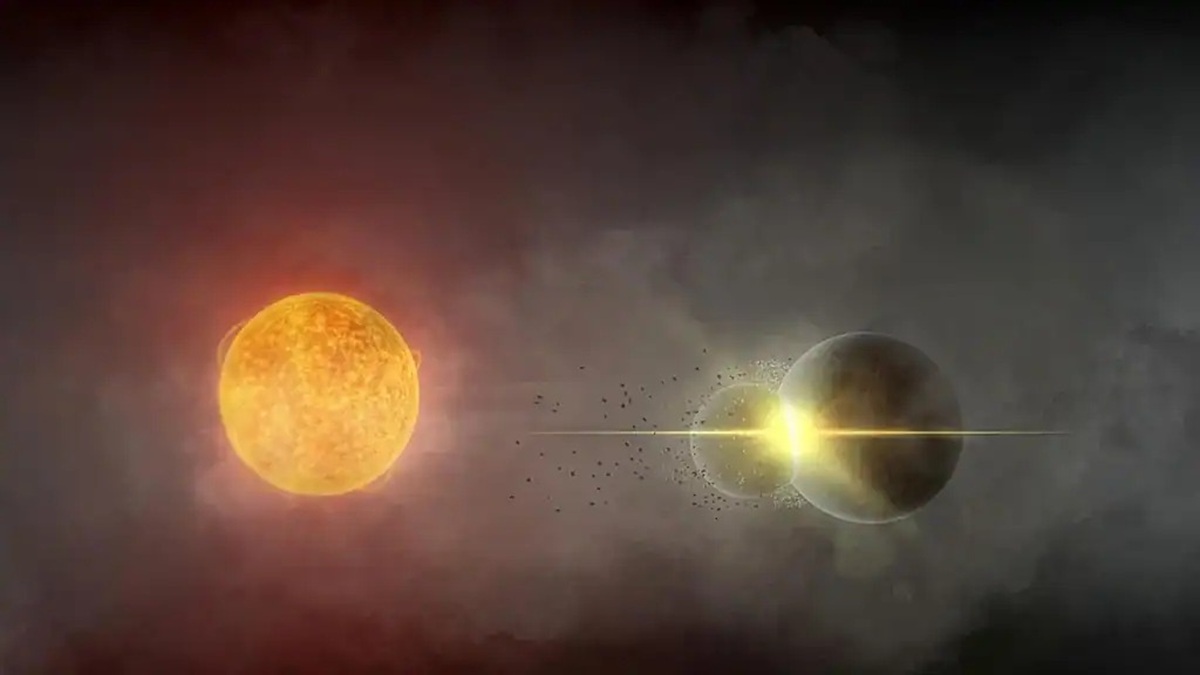
Astronomers Identified the Collision Between Two Planets About 11,000 Light-Years from Earth After Observing Unexpected Changes in the Brightness of Star Gaia20ehk. The Event Produced a Cloud of Hot Debris and May Help Scientists Understand How Planets and Moons Form After Giant Impacts in Space
Astronomers Recorded the Collision Between Two Planets About 11,000 Light-Years from Earth by Observing Unexpected Changes in the Brightness of Star Gaia20ehk in the Constellation Puppis, Revealing a Rare Event That Produced a Vast Cloud of Hot Debris.
The Phenomenon Was Detected While Researchers Were Monitoring Star Gaia20ehk, a Sun-Like Star That for Years Showed Stable, Predictable Light Emission. At One Point, However, Its Brightness Began to Flicker and Drop Suddenly as a Huge Cloud of Rocks and Dust Passed in Front of the Star.
The Analysis of This Behavior Indicated That the Star Was Not Varying on Its Own. Scientists Concluded That the Light Fluctuation Was Caused by An Increasing Field of Debris Generated by the Collision Between Two Planets.
-
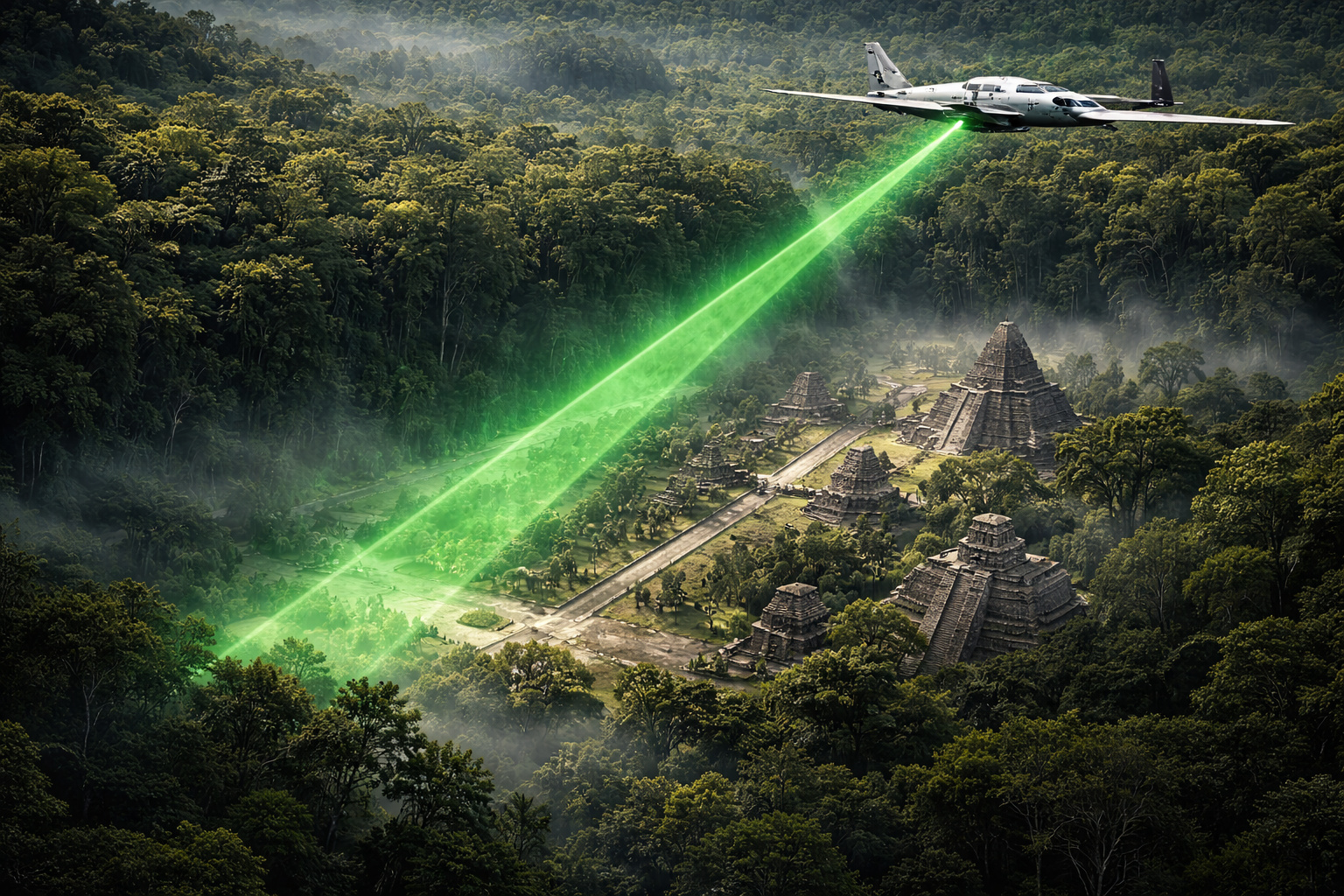
In 2016, a plane equipped with billions of laser pulses scanned 2,100 km² of jungle in Guatemala and revealed, beneath the tree canopies, a Maya megacity with 61,480 unknown structures, elevated roads spanning dozens of kilometers, industrial-scale irrigation systems, and a population of up to 15 million, three times more than any previous estimate.
-
Someone released 18 beavers in the upper Ebro River; it seemed like an isolated case, but no one knows who did it or how to stop their expansion, and now they have already reached Catalonia. And there’s a detail that changes the game: they can help restore rivers and even capture carbon.

-
ZCC 11000 crane lands at the port of Vitória and heads to Ceará in a convoy with 64 trailers: Zoomlion, founded in 1992, builds a monster that lifts over 600 compact cars to 93 m.

-
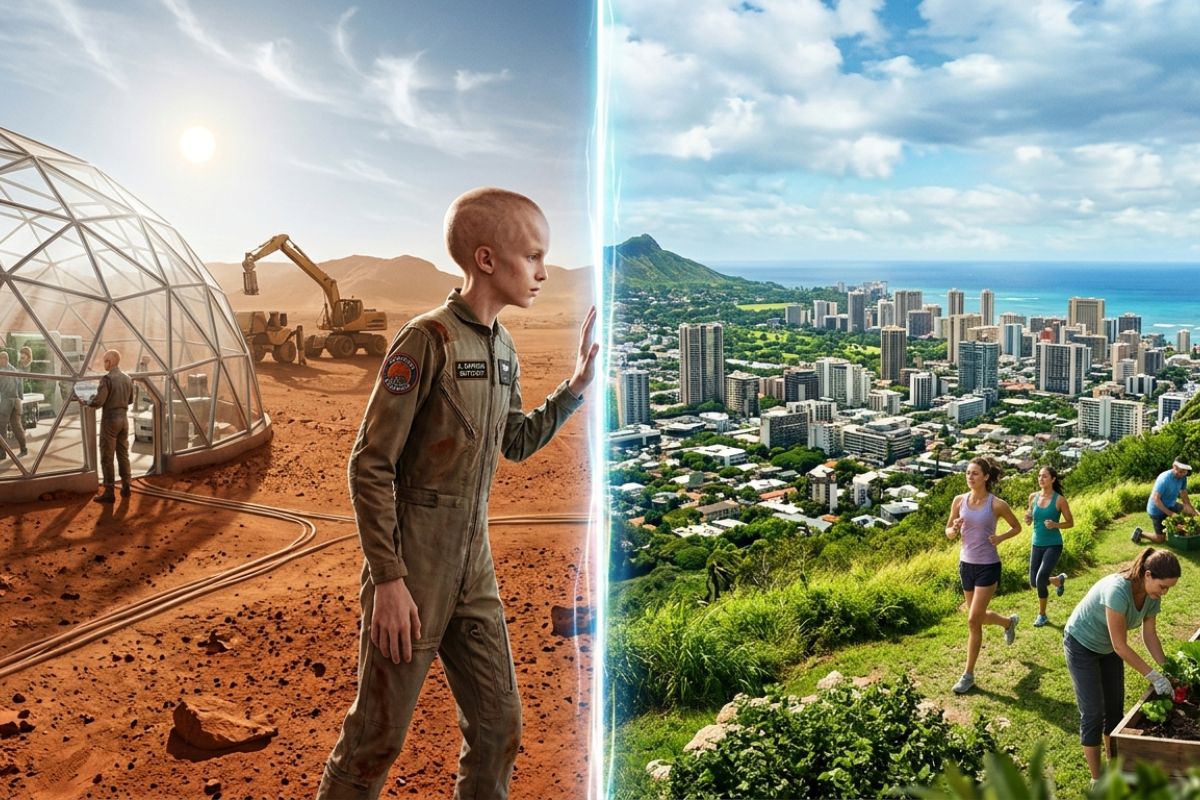
The biggest drama of being born on Mars is not breathing: Rice biologist says that colonists’ children may cease to be Homo sapiens, shaped by low gravity, radiation, and isolation that divides humanity.

This Type of Event Offers a Rare Opportunity to Directly Observe a Planetary Impact. The Scene Resembles the Type of Violent Collision That, Billions of Years Ago, Led to the Formation of the Moon When a Mars-Sized Body, Called Theia, Collided with Primitive Earth.
The Strange Behavior of The Star Revealed the Collision Between Planets
The Discovery Began When Anastasios Tzanidakis, a PhD Candidate at the University of Washington, Noticed That Star Gaia20ehk Was Exhibiting Unusual Brightness Variations. For Years, It Had Been Considered a Typical Main Sequence Star.
Starting in 2016, the Star’s Brightness Exhibited Three Brief, Abrupt Drops. Years Later, in 2021, Brightness Levels Started to Vary in a Chaotic and Erratic Manner.
According to Tzanidakis, the Light Emission of the Star Had Always Been Constant and Predictable. Therefore, When Sudden Declines in Brightness Began to Appear, Researchers Realized They Were Facing an Unusual Behavior for Sun-Like Stars.
Scientists Concluded That the Star Itself Was Not Responsible for the Observed Fluctuation. Instead, Its Light Was Being Partially Blocked by a Huge Expanding Cloud Made Up of Rocks and Dust.
Infrared Observations Revealed Hot Planetary Debris
To Understand What Was Hiding the Star, the Team Conducted Observations Using Infrared Telescopes. While the Visible Brightness of the Star Decreased and Varied, the Signal Detected in the Infrared Increased Rapidly.
The Relationship Between the Two Signals Caught the Researchers’ Attention. The Infrared Light Curve Showed Behavior Completely Opposite to That of the Previously Recorded Visible Light.
According to Tzanidakis, This Indicates That the Material That Was Blocking the Star Was Extremely Hot. The Brightness in the Infrared Suggests That the Debris Generated by the Collision Was Heated to About 900 Kelvin, Around 627 Degrees Celsius.
This Thermal Pattern Led Astronomers to Conclude That They Were Witnessing a Collision Between Two Planets. The First Recorded Brightness Dips Likely Correspond to Grazing Impacts as the Two Bodies Orbited Closer and Closer to Each Other.
The Final Collision Pulverized the Planets into a Cloud of Dust
The Large Increase in Infrared Radiation Marked the Moment of the Final Head-On Collision. This Impact Destroyed Both Planets and Launched a Bright Cloud of Dust and Fragments into Space.
The Study Does Not Present the Exact Diameters of the Two Worlds That Collided. Nevertheless, Researchers Were Able to Estimate the Scale of the Event by Analyzing the Trail of Hot Debris Left After the Impact.
Based on the Intensity of the Infrared Brightness, Scientists Calculated That the Mass of the Newly Formed Dust Is Approximately Equivalent to That of the Icy Moon Enceladus, Which Orbits Saturn. This Value Considers Only Fine Particles Capable of Emitting Detectable Radiation in the Infrared.
As Planetary Collisions Typically Pulverize Only Part of the Total Mass of the Bodies Involved, the Two Colliding Planets Were Likely Significantly Larger Than the Volume of Dust Observed.
Collision Between Planets Reminiscent of Event That Formed The Moon
The Episode Observed by Astronomers Bears Similarities to an Event That Occurred Early in the History of the Solar System. About 4.5 Billion Years Ago, an Object the Size of Mars Is Believed to Have Collided with Young Earth.
This Impact Would Have Launched Enormous Amounts of Material into Space. Over Time, the Debris Cooled and Clumped Together to Form the Moon.
In the Case Observed Around Star Gaia20ehk, the Cloud of Debris Is Currently Orbiting at Approximately One Astronomical Unit from the Star. This Distance Corresponds to About 150 Million Kilometers, Similar to the Average Distance Between Earth and the Sun.
This Position Makes the System an Important Environment to Study How Terrestrial Planets and Moons May Form After Such Collisions.
Telescopes Recorded An Extremely Rare Event Between Planets
Tzanidakis Emphasized That Several Telescopes Were Able to Record the Impact Almost in Real Time. According to Him, There Are Few Records of Similar Planetary Accidents.
Additionally, None of the Documented Events Share as Many Similarities with the Impact That Gave Rise to the Earth-Moon System. This Characteristic Makes the Observed Case Particularly Relevant for Studies of Planetary Formation.
Capturing Collisions of This Type Is Extremely Difficult Because Orbits Must Be Aligned with the Line of Sight from Earth. Only When This Alignment Occurs Can Telescopes Detect the Blocking of the Star’s Light.
Future Observatories May Record More Planetary Collisions
James Davenport, Assistant Research Professor at the University of Washington and Senior Author of the Study, Stated That the Success of the Discovery Is Linked to Extended Observations. He Noted That This Type of Research Relies on Monitoring That Can Last a Decade or More.
He Highlighted That the Future Vera C. Rubin Observatory Could Significantly Enhance This Type of Detection. The Expectation Is That the Instrument Will Identify Up to 100 Similar Collisions Between Planets in the Next Ten Years.
For Davenport, Understanding the Frequency of These Events Is Essential to Addressing a Central Question in Astrobiology. Scientists Want to Know How Common the Type of Impact That Formed Earth and the Moon Is.
The Results of the Study Were Published in the Scientific Journal The Astrophysical Journal Letters.







-

-

-

-

-

-

45 pessoas reagiram a isso.