





 Portuguese
  English
  Spanish
  5 min of reading
  0 comments


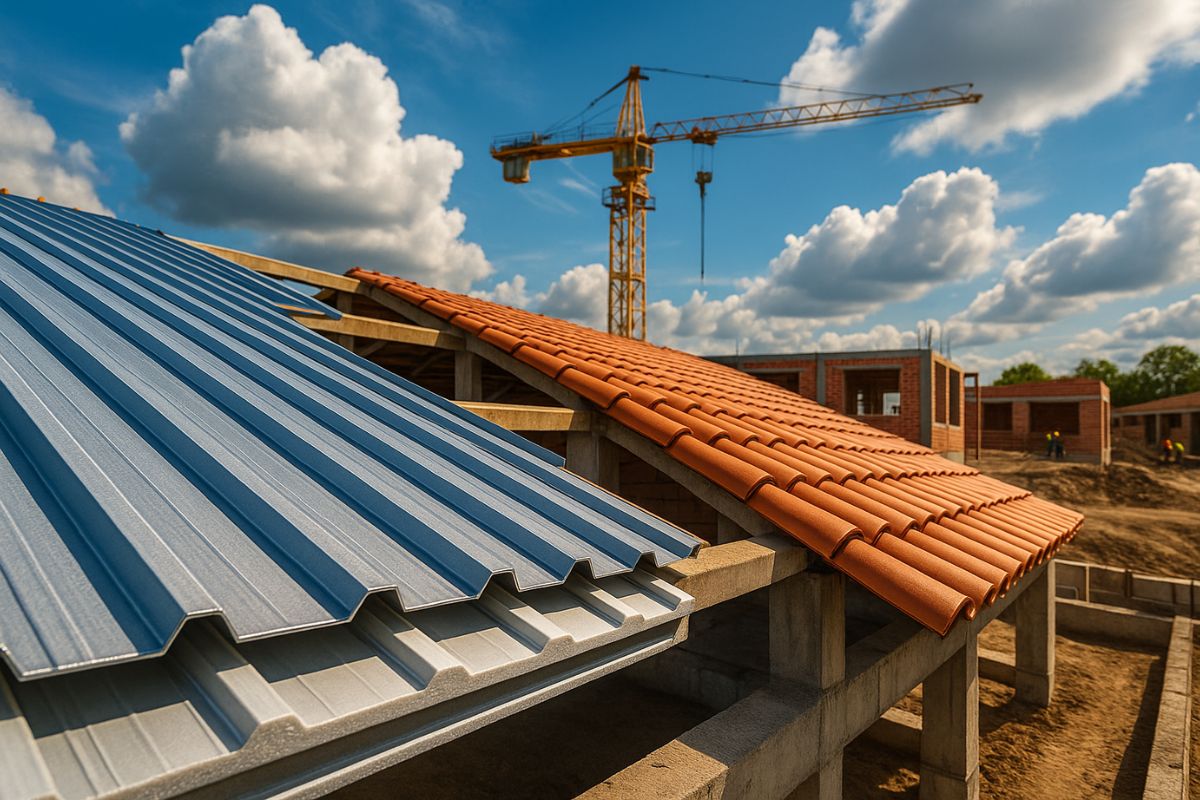
Focusing on Foundation Economy, Step Reduction, Thermal Comfort, and Up to 40% Faster Construction, The Sandwich Tile Gains Strength in Residential Projects and Competes Directly with Ceramic Tiles.
When choosing a roof, many still rely solely on the price of the tile on the shelf and believe they are saving money by opting for traditional ceramic. However, when looking at the total cost of construction, this equation doesn’t always favor the conventional system. The sandwich tile has been gaining ground precisely for combining structural economy, reduced labor, thermal comfort, and low maintenance needs, which completely changes the final calculation.
In 2026, the trend is that this type of coverage will appear in more and more residential projects, especially in works that need to be executed quickly or in very hot regions. When considering structure, foundation, ceiling, installation time, and energy consumption over the years, the sandwich tile is seen as a global economy solution, and not just as a more expensive tile per unit.
How The Sandwich Tile Generates Savings Beyond The Price Of The Tile
In the traditional system with ceramic tiles, the step-by-step process usually involves several layers of cost:
-
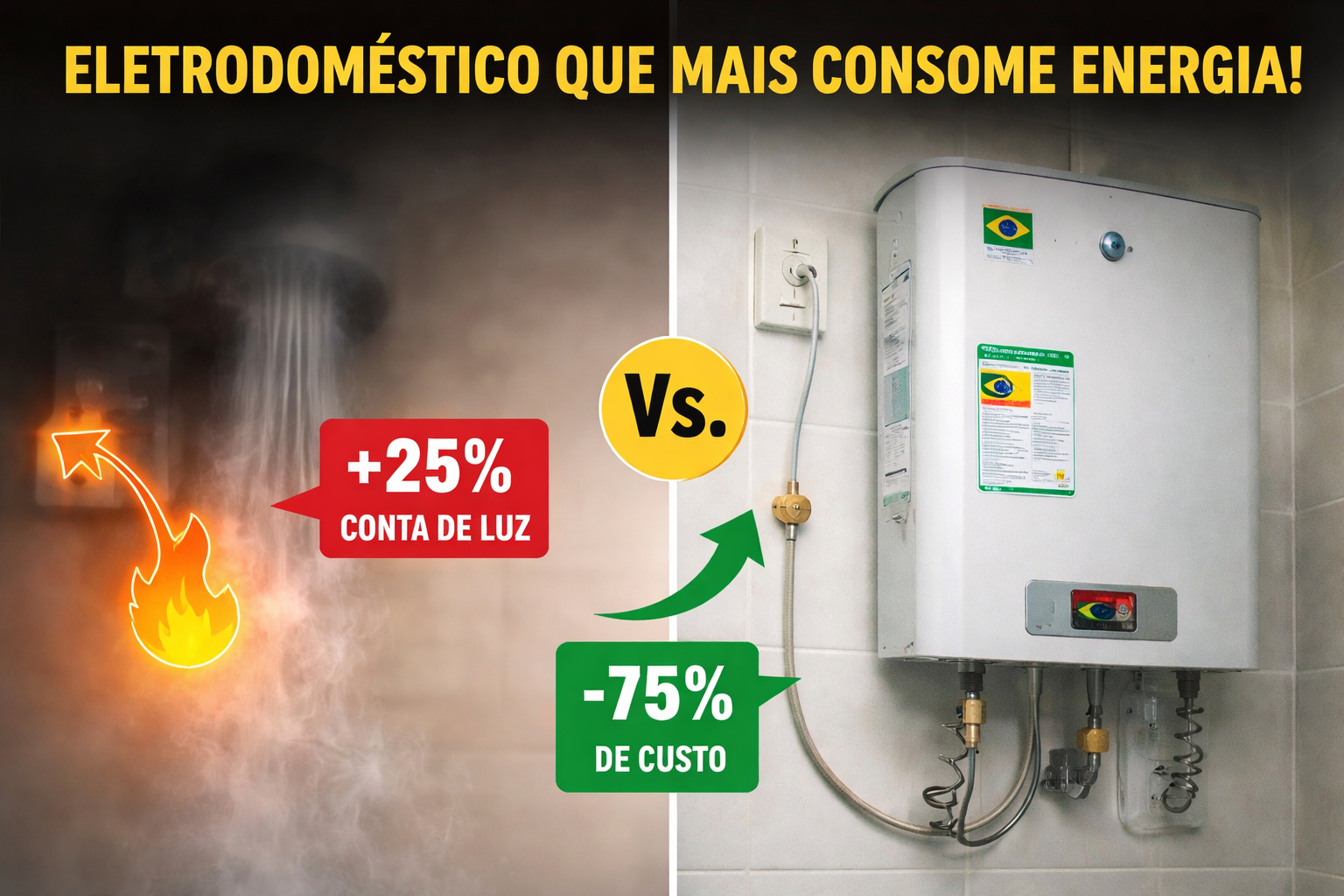
The household appliance that consumes the most energy in Brazilian homes is not the air conditioner; it is located in the smallest room of the house, is used daily, and can account for up to 25% of the electricity bill, while an alternative in the same outlet can reduce this cost by up to 75%.
-
Son of a seamstress from the rural area of Ceará who did not speak English wins a scholarship of over 2 million reais at Williams College, one of the top 10 universities in the United States, covering everything including dormitory, meals, and annual trips to Brazil.

-
Bill Gates revealed that the true secret behind every great achievement is not a brilliant leap but rather small improvements repeated over the years, and the data from his own career and the fight against climate change prove that he is right.

-
With 22 thousand tons of steel, a height nearly three times greater than the Eiffel Tower, and a cost of R$ 1.6 billion, China is building the highest bridge on the planet over a colossal canyon, reducing a crossing time of over 2 hours to just over 2 minutes.


- Ceramic tile
- Robust wooden or metallic structure to withstand the weight
- Separate ceiling
- More time-consuming labor, laying piece by piece
In many regions, a complete coverage in this pattern costs around R$ 150 to R$ 200 per square meter, depending on the complexity of the roof and the project.
Conversely, the sandwich tile, viewed in isolation, might seem a bit more daunting in terms of unit price.
In regional ads, it’s common to find tiles priced around R$ 160 to R$ 170 each, which can represent between R$ 80 and R$ 160 per square meter, depending on size and finish.
The difference is that, with the sandwich tile, part of the savings comes precisely from what you no longer have to pay for:
- The structure can be lighter
- The ceiling comes pre-integrated
- Installation is much faster
In other words, it’s not just the cost of the tile that matters, but the overall savings of the roofing system, from structure to labor.
Thermal Comfort and Savings on Energy Bills
One of the significant advantages of the sandwich tile is its thermal comfort. The EPS (structural polystyrene) filling acts as an insulator, reducing heat entry into the internal environment.
In practice, this means cooler homes in hot regions and less need for intensive use of air conditioning or fans at certain times of the day.
Over the years, this difference translates into direct savings on the energy bill, particularly in properties where air conditioning tends to be on for many hours.
Additionally, the sandwich tile, coming in large panels, reduces points of water entry and coverage failures, which decreases the risk of infiltrations and rework that can also take a toll on finances over time.
Structure, Foundation, and Material Savings In Construction
Another often-overlooked point is the impact of the tile on the rest of the project. A lighter roof tends to require:
- A less robust metal or wooden structure
- Less load distributed over beams and columns
- Possibility of savings on the foundation, as the total weight of the building decreases
In many cases, ceramic tiles force the engineer to size a reinforced structure, increasing the consumption of steel, concrete, and wood.
With the sandwich tile, the structural set can be optimized, generating savings not only on the roof but in the entire construction.
This weight reduction also contributes to projects with large spans, spacious balconies, and integrated areas, as it becomes easier to cover long distances between supports without overloading the structure.
Execution Speed and Impact on the Construction Schedule
Construction time is also savings. In the traditional system, the team needs to lay tile by tile, adjust fittings, take care of the ceiling later, and often return for corrections.
With sandwich tiles, large panels are positioned and secured with screws and appropriate seals, drastically reducing installation time.
In many comparison scenarios with conventional roofs, the sandwich tile coverage can be completed in a significantly shorter time frame, alleviating costs associated with labor and equipment rental.
This speed is especially advantageous in commercial projects, vacation homes, gourmet areas, and residential expansions where delivery time is critical.
Less construction time means lower expenses for the team and greater operational savings.
Logistics, Labor, and Points of Attention
Despite the advantages, the sandwich tile is not a magical solution and also brings challenges that need to be considered in planning:
- Logistics: not all cities have sandwich tiles readily in stock. In some cases, it may be necessary to consider higher freight costs or longer delivery times, which impacts the schedule and expenses.
- Labor: installation is simple, but it needs to be done well, with correct screws and seals. Poorly executed assembly can lead to leaks and compromise thermal efficiency.
- Noise: during very heavy rains, the noise tends to be more noticeable than in heavier roofs with traditional acoustic ceilings. In high-end projects, this may require additional solutions.
- Aesthetics: for those seeking a very traditional look, with exposed roofs and ceramic tiles, the sandwich tile may require extra care in combination with the house style.
Still, when considering the whole, savings during construction, durability, and thermal comfort tend to favor the sandwich tile, especially in contemporary projects.
When The Sandwich Tile Tends To Provide More Economic Benefits
Instead of asking just “which tile is cheaper,” the ideal question is: “in which scenario does the sandwich tile provide the most savings in the overall construction and use of the house over the years?”
It tends to be particularly advantageous in:
- Homes in very hot regions, where air conditioning is frequently used
- Projects that need to be delivered quickly
- Works with large spans, integrated areas, and spacious balconies
- Land where reducing weight helps relieve foundations
- Renovations seeking to modernize roofing and improve thermal performance
When requesting a comparison from an engineer or architect, the ideal is to analyze:
- Complete roofing cost with each system
- Impact on structure and foundation
- Labor costs
- Anticipated maintenance
- Thermal comfort and expected energy consumption
It is with this global perspective that the sandwich tile stops being seen as “expensive tile” and is viewed as a structured economic solution that cuts stages, reduces waste, and delivers more performance with less headache.


Now tell me: when choosing the roof for your home, what matters most to you, the immediate savings on the material or the long-term savings with comfort, energy, and maintenance?







-

-

-

5 pessoas reagiram a isso.