





 Portuguese
  English
  Spanish
  5 min of reading
  0 comments


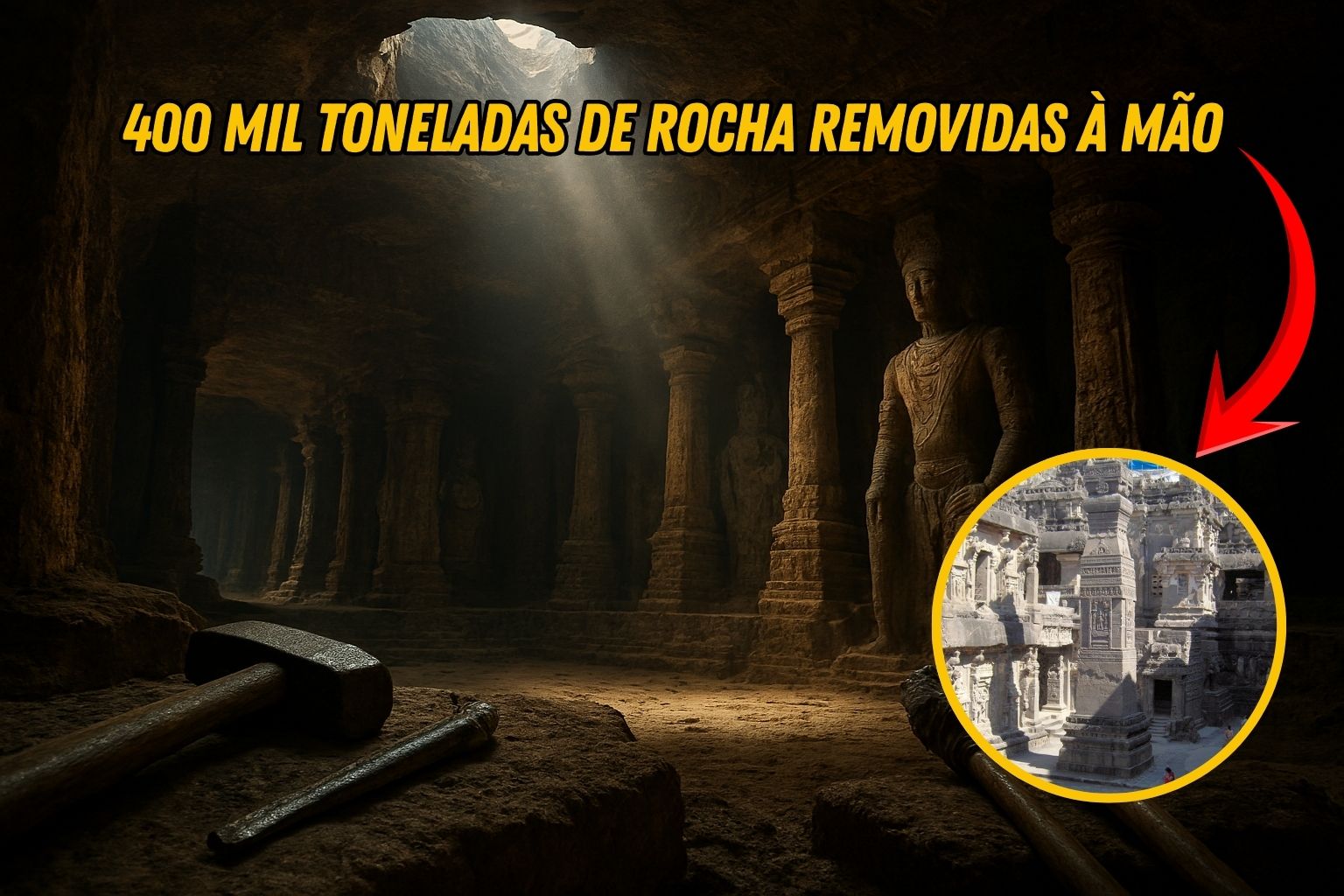
Ellora Brings Together 34 Temples Carved Directly Into The Rock, With About 400,000 Tons Removed By Hand In India — An Extreme Feat Of Ancient Engineering.
In the state of Maharashtra, India, there is a complex that completely challenges the traditional idea of construction. The Ellora Caves were not built with stacked blocks, like pyramids or walls. It was literally carved out of an entire basalt mass, from the outside in, over the centuries.
There are 34 underground temples, all directly hewn from solid rock, using only hammer, chisel, and fire, at a time without explosives, machines, steel, or any type of mechanical equipment. To open these monumental spaces, archaeologists estimate that about 400,000 tons of rock were removed manually. This places Ellora among the greatest feats of manual engineering in human history.
Nothing Was Assembled: Everything Was Removed By Reverse Excavation
The technique employed at Ellora is called excavated monolithic architecture. Instead of stacking materials, the builders did exactly the opposite: they removed everything that was not part of the final work. In practice, this means that:
-
New CCR concrete paving technology promises roads up to 3x more durable, less maintenance, and cost reduction in Brazil.

-
Made from recycled plastic, plastic wood is gaining space in the construction industry because it does not rot, resists moisture, and reduces maintenance costs over the years.

-
Florianópolis will receive a million-dollar BRT that will begin construction in 2026 with nearly 400 million in funding from the federal government and the Inter-American Development Bank, and the map already shows the routes for the exclusive bus corridors.

-
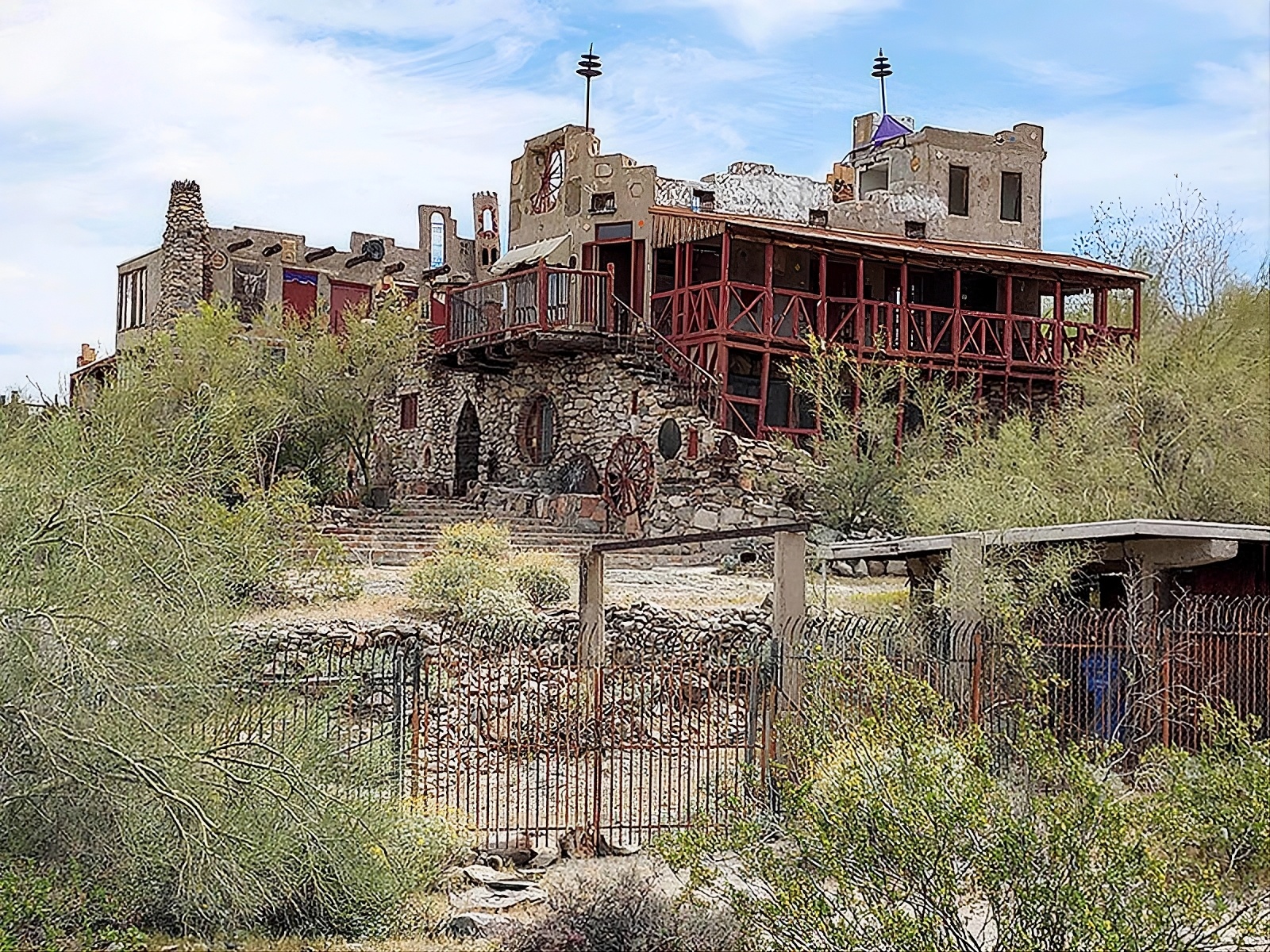
Without a blueprint, without an engineer, and using scrap from the dump, a father spends 15 years building an 18-room castle for his daughter, featuring tram tracks, 13 fireplaces, and over 700 m², which may now be demolished.

- columns, walls, ceilings, and sculptures
- corridors, halls, staircases
- portals, towers, and facades
are the very body of the original rock, and not structures assembled on top of it. A calculation error could irreversibly destroy an entire hall. Unlike a structure with blocks, where it is possible to correct flaws, at Ellora every mistake was definitive.


The Temple That Alone Would Be One Of The Greatest Works Of Antiquity
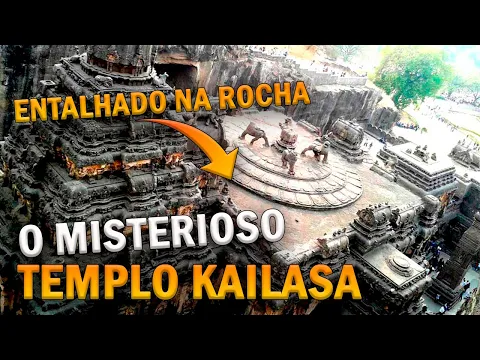
Within the complex, there is an even more incredible monument: the Kailasa Temple, an entire building sculpted from top to bottom out of a single continuous block of rock.
To create just that temple, the builders had to remove something close to 200,000 tons of basalt, all manually. First, they descended by opening a vertical courtyard. Then they began to carve the building “from the outside in,” freeing the main structure while the surrounding mass was dismantled. In the end, a complete temple emerged, with:
- towers,
- open courtyards,
- galleries,
- giant sculptures,
- staircases,
- internal and external corridors,
all excavated in one piece, without seams, joints, or any type of later assembly.
Hammer, Chisel, And Fire: The Only Technology Available
The tools available at the time were extremely limited:
- simple stone and metal hammers,
- rudimentary chisels,
- fire to heat the rock and facilitate breaking by thermal shock,
- cold water to create natural fissures.
This process was slow, exhausting, and brutal. To remove hundreds of thousands of tons of rock this way, researchers estimate that:
- thousands of workers labored for generations,
- the work spanned entire reigns,
- the execution took centuries.
There is no “completion year” for Ellora. It grew gradually, temple by temple, like a living work traversing time.
One Complex For Three Religions
Another factor that makes Ellora unique in the world is that its 34 temples do not belong to a single religious tradition. The complex houses:
- Buddhist temples,
- Hindu temples,
- Jain temples.
They were excavated side by side, over different centuries, by distinct cultures, without mutual destruction. This creates a rare physical record of religious coexistence carved directly into the rock.
Physical Scale That Still Impresses Engineers Today
The internal halls of Ellora have:
- heights comparable to multi-story buildings,
- corridors extending dozens of meters,
- columns sculpted in one piece,
- facades that mimic buildings assembled block by block, but are actually single solid rock.
In terms of volume of material removed, Ellora is on par with many modern heavy mining and infrastructure works — with the brutal difference of having been done without tractors, without drills, and without explosives.
Why The Removal Of 400,000 Tons Is So Impressive
For comparison:
- a modern truck carries about 20 tons;
- 400,000 tons is equivalent to about 20,000 full truck loads;
- in modern mining, this would require months of continuous operation with heavy machinery.
At Ellora, all of this was done:
- by hand,
- with simple tools,
- in solid rock,
- at a pace dictated by human strength.
An Error Would Be Irreversible — And Yet The Precision Is Extreme
The technical risk of the work is something that is rarely highlighted. By excavating directly into the mountain:
- there was no “Plan B,”
- there was no way to correct structural flaws afterward,
- any serious mistake would cause the rock to collapse,
- a miscalculated fissure could destroy an entire hall.
Even so, the ancient architects managed to:
- distribute the weight correctly,
- maintain stability for centuries,
- create giant voids within the mass,
- preserve extremely slender columns.
Many of these halls have remained structurally stable for over a thousand years.
One Of The Largest Construction Sites Of Antiquity
Ellora functioned for centuries as a true permanent construction site:
- continuous debris extraction,
- manual transportation out of the mountain,
- team coordination,
- technical division of tasks,
- specialized sculptors,
- master carvers and empirical architects.
All of this without formal technical writing, without detailed projects on paper, without modern structural calculations. Knowledge was passed down through observation, oral tradition, and accumulated practice.
World Heritage, Yet Still Little Understood Outside India
Today, Ellora is recognized as a UNESCO World Heritage Site, studied by archaeologists, engineers, and historians from around the world. Nonetheless, outside the academic circuit, it remains much less known than pyramids, Greek temples, or Incan cities.
And this is curious, because few works on the planet manage to combine at the same time:
- colossal scale,
- extreme technical precision,
- religious diversity,
- 100% manual execution,
- and structural permanence for over a thousand years.
A Work That Redefines What Ancient Engineering Means
Ellora proves that engineering is not just machines, concrete, and steel. Engineering is:
- planning,
- collective organization,
- mastery of materials,
- correct understanding of the behavior of rock,
- and the courage to execute something that may take generations to complete.
Removing 400,000 tons of stone by hammer was not just physical effort. It was logistics, long-term vision, political power, and empirical technical knowledge at the maximum limit.
A Silent Colossus Hidden Within The Mountain
While skyscrapers compete for the sky in modern cities, Ellora took exactly the opposite path: it dove into the mountain to create one of the largest subterranean religious complexes ever made by humankind.
All of this carved, not built. All of this hewn, not assembled. All of this surviving for over a thousand years.








-

-

-

4 pessoas reagiram a isso.