





 English
  Francês
  Alemão
  Italiano
  Japonês
  Norueguês
  Portuguese
  Spanish
  6 min of reading
  0 comments


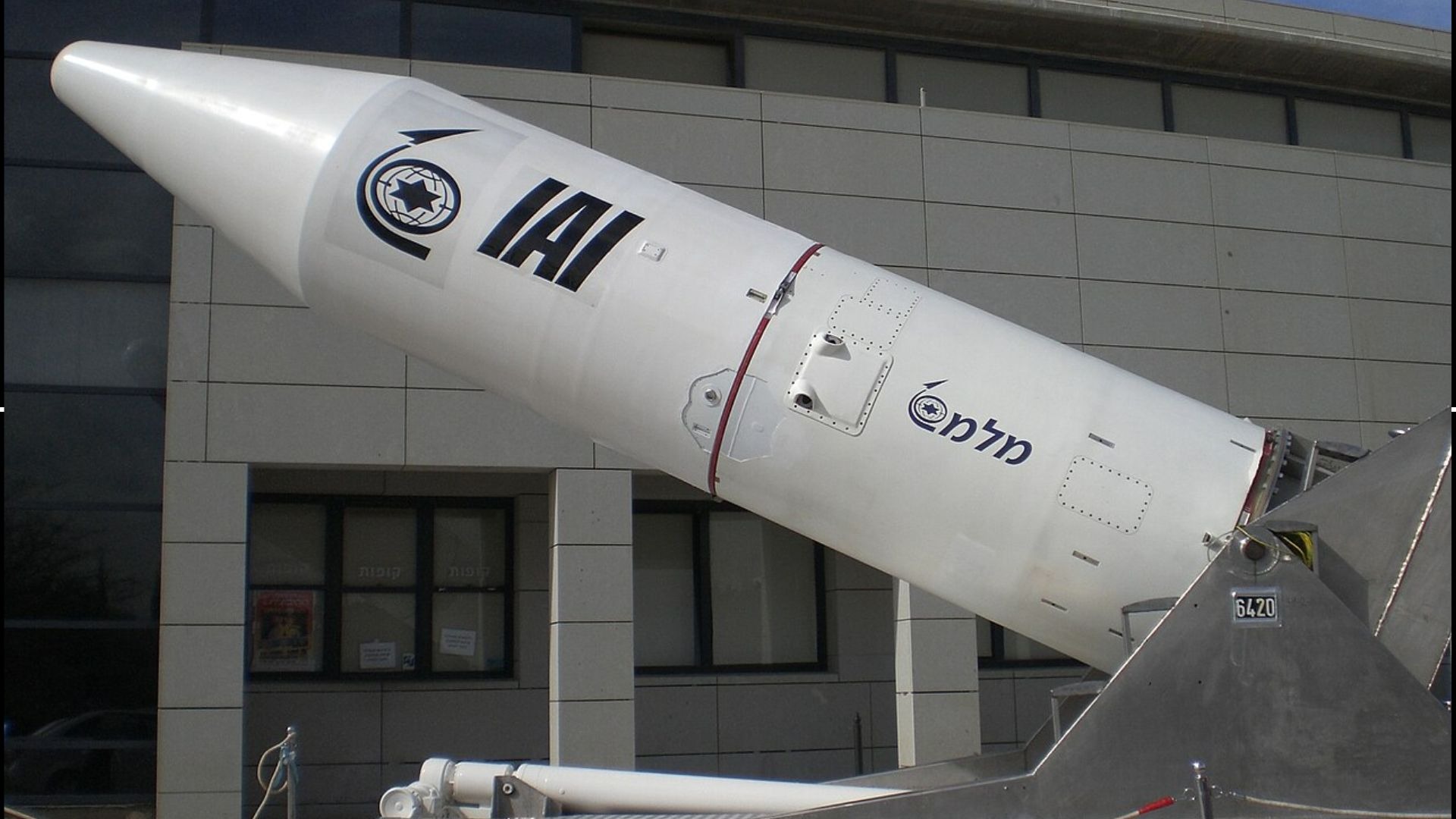
The Debate About Israel, Nuclear Weapons Is Back at the Center of International Analyses Following the Rise of Tensions With Iran. Estimates Indicate That the Country Has Between 80 and 90 Nuclear Warheads, as Well as Missiles and Submarines Capable of Launching Attacks Thousands of Kilometers Away
The rise of tensions between Israel and Iran has reignited international discussions about Israel, nuclear weapons, and the risk of an extreme scenario in the Middle East, a topic that has returned to the forefront of strategic analyses in light of the undeclared nuclear arsenal attributed to the country.
Experts emphasize that the use of nuclear weapons in the region remains highly unlikely. Nevertheless, the existence of the nuclear arsenal associated with Israel and nuclear weapons remains a central element in regional security concerns.
Although nuclear weapons have never been used in the Middle East, debates about Israel, nuclear weapons, and the Iranian nuclear program have been recurring in strategic analyses for decades. The topic has resurfaced following the resumption of hostilities in the region.
-
If the USA were to go to war with Brazil, Washington’s greatest fear would not be the attack itself, but facing a vast territory, prolonged resistance, and a costly, chaotic, and unpredictable occupation.
-
In 2013, Nicaragua sold the concession for a canal to rival Panama to a Chinese billionaire who lost 85% of his fortune, disappeared, and was declared bankrupt. Now the project resurfaces with a new route, a new Chinese partner, and a cost of $64.5 billion.
-
The USA announces a mysterious billion-dollar vault project to store critical minerals, but what intrigues experts is not just the plan itself, but why Latin America, including Brazil, has entered the center of this global dispute against China.

-
Trump Announces Bombing of U.S. Military Targets on Iranian Island Responsible for About 90% of Iran’s Oil Exports, Warns of Further Attacks if Navigation in Strategic Strait of Hormuz Is Threatened

According to a recent report from the South China Morning Post, the issue has returned to international focus due to military tensions between the two countries. The situation has once again drawn attention to the widely suspected Israeli nuclear arsenal and the strategic risks associated with it.
Alicia Sanders-Zakre, head of policy at the International Campaign to Abolish Nuclear Weapons, stated that experts generally recognize that Israel possesses nuclear weapons. Still, this condition has never been officially acknowledged by Israel or the United States.
She highlighted that the very existence of nuclear arsenals poses a permanent risk. According to Sanders-Zakre, as long as a country possesses nuclear weapons, the possibility of intentional or accidental use of those weapons remains.
Nuclear Ambiguity Policy Marks Israeli Strategy
Israel has never officially confirmed possessing nuclear weapons and maintains a strategy known as nuclear ambiguity. This policy consists of neither confirming nor denying the existence of a nuclear arsenal in the country.
The goal of this approach is to maintain deterrent capability against adversaries without formally assuming the status of a nuclear power. The strategy has been adopted by Israeli leaders over decades.
According to the Nuclear Threat Initiative, analysts believe that Israel has possessed nuclear weapons since the late 1960s. Despite this, the country continues to avoid any official confirmation regarding its arsenal.
Independent research institutes attempt to estimate the size of Israel’s arsenal based on available intelligence data and historical records. Estimates vary but indicate a relatively limited number of warheads.
The Stockholm International Peace Research Institute estimates that Israel possesses around 80 nuclear weapons. This quantity would place the country among the smallest existing nuclear arsenals in the world.
Meanwhile, the Arms Control Association estimates that Israel has approximately 90 nuclear warheads. According to this same assessment, the country would also have fissile material sufficient to produce about 200 additional weapons.
Launch Systems Expand Strategic Capacity
Analysts believe that Israel has structured its nuclear forces to operate with multiple launch methods. This diversification would be part of the deterrence strategy associated with Israel and nuclear weapons.
SIPRI assessments indicate that some warheads could be launched by military aircraft. Others would be intended for the Jericho series of ballistic missiles.
Jericho missiles are described by analysts as capable of hitting targets located thousands of kilometers away. This capability would significantly expand the strategic reach of the Israeli arsenal.
According to the South China Morning Post, Israel’s nuclear warheads could also be launched from different platforms. Among them would be aircraft and submarines capable of carrying nuclear armaments.
Experts also believe that Israel possesses submarines capable of launching cruise missiles with nuclear warheads. This feature creates what analysts classify as second-strike capability.
This capability means that a country could retaliate with nuclear weapons even after suffering a large-scale attack. In strategic terms, this reinforces the role of nuclear weapons as a deterrent tool.
Historical Origin of the Israeli Nuclear Program
Israel’s nuclear policy also differs from most nuclear powers because the country has not signed the Treaty on the Non-Proliferation of Nuclear Weapons. As a result, its nuclear facilities are not subject to international inspections.
The Israeli nuclear program originated in the 1950s. During this period, the Dimona nuclear facility was built, located in the Negev Desert.
The facility was part of a secret effort to develop nuclear weapons. The program remained hidden for decades and was kept under tight secrecy.
The existence of the nuclear complex became widely known in 1986. That year, technician Mordechai Vanunu disclosed photographs and information about activities conducted at the site.
Historians point out that the nuclear program emerged during a time of significant strategic concern among Israeli leaders. The young state feared facing existential threats from neighboring countries.
In this context, nuclear capability began to be seen as the ultimate deterrent against the possibility of national annihilation.
The Doctrine Known as the “Samson Option”
One of the most controversial concepts associated with the debate about Israel, nuclear weapons is the so-called Samson Option. The term was popularized by investigative journalist Seymour Hersh in 1991.
Hersh used the concept in his book “The Samson Option,” which examined the Israeli nuclear program and its strategic implications. The expression has come to describe a possible extreme retaliation strategy.
In strategic terms, the Samson Option refers to the possibility of a massive nuclear response should the state of Israel itself face the risk of destruction.
The name derives from the biblical narrative of Samson. According to the story, the character destroyed a temple and killed himself and his enemies.
Military analysts explain that the Samson Option is not considered a formal operational doctrine. Instead, it is viewed as a strategic framework for deterrence.
The implicit idea would be to convey the message that any adversary threatening Israel’s survival would face the risk of devastating retaliation.
Researchers from the Modern War Institute at West Point describe the Samson Option as a last resort strategy. It would be based on implicit threats of overwhelming nuclear retaliation should the country’s existence be threatened.
Experts Consider Use of Nuclear Weapons Unlikely
Despite strategic concerns, experts assert that the use of nuclear weapons by Israel in a conflict with Iran is considered highly unlikely.
Nuclear weapons would provoke extremely severe humanitarian and environmental consequences. Moreover, their use would likely trigger political and military repercussions on a global scale.
Another factor pointed out by analysts is the role of nuclear deterrence. The presence of these weapons aims to prevent existential threats and not serve as a common instrument of war.
According to Sanders-Zakre, the humanitarian consequences of a nuclear detonation would be devastating. An explosion in a populated area could result in hundreds of thousands or even millions of deaths.
She also warned that long-term effects would include persistent environmental contamination. Furthermore, diseases such as cancer could affect future generations due to radiation exposure.
The Arms Control Association emphasizes that the mere existence of nuclear arsenals already involves risks. Among them are accidental escalations, miscalculations, or deliberate use during moments of extreme crisis.
Strategic Balance Remains Fragile in the Region
Israel is widely considered the only state with nuclear weapons in the Middle East. Nevertheless, the country has never officially confirmed possessing such armaments.
According to ICAN, Israel is among the nine countries believed to possess nuclear weapons in the world. The list includes the United States, Russia, China, France, the United Kingdom, India, Pakistan, and North Korea.
At the same time, Israel and its allies claim that preventing Iran from acquiring nuclear weapons is a central regional security goal.
The Iranian government asserts that its nuclear program has civilian purposes. However, uranium enrichment activities have been monitored and analyzed by international observers.
Sanders-Zakre stated that despite frequent accusations, there is still no evidence considered truly credible that Iran has advanced to a nuclear weapons program.
The combination of Israel’s undeclared arsenal and Iran’s nuclear program has created a tense strategic environment. Analysts assert that this balance heavily depends on deterrence and secrecy.
For now, nuclear weapons remain a silent element in the confrontation between Israel and Iran. Nonetheless, the mere existence of these capabilities continues to influence strategic decisions on both sides.









Seja o primeiro a reagir!