





 Português
  Inglês
  Espanhol
  3 min de leitura
  0 comentários


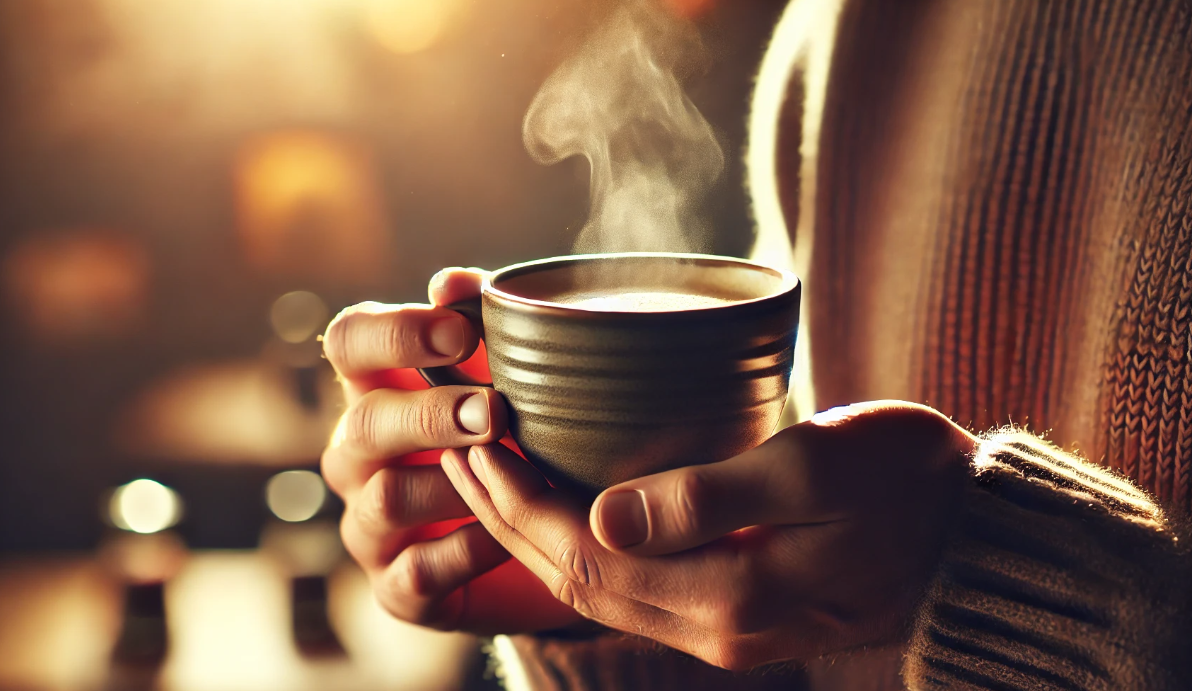
If You Want Your Coffee Cup to Stay Hot Longer, Should You Hold It in Your Hands or Leave It on the Table?
It’s raining outside, and the cold wind cuts through your skin as you need to go to work. Your hands are cold, so you grab a hot cup of coffee in hopes of warding off the chill. Holding the cup between your hands, you feel the heat slowly spreading, bringing a bit of comfort.
However, you soon realize that the drink has cooled down faster than you expected and wonder if it would have been better to leave it on the table.
But would the coffee have stayed warmer if it had been placed on the table? And why did the cup cool down in your hands, after all? The answer to these questions lies in Thermodynamics.
-
A bright yellow mushroom imported from Asia escaped from a cultivation farm in the United States in 2010 and is now aggressively spreading across 25 states, destroying entire communities of native fungi in American forests.

-
Buried under China, a colossal machine weighing 20,000 tons began operating as the largest neutrino detector on the planet and, in just 59 days, surpassed results that science took half a century to achieve.

-
Iran enters the center of a climate alert after the war emitted 5.6 million tons of CO2 in two weeks, surpassing the annual pollution of entire countries.

-
Lunar exploration may change after a Chinese probe finds a “cavity” of radiation that reduces the impact on astronauts by up to 20% at certain times on the Moon.


Thermal Energy and Heat Flow
Thermodynamics is the branch of physics that studies how thermal energy interacts with the matter around it. The sensation of hot or cold is directly related to the kinetic energy of the molecules of an object. The higher the kinetic energy of the molecules, the higher their temperature.
Whenever two objects with different temperatures come into contact, heat transfer occurs:
- The hotter object loses heat.
- The cooler object gains heat.
This process continues until both reach the same temperature, a state known as thermal equilibrium.
Heat Transfer Mechanisms
Heat loss occurs in three ways:
- Conduction: Heat is transferred through direct contact between two objects. When you hold the coffee cup, your hands absorb heat through conduction, causing the coffee to cool faster.
- Convection: Heat moves through air or liquids. The warm air around the cup rises, being replaced by cooler air, which accelerates heat loss.
- Radiation: Heat is emitted in the form of electromagnetic waves. The open part of the cup loses heat to the environment through this mechanism.
Now, let’s analyze what happens in each scenario.
Coffee Cup – Hold or Leave on the Table?
Case 1: Cup on the Table
- The coffee loses heat through radiation.
- The base of the cup loses heat through conduction to the table.
- The heat from the sides of the cup is dissipated into the environment.
Case 2: Cup Held in Hands
- The coffee continues to lose heat through radiation.
- The base of the cup loses less heat, as it is not in contact with a cold surface.
- The sides lose heat to your hands through conduction.
The big difference lies in conduction: when you hold the cup, your hands absorb heat quickly. This can be comfortable in the cold, but it accelerates the cooling of the coffee. On the other hand, when the cup is on the table, it loses heat more evenly.
How to Keep Coffee Hot Longer?
If you want to keep your coffee hot, some practical solutions can help:
- Use a Lid: Reduces heat loss through radiation and convection.
- Choose a Thermal Cup: Materials like ceramics retain heat better than glass or plastic.
- Set the Cup on an Insulator: A cork or rubber mat reduces heat loss to the table.
- Use a Thermal Reflector: Reflects the infrared radiation back to the coffee.
- Invest in a Thermal Bottle: The most effective solution for keeping heat for hours.
Thermodynamics clearly explains that coffee cools due to heat transfer via conduction, convection, and radiation.
Holding it might provide a pleasant feeling for your hands, but it also accelerates the cooling of the drink. Leaving it on the table reduces heat loss by conduction to your hands, but still doesn’t completely prevent cooling.
For those who want to enjoy hot coffee for longer, using a lid, choosing a good cup, and avoiding holding the container directly are effective solutions. And, of course, the best option will always be a good thermal bottle!
Now that you understand how Thermodynamics affects your coffee, why not try these tips and see which works best for you?
With information from science andabc.







Seja o primeiro a reagir!