





 Portuguese
  English
  Spanish
  6 min of reading
  1 comment


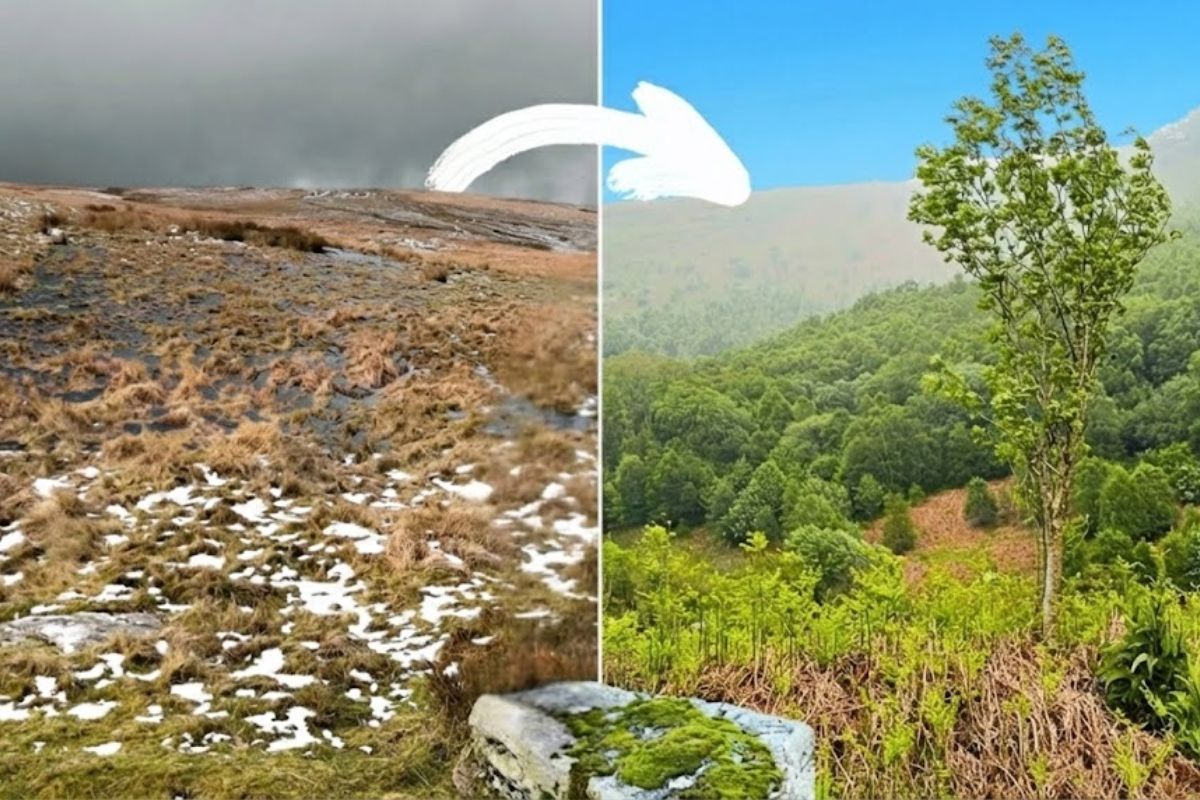


Degraded Lands in the United Kingdom, the United States, and Parts of Africa React When Grazing Is No Longer Continuous and Becomes Movement, Rest, and Recovery, Changing Water, Erosion, Biodiversity, and Production
Lands that seemed condemned to become “beautiful on the outside and empty on the inside” are silently resurrecting in places far apart on the planet. When the soil starts to hold water again, the vegetation ceases to be a fragile monoculture and behaves like a true ecosystem, with structure, diversity, and the capacity to sustain life.
What lies behind this turnaround is not a futuristic technology or a gigantic work. It is something more basic and, therefore, more shocking: the return of animal movement as a recovery tool, with long pauses for the land to breathe, regain composition, and resume processes that had been interrupted for decades, centuries, and, in some cases, by entire generations.
Lands That Seem Wild but Were Engineered to Fail
In the Cambrian Mountains, in Wales, the cold, windy, and exposed landscape gives a sense of untouched nature.
-
Millions of people have been eating yam for centuries without knowing that this humble tuber contains a compound called diosgenin, which scientists have now discovered can improve memory and help control blood sugar levels.

-
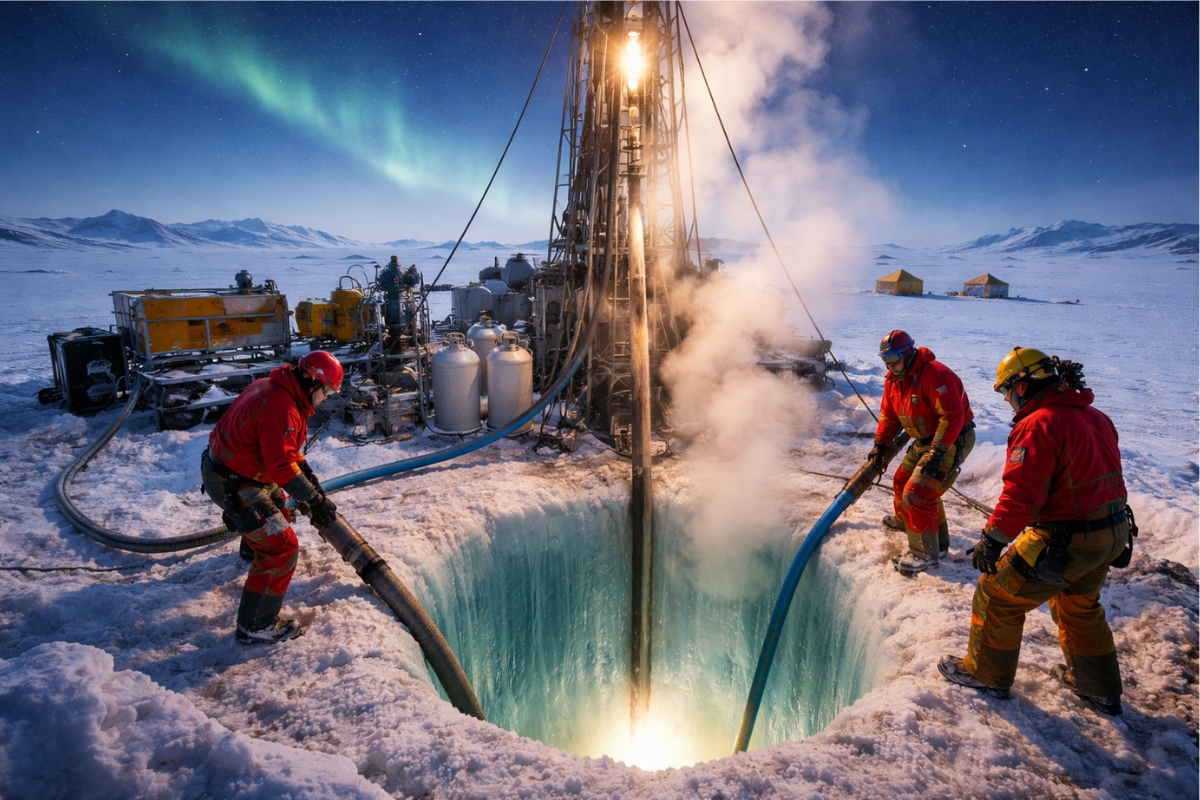
Scientists from an international project drill 1,800 meters of ice in Antarctica using hot water and discover details about one of the most intriguing places on planet Earth.
-
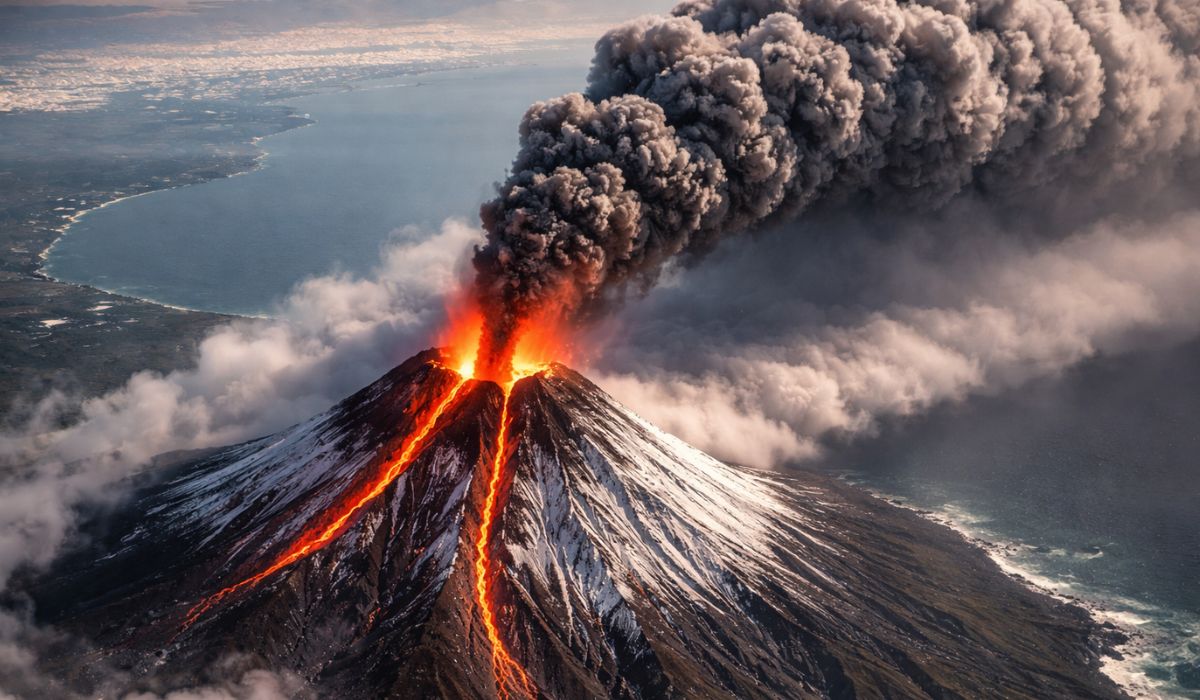
Seen from space, a colossal volcano nearly 5,000 meters high in Russia has released 1,600 km of smoke over the Pacific, forming “devil’s horns” of lava and revealing the brutal force of the Ring of Fire.
-
Expedition 501: Scientists drill into the ocean floor and discover a giant reserve of fresh water hidden beneath the sea, extracting nearly 50,000 liters and revealing an invisible system that could reshape the map of water scarcity.


However, in practice, there is hardly anything “untouched” there. The uplands have been shaped by human actions for so long that they have come to appear natural, even when they no longer function as they should.
In many of these lands, what dominates is a monoculture of resistant grass, known as “purple morphed grass,” which creates a kind of biological desert.
It can withstand the harsh environment, but it impoverishes everything around it.
The problem is not just “having too much grass.” It is the way this grass sustains itself: shallow roots, little complexity, limited infiltration, and little associated life.
When the roots are shallow, the lands hold less water. This changes everything. In dry periods, the exposed soil dries out quickly.
When it rains, the water does not penetrate as it should and flows directly over the surface, taking nutrients with it and paving the way for erosion. The result is a landscape that looks alive but functions as if it is always on the edge.
The Collapse Did Not Start with the Plant, It Started with the Broken Relationship Between Earth and Animal
The “purple morphed grass” does not become dominant by magic. It becomes dominant when the entire system is pushed into a model where almost nothing can compete.
The pattern described for these lands is a repeating sequence: top predators were eliminated, ancestral forests were cut down, wetlands were drained, fences and enclosures were erected, and wild herbivores were replaced by non-native cattle.
In this scenario, grazing ceases to be a natural pulse and becomes a constant pressure.
And here comes the most decisive point: without movement and without pause, there is no recovery.
Continuous grazing does not allow the land to “rearm” its balance.
There is no rest.
There is no vigorous regrowth. There is no time for the soil to reorganize pores, organic matter, and moisture.
Thus, the resistant and unpalatable plant for most of the year, even for sheep, gains an advantage and begins to dominate year after year.
To try to curb this, vast areas are burned.
However, this cycle does not reverse degradation. It keeps the landscape trapped in a model that never truly regenerates.
Lands in the United States Fell into the Same Hole by a Different Path

What happens in the United Kingdom is not an isolated case.
In places like Montana, in the United States, the logic of land collapse appears with a different “face,” but with the same heart: huge herds of bison were replaced by cattle, predators were removed, and miles of fencing began to block natural movement across the landscape.
Prairies that evolved to cope with short periods of intense grazing followed by long periods of rest lost that rhythm.
Instead of pulses, there came continuous pressures. And when this happens, the system changes gear: deep-rooted grasses disappear, bare soil expands between plants, the earth compacts, and water ceases to penetrate.
When water does not enter, it does not stay. And when it does not stay, the lands lose resilience. Droughts become more aggressive.
Heavy rains become floods.
The landscape starts to fail at both extremes.
In Africa, the Lands Also Broke When Movement Became Permanence

In Africa, especially in the Sahel region, the plot changes on the surface, but the foundation remains the same.
For centuries, herders moved cattle over vast distances.
The grazing was intense but brief, and the lands had time to recover.
Then, borders were drawn, people were pushed to settle, permanent wells reduced the need for movement, and in many areas, conflicts made movement unsafe.
The animals continued to exist, but the pattern changed.
Grazing became continuous.
Perennial grasses collapsed, short-lived annual weeds took over, and bare soil advanced, accelerating desertification.
The summary of this part is harsh and straightforward: in different places, with different animals, the system failed in the same way when movement was replaced by boundaries.
The Simple Method That Resurrects Lands: Movement, Rest, and Recovery
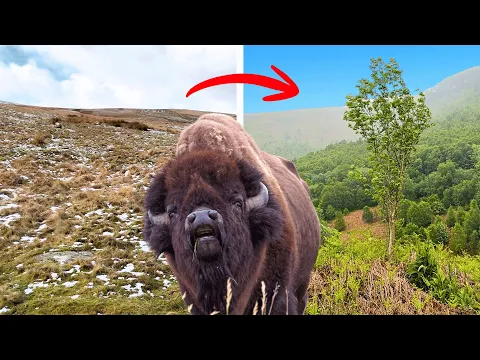

What makes lands react is not “removing animals” nor is it “abandoning the land.”
The central point is to restore what has been missing for a long time: movement with pause.
In Wales, this is clearly illustrated by the example of the Gilfac Nature Reserve.
There, grazing remains the foundation of management, but the way it happens changes completely.
Instead of constant pressure, there is control. The cattle enter, act as ecological disruptors in certain sections, and then exit.
In some areas, they are excluded for long periods. In others, they are removed when necessary.
The land begins to have real recovery time.
This detail is crucial because recovery is not just “the grass growing back again.”
It is the soil recovering its function: infiltrating, storing, sustaining diversity.
With this restart, the transformation gains strong signs. Trees begin to return more consistently, the structure of vegetation changes, and the hints of what that place could be become visible.
A symbolic example mentioned is an ancient apple tree, which suggests that region is in an area capable of sustaining a kind of moisture-rich forest.
The tree appears covered with lichens, mosses, and ferns, showing that when the land starts to retain moisture, life begins to stack up in layers.
When Lands Function, They Hold Water, Reduce Extremes, and Sustain Food
The most important part of this story is that recovering lands is not an ecological luxury. It is natural infrastructure.
Healthy lands retain water during droughts and help mitigate impacts during storms.
This means less flooding, less erosion, less soil loss, and more stability.
And, in times of uncertainty, functioning lands can also produce food sustainably and reliably.
In the United States, this is evident when ranchers start exchanging continuous grazing for planned and rotational systems.
The cattle are kept in more compact groups, graze for shorter periods, and are moved. Then, the lands receive long periods of rest.
The described result is a self-reinforcing sequence: grasses with deeper roots, healthier soils, better water retention, and a landscape more resilient to both drought and torrential rains.
And this effect does not stay just “in the open field.” The recovered vegetation stabilizes riverbanks, reduces wear, and improves the functioning of surrounding wetlands.
Lands Respond When Movement Returns, Even If Partially
In Africa, the principle is the same. Where movement begins to be restored, even if partially, the lands react.
Perennial grasses return, bare soil decreases, and productivity begins to rebuild.
This response is the point that connects everything: it does not matter if the landscape is a British upland, an American prairie, or a semi-arid African region.
When the system regains rhythm, the land gains a chance.
And that is why the impact of this idea goes beyond a local case.
It suggests that many degraded lands are not “dead” for lack of potential but are trapped in a logic of use without pause, without recovery, and without movement.
If such different lands can react when management restores movement and rest, do you think this simple method could become a rule instead of an exception in degraded areas of Brazil as well?







Sim, sem dúvidas. A inclusão de roedores também ajuda muito pois eles constroem verdadeiros túneis para que a água penetre o solo de forma natural e eficaz.