





 Portuguese
  English
  Spanish
  3 min of reading
  0 comments


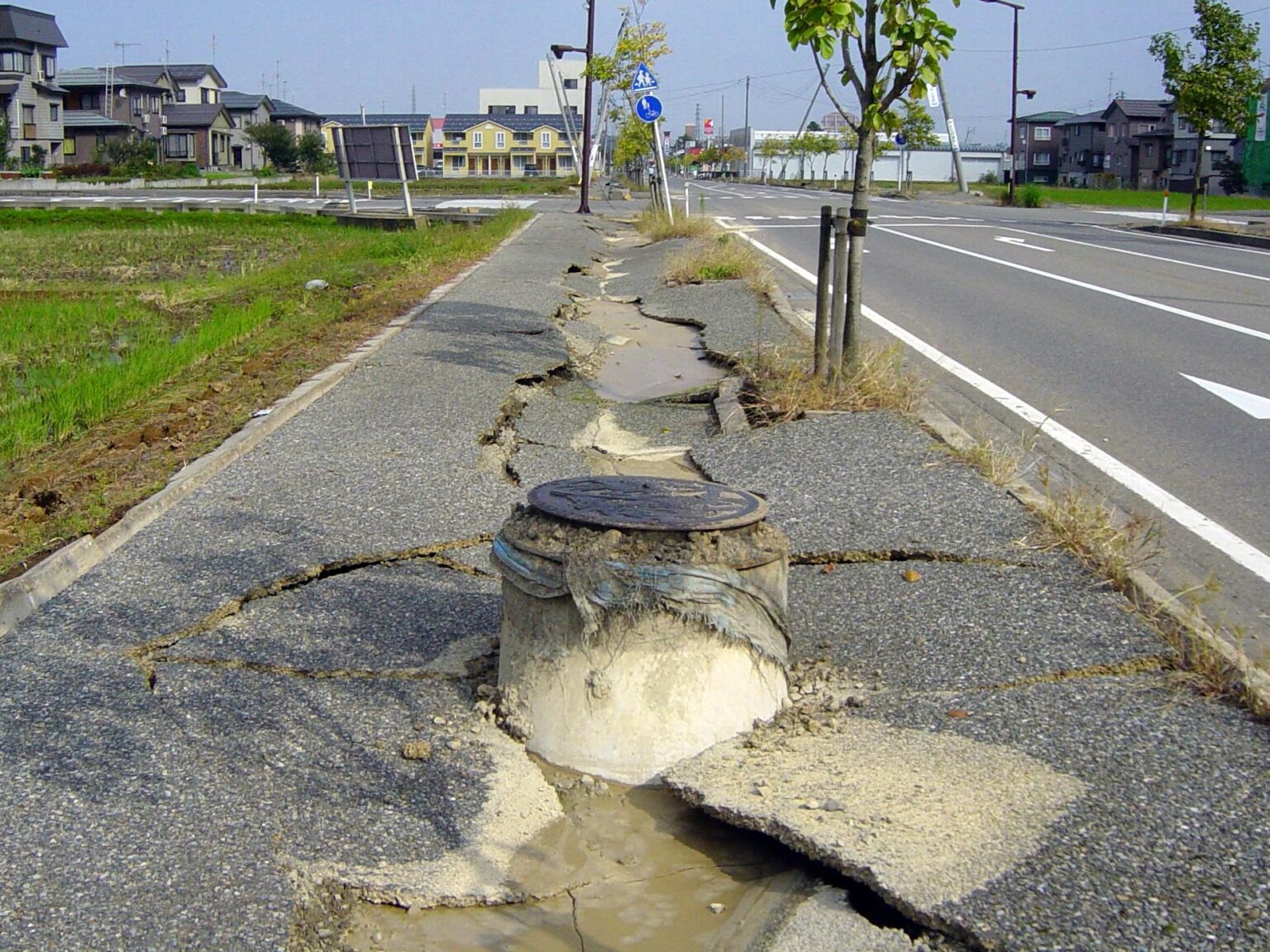
Study Reveals That Earthquakes May Be Preceded By A Subtle And Slow Movement, Offering New Possibilities To Improve Early Warning Systems And Prevent Disasters
Avoiding an earthquake is still an almost impossible task, despite scientific advances. However, a recent study has shed new light on what may be a precursor signal before the most catastrophic earthquakes.
Based on laboratory experiments, scientists identified a slow and subtle movement that could be key to widening an early warning window.
The Mystery Of The Start Of Rupture
Earthquakes occur when tectonic plates, large pieces of the Earth’s crust, move abruptly. This movement occurs along geological faults, where plates meet and press against each other for long periods.
-
Friends have been building a small “town” for 30 years to grow old together, with compact houses, a common area, nature surrounding it, and a collective life project designed for friendship, coexistence, and simplicity.

-
This small town in Germany created its own currency 24 years ago, today it circulates millions per year, is accepted in over 300 stores, and the German government allowed all of this to happen under one condition.

-
Curitiba is shrinking and is expected to lose 97,000 residents by 2050, while inland cities in Paraná such as Sarandi, Araucária, and Toledo are experiencing accelerated growth that is changing the entire state’s map.

-
Tourists were poisoned on Everest in a million-dollar fraud scheme involving helicopters that diverted over $19 million and shocked international authorities.


Eventually, the accumulated pressure causes a rupture, releasing a huge amount of energy and causing tremors. However, what intrigues scientists is how this rupture starts. How can this initial moment be predicted?
Jay Fineberg, a physicist at the Hebrew University of Jerusalem and leader of the study, explains that the rupture begins in a broken zone where the plates are stuck.
As stress increases, the rupture accelerates to nearly the speed of sound, generating the earthquake. But before this explosion, there is a calmer and slower phase that could be observed to predict a disaster.
The Experiment With Plexiglass
Although geological faults are located kilometers deep, the study did not focus directly on them. Instead, the scientists recreated fault conditions in a laboratory environment by using sheets of polymethyl methacrylate, commonly known as plexiglass.
The team applied shear forces to the sheets, simulating the movements of tectonic plates, especially how it occurs in the famous San Andreas Fault in California.
What they discovered was surprising. Before a catastrophic rupture, the material went through a phase called “nucleation front,” an extremely slow and almost imperceptible movement.
This phase is much smoother and creeping compared to the fast and intense tremors that characterize earthquakes. For scientists, this opened a new possibility: if this subtle movement could be detected, it might be possible to predict the arrival of a major earthquake.
The Mechanics Behind The Slow Movement
Fineberg’s team went further and expanded mathematical models to understand the behavior of the crack. Instead of viewing the rupture as a simple line, as was traditionally done, they reimagined it as a patch expanding in two dimensions.
This new model revealed a crucial point: while the increase in energy needed to expand the patch was balanced, the movement remained slow and aseismic.
However, when the patch exceeded the limit of its broken zone, excess energy accumulated, and the rupture accelerated, becoming explosive.
Implications And Challenges
The findings bring an optimistic perspective for improving early warning systems for earthquakes. If it is possible to detect this aseismic phase in actual faults, energized scientists will have more time to issue alerts.
According to Fineberg, in the laboratory, it is possible to hear the sounds emitted by this movement, but in reality, faults do not have the same visibility. Many faults exhibit this slow movement without resulting in an earthquake, making the task of predicting the exact moment even more complex.
Despite the challenges, this research opens doors for the development of new monitoring and prevention methods.
And not just for earthquakes. These same principles can be applied to the study of other systems under stress, such as airplane wings or bridges, offering a way to detect failures before they become catastrophic.
With information from Live Science.









Seja o primeiro a reagir!