





 Portuguese
  English
  Spanish
  4 min of reading
  0 comments


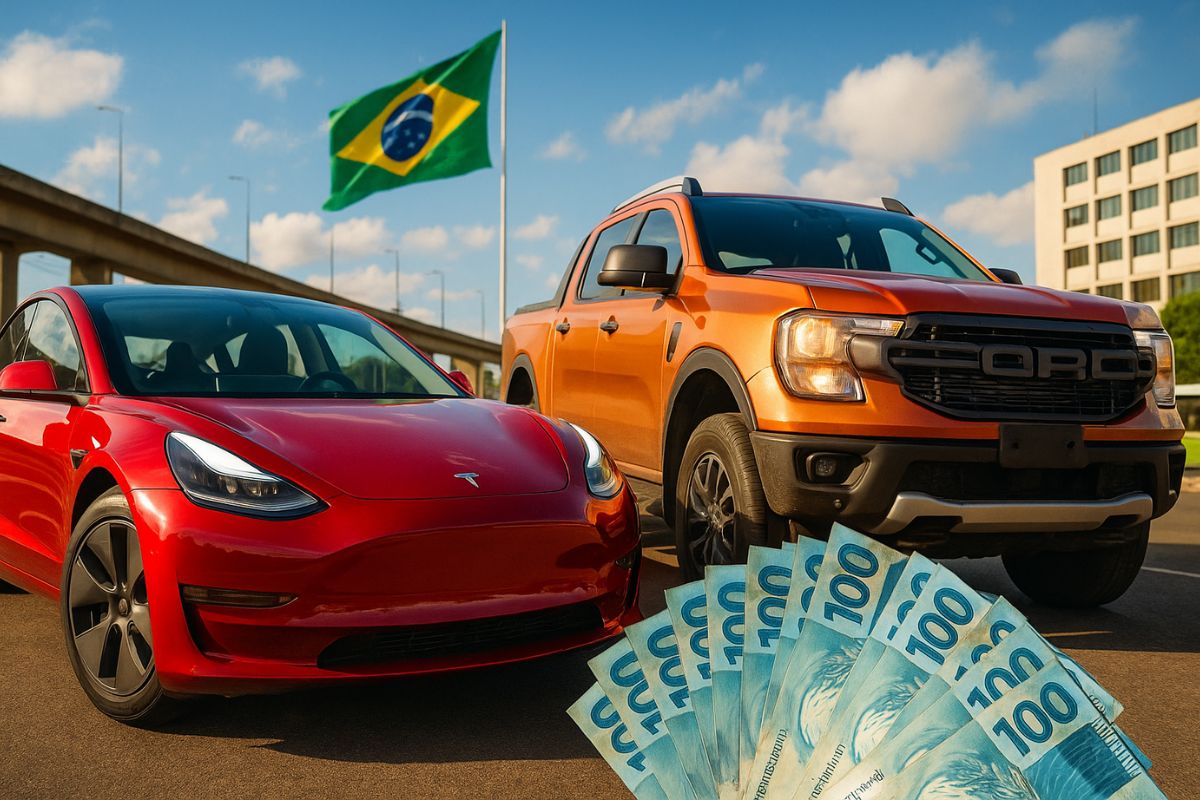
Even With 2 Million Cars Sold Per Year and Global Leadership, Tesla Avoids the Brazilian Market. The Reason Is Not Infrastructure, But the Consumption Profile That Favors Pickups Over Electric Vehicles.
Tesla sells about 2 million electric vehicles per year and controls 60% of the American battery-powered car market. The success of Elon Musk’s brand in the United States, Europe, and China is the result of a strategy that combines direct sales integration, logistical efficiency, and technological dominance. Still, Brazil remains off the automaker’s map, even with the advancement of electrification in neighboring countries like Chile and Colombia.
The absence of Tesla in the country is not a coincidence. The Brazilian market for premium cars is small, concentrated, and largely focused on pickups above R$ 300,000, a niche that hardly aligns with the consumption profile of the brand’s electric cars.
Tesla Sells Without Dealerships and With More Control
One of the pillars of Tesla‘s success is the direct distribution model. Unlike traditional automakers, the company does not use dealerships: it sells and delivers its cars directly to the consumer.
-
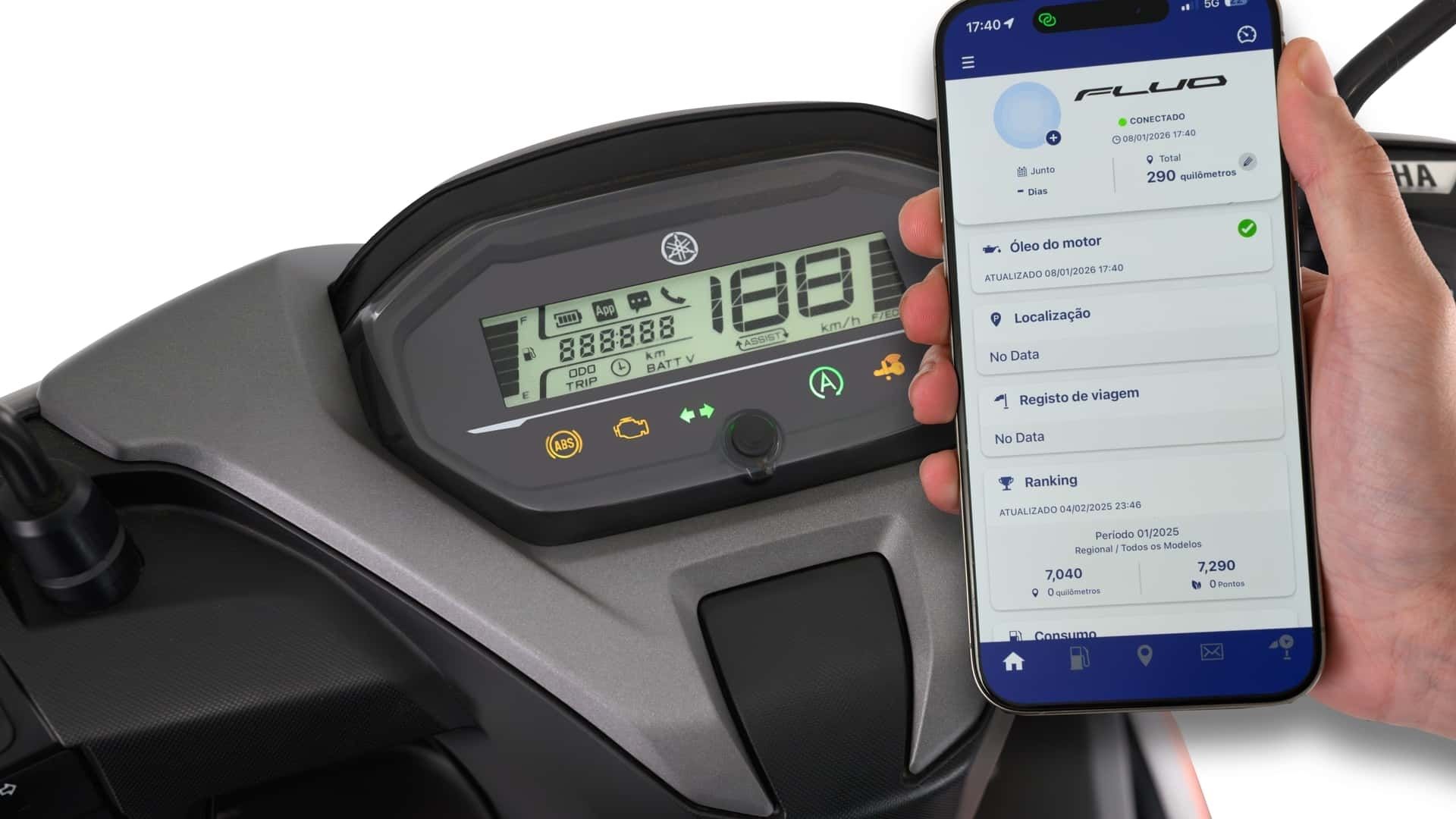
Costing R$ 16,000, the new Yamaha features a 125 cc hybrid engine with electric assistance, delivers 8.3 hp, includes ABS, optimized fuel consumption, Y-Connect connectivity, 25 liters of storage space, and a surprising 4-year warranty in the urban segment.
-
OMODA & JAECOO grows in Europe in 2026 with an integrated strategy of sales, innovation, local production, and technological advancement in the United Kingdom, Italy, and Spain.
-
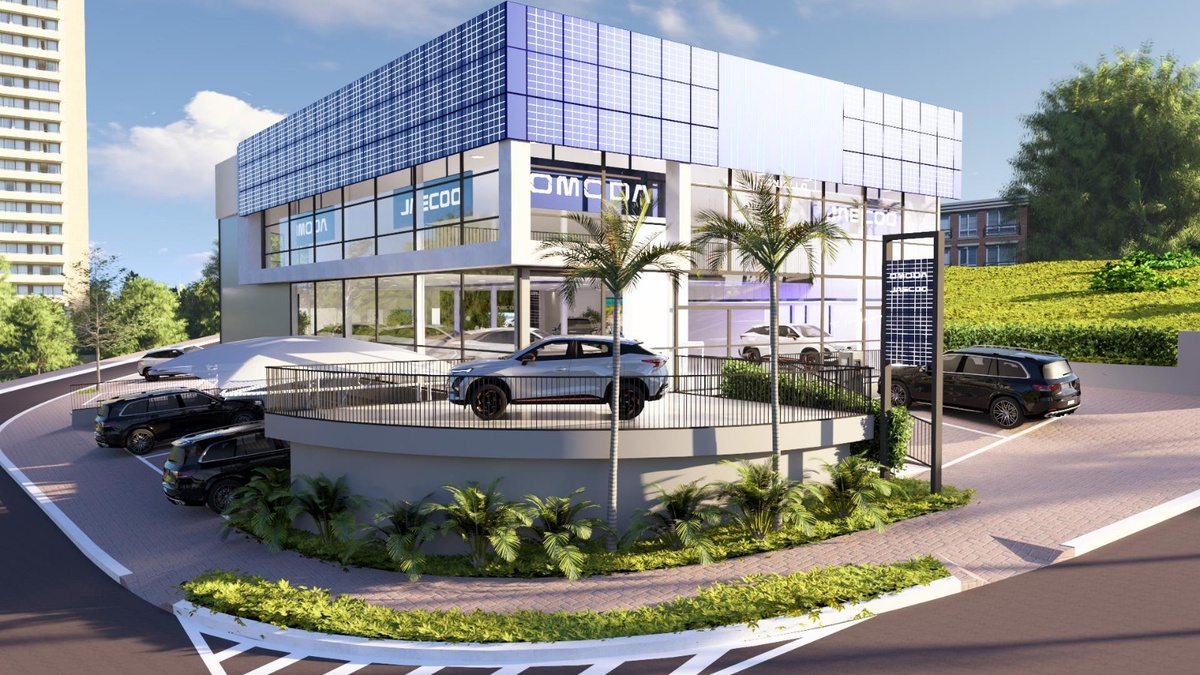
OMODA & JAECOO expands after-sales service in Brazil with competitive maintenance, a 7-year warranty, and high availability of parts for technological SUVs.
-
OMODA & JAECOO appoints Alessandra Souza as executive marketing director in Brazil and accelerates brand expansion with a focus on innovation, networking, and hybrid portfolio.


This structure reduces costs and allows for immediate price adjustments.
When there is a price drop on a model in the United States, the entire network reflects the reduction on the same day, since the inventory belongs to Tesla itself.
This vertical integration from production to sale provides agility and total control over margins and commercial strategies.
However, this model faces barriers in various U.S. states, where laws require sales through independent dealerships, and it would be even more complex to apply in Brazil, which has rigid regulations and high tax burdens on imports.
Why Tesla Does Not Come to Brazil
Tesla sees Brazil as a small market with low scale for electric vehicles. The logistical costs, lack of significant tax incentives, and limited charging infrastructure reduce attractiveness.
But the decisive factor lies in the type of vehicle that affluent Brazilians choose to buy.
While in the U.S. the luxury segment represents about 10% of the total market, in Brazil it does not reach 2% of new car sales, which is equivalent to approximately 20,000 units annually. Combined, brands like BMW, Mercedes-Benz, Audi, Volvo, Land Rover, and Porsche sell fewer than 40,000 cars per year, a number insufficient to justify the entry of a Tesla operation.
Moreover, the audience driving the Brazilian premium sector does not seek electric sedans or luxury SUVs, but rather robust and versatile pickups, with average prices above R$ 300,000.
The Market That Truly Drives Luxury in Brazil
Although models like BMW X1, Audi Q3, and Volvo XC40 dominate urban imagination, the money is in the countryside.
In Brazil, large pickups like Toyota Hilux, Chevrolet S10, and Ford Ranger sell double the total volume of premium cars.
The country sells about 60,000 pickups above R$ 300,000 per year, a market more profitable and stable than that of electric luxury SUVs.
In contrast, Tesla does not have a model adapted for this audience, since the Cybertruck, its first vehicle aimed at the segment, is produced in small scale and focuses on the North American market.
Meanwhile, Brazilian rural and agribusiness consumers prioritize resistance, durability, and resale value, attributes that are not yet associated with electric cars.
As industry analysts describe, a vehicle costing R$ 400,000 needs to “work” as much as a diesel utility, and not just serve as a status symbol.
The Weight of Economic and Structural Reality
Even if there were initial demand, bringing Tesla to Brazil would require high investment in import and adaptation, with reduced margins.
The price of a Model Y, which costs around US$ 45,000 in the United States, would exceed R$ 500,000 with taxes and local logistics, placing it outside the real consumption range.
Additionally, the country still lacks a robust fast-charging network outside major centers, making long trips particularly unfeasible in agricultural regions, which concentrate a good portion of consumers of expensive vehicles.
While Europe and China invest in electric infrastructure and tax incentives, Brazil is progressing slowly, which keeps electric cars as niche products, aimed more at image than practical use.
A Promising Market, But Still Distant from Brazilian Reality
Tesla could, in theory, import its vehicles to serve a small elite, as luxury brands do. But the logic of volume and global integration of the company does not adapt to limited operations and tight margins.
For Elon Musk, entering a market where he would sell a few hundred cars per month makes no economic sense.
Brazil still needs to reach a point of energy and regulatory maturity to attract electric manufacturers on an industrial scale.
The absence of Tesla in Brazil is not a matter of disinterest, but of strategy and market rationality.
The country consumes expensive vehicles, but not electric ones; luxury here has high ride, a cargo bed, and 4×4 traction. Meanwhile, the automaker’s focus remains on the U.S., Europe, and China, where the return on investment is predictable and immediate.
Do you believe that the Brazilian electric vehicle market is still distant from Tesla’s reality, or that the brand’s arrival could accelerate the transition to a more sustainable fleet?







Seja o primeiro a reagir!