





 Portuguese
  English
  Spanish
  5 min of reading
  0 comments


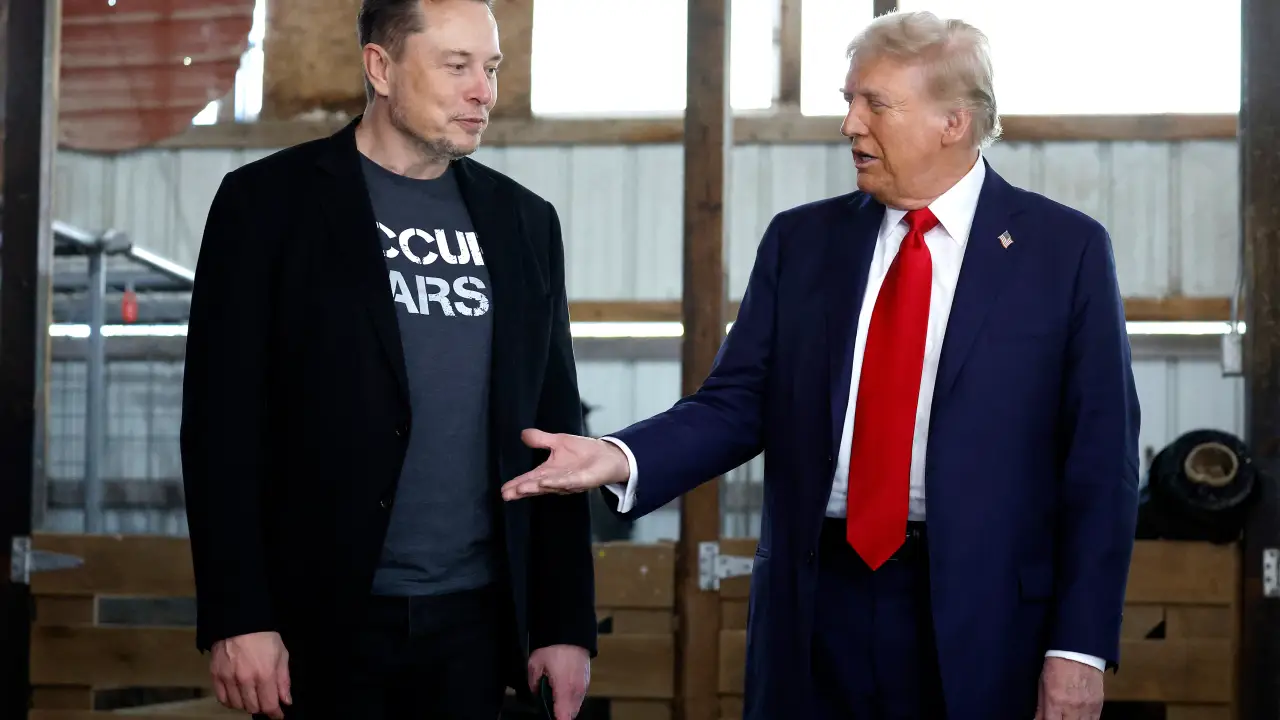
The Electric Vehicle Manufacturer Benefits From Local Production, While Competitors Face High Costs Due To New Tariffs
The new tariffs from Donald Trump on automobile imports are expected to severely impact the automotive sector, increasing prices for consumers in the United States. However, one company stands out in this scenario: Tesla, led by Elon Musk.
Shares of American, European, and Japanese automakers have already experienced significant declines due to these new measures.
Tesla’s Position In The Market
Tesla, an electric vehicle manufacturer, has large factories in California and Texas, giving it a competitive advantage over other automakers.
-
Costing R$ 16,000, the new Yamaha features a 125 cc hybrid engine with electric assistance, delivers 8.3 hp, includes ABS, optimized fuel consumption, Y-Connect connectivity, 25 liters of storage space, and a surprising 4-year warranty in the urban segment.

-
Larger than entire cities in Brazil: BYD is building a 4.6 km² complex in Bahia with a capacity for 600,000 vehicles per year, but the discovery of 163 workers in conditions analogous to slavery has shaken the entire project.

-
With an investment of R$ 612 million, a capacity to process 1.2 million liters of milk per day, Piracanjuba inaugurates a mega cheese factory that increases national production, reduces dependence on imports, and repositions Brazil on the global dairy map.

-
Brazilian city gains industrial hub for 85 companies that is equivalent to 55 football fields.


The company manufactures all the cars it sells in the U.S., thereby reducing the impact of Trump’s tariffs on automobile and essential component imports.
For some of its models, between 60% and 75% of the components are produced locally, an atypical standard in the automotive sector.
This situation was highlighted by analyst Garrett Nelson from CFRA Research, who noted that Tesla is the “least exposed” to the new tariffs.
Tesla has positioned itself as the “most American automaker” in its communications, emphasizing its ability to produce locally and thus mitigate the effects of the tariffs.
This strategy not only helps the company protect itself against additional costs but also appeals to the growing consumer demand for products made in the United States.
25% Tariffs And Their Consequences
Starting next week, new tariffs of 25% will be applied to all imported passenger vehicles and light trucks, as well as essential components such as engines and transmissions.
This measure represents an assault on the North American free trade agreement, renegotiated by Trump during his first term, which sought to integrate supply chains among the United States, Canada, and Mexico.
The Canadian Prime Minister, Mark Carney, characterized the tariffs as a “direct attack.”
These tariffs focus on the non-American parts of imported vehicles and components, which could further complicate operations for automakers that rely on an integrated supply chain.
This is particularly relevant for companies with operations in multiple countries, which may have to restructure their production chains to adapt to the new rules.
Impact On Foreign Automakers
Foreign automakers that heavily depend on imports will be the most affected by the tariffs.
Hyundai, for example, imports over a million vehicles to the United States, accounting for more than half of its sales in the country.
With the implementation of the 25% tariff, the automaker could face additional costs of up to 10 trillion won (approximately US$ 7 billion) per year, which would represent nearly 40% of the total projected operating profit for 2024.
The Volkswagen group will also face challenges, as many of its models sold in the U.S. are imported from Europe and Asia.
As a result, the company will need to assess whether it will raise prices for consumers or adjust its production to minimize the impacts of the tariffs.
Effects On American Automakers
Even American automakers such as Ford will not be exempt from the impacts of the tariffs.
Ford, which has a production base more concentrated in the U.S., still faces challenges as it manufactures models such as the Maverick pickup and the Bronco Sport SUV in Mexico.
General Motors (GM) will also be affected, importing pickups such as the Chevrolet Silverado from Mexico and Canada. This means that although Ford and GM have a significant presence in the U.S., they remain vulnerable to the new tariffs.
Additionally, Stellantis, which produces the Jeep Compass and Wagoneer S SUVs in Mexico, will also face challenges.
The company will have to consider how the tariffs will impact its competitiveness in the market and whether it will need to adjust its production strategy.
Tesla’s Recognition Of The Impact
Although Tesla is one of the least affected companies, Elon Musk acknowledged that the automaker will not emerge unscathed from the new tariffs.
In a post on X, Musk stated that the tariffs will have a “significant” impact on costs, particularly regarding the prices of imported parts.
He highlighted that most of Tesla’s components come from the United States and Mexico, but the total value of imported parts has yet to be specified, leaving the financial impact of the tariffs on the automaker uncertain.
Musk also emphasized the importance of a robust and flexible supply chain that allows the company to quickly adapt to changes in market conditions and trade policies.
The Relationship Between Trump And Elon Musk
Donald Trump insisted that there is no conflict of interest in his relationship with Elon Musk, emphasizing that Tesla’s CEO has never asked him for business favors.
This dynamic between the two leaders is closely monitored, especially considering Musk’s role in the development of the electric vehicle industry in the United States.
Moreover, Musk’s relationship with Trump and his influence in government could affect the public perception of Tesla. As one of the leading voices in the technology industry, Musk has the ability to shape opinions and policies, which can be beneficial or detrimental to the company.
The Future Of The Automotive Industry With Elon Musk In Power
The impact of Donald Trump’s tariffs may reconfigure the automotive industry in the United States.
Automakers that do not quickly adapt to the new market conditions may face significant difficulties. On the other hand, companies like Tesla, which already have a robust infrastructure and a strong local presence, may benefit and continue to grow.
The pressure on automakers to reduce prices and increase local production is expected to rise as consumers seek more affordable and sustainable alternatives.
This scenario may accelerate the transition to electric vehicles and drive innovations within the automotive industry.
With increasing awareness of environmental issues and the demand for cleaner vehicles, Tesla may position itself as a leader in this new paradigm.
Thus, Elon Musk’s company not only benefits from the tariffs but could also become a model to be followed by other automakers in the future. In an ever-evolving sector, the ability to adapt and innovate will be crucial for the success of automakers in the coming years.
SOURCE: OGLOBO








Seja o primeiro a reagir!