





 Portuguese
  English
  Spanish
  7 min of reading
  0 comments



A Mega Phosphate Reserve Buried in the Mountains of Southern Norway Could Reorganize the Mineral Power Map, Reduce European Dependence on Imports, and Pressure Established Giants in the Global Market.
Amid a global fertilizer crisis, a gigantic treasure of phosphate discovered beneath the mountains of Rogaland in southwestern Norway emerges as a potential game changer for agriculture, the green industry, and the geopolitics of raw materials. Europe, heavily reliant on imports of this input, sees the new deposit as an opportunity to reduce its vulnerability to suppliers like China, Morocco, and Russia.
At the same time, the size of the reserve and the estimated value of the deposit raise another central discussion. On one hand, phosphate could guarantee fertilizers, batteries, and clean energy for decades; on the other, environmental risks, technological challenges, and pressure from local communities suggest that turning this find into wealth will be a long, costly, and politically complex process.
From Urine Experiment to Engine of Modern Agriculture
The story of phosphate begins long before the energy transition and the discussion about batteries. In 1669, the German Hennig Brand, in search of the mythical philosopher’s stone, heated urine and ended up finding an element that glowed in the dark.
-
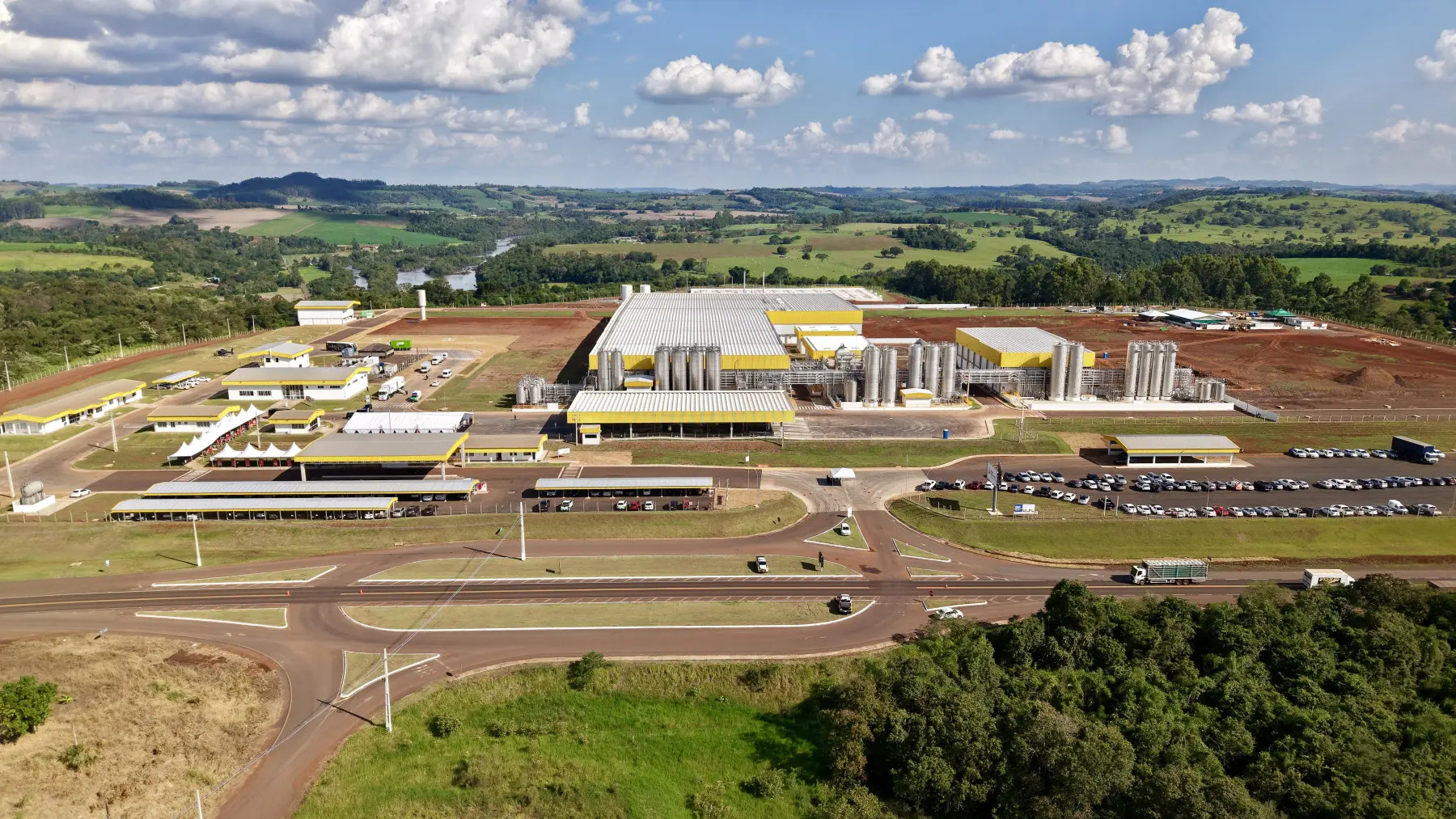
With an investment of R$ 612 million, a capacity to process 1.2 million liters of milk per day, Piracanjuba inaugurates a mega cheese factory that increases national production, reduces dependence on imports, and repositions Brazil on the global dairy map.
-
Brazilian city gains industrial hub for 85 companies that is equivalent to 55 football fields.

-
Peugeot and Citroën factory in Argentina cuts production by half and opens a layoff program for more than 2,000 employees after Brazil drastically reduced purchases of Argentine vehicles.

-
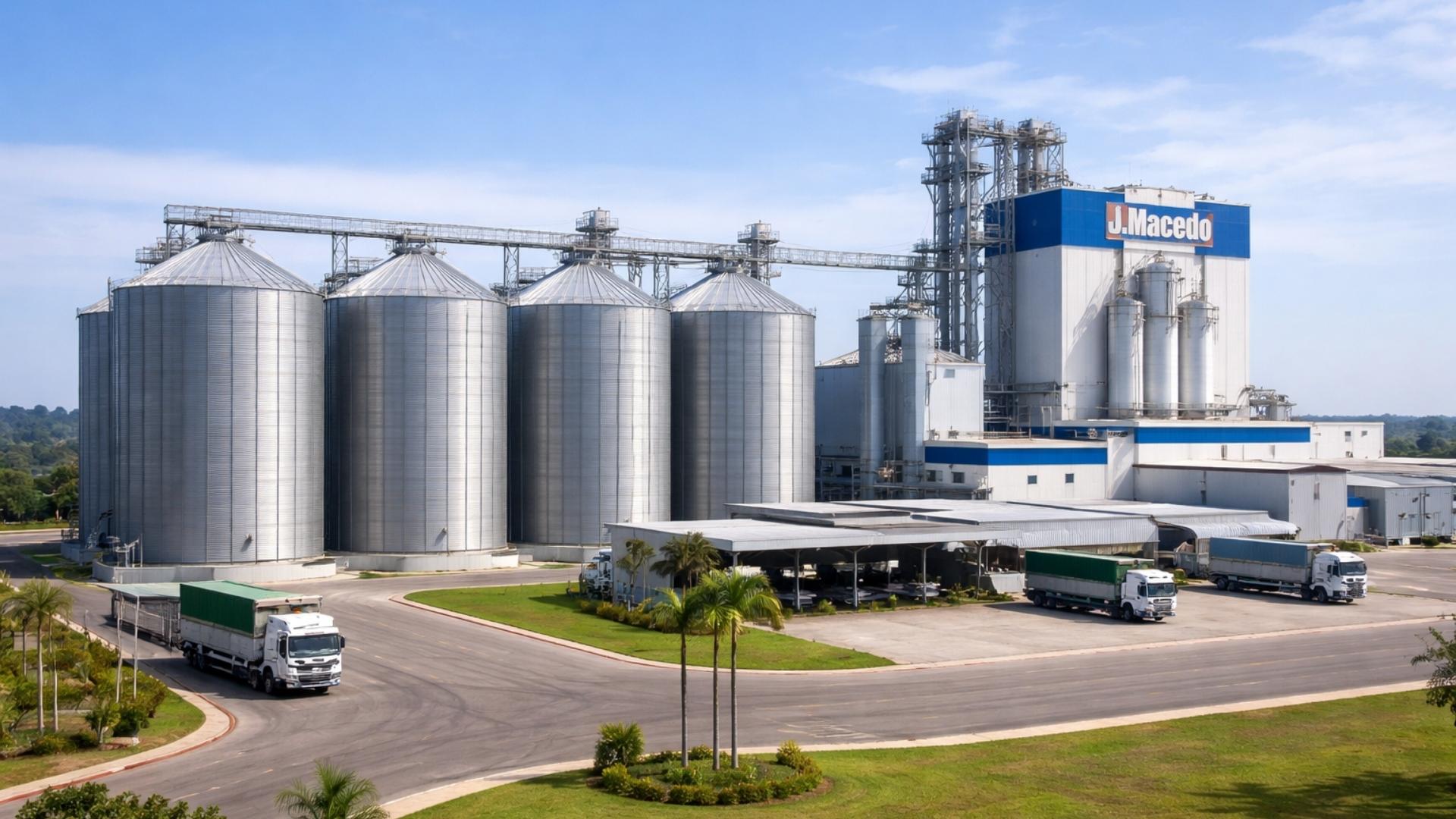
A Brazilian city gains a factory worth R$ 300 million with the capacity to process 200 thousand tons of wheat per year, a mill of 660 tons/day, silos for 42 thousand tons, and an industrial area of 276 thousand m².
It was phosphorus, the “carrier of light,” which would later be understood as a key piece for soil fertility.
In the 19th century, chemist Justus von Liebig demonstrated that phosphorus, nitrogen, and potassium were the true drivers of plant productivity, debunking the idea that only decomposed organic matter explained abundant harvests.
A few decades later, phosphate-rich waste from the steel industry and the first natural deposits in sedimentary rocks, the phosphorites, consolidated the mineral as an industrial and agricultural input.
Today, over 200 million tons of phosphate are extracted annually, with about 90 percent of that production going directly to fertilizers.
Beyond the field, phosphate is present in chemicals, animal feed, detergents, and, more recently, in iron and lithium phosphate batteries used in solar panels and electric cars.
In other words, phosphate connects the dinner plate, the outlet, and the fuel tank of the future in a single value chain.
An Input Concentrated in the Hands of Few
This strategic importance explains why phosphate has become a geopolitical asset. China leads global production by a wide margin, producing around 110 million tons per year, with reserves estimated in billions of tons.
Right behind is Morocco, with lower production but a volume of reserves considered the largest on the planet. The United States and Russia round out the group of major players.
When, in 2021, China decided to restrict phosphate exports, the impact was immediate. There was a significant increase in fertilizer prices, cost pressures on farmers, and a rush for new supply sources.
At the same time, Russia and its ally Belarus, which together accounted for a significant share of fertilizer exports, began facing sanctions, further tightening global supply.
The European Union, which relies almost entirely on phosphate imports, found itself exposed to a risk it cannot control.
The result was a reality check. In a world that needs cheap food and clean energy, but whose mineral base is concentrated in a few countries, any disruption in the flow of phosphate becomes an economic, social, and political problem.
Rogaland: The Hidden Treasure That Could Rebalance the Market
In this context, the Norwegian discovery gained weight. In the mountains of Rogaland, in southwestern Norway, the company Norge Mining identified a massive phosphate rock deposit in 2018.
The deposit is estimated to contain up to 70 billion tons, as well as titanium and vanadium, two metals critical for the high-tech industry and the so-called green economy.
At current prices, with phosphate trading around $345 per metric ton, a deposit of this scale could reach an estimated value in the tens of trillions of dollars.
It is literally about turning rock into something close to gold on a national scale. If the estimates are confirmed, Norway could move from a supporting role to the top of the global market, vying for prominence with China, Morocco, Egypt, and Russia.
The movement is not limited to phosphate. The titanium present in the deposit also represents a challenge for Brazil, which is currently one of the leading suppliers of the mineral and holds one of the largest reserves in the world.
In uses ranging from medical prosthetics to aircraft and high-strength structures, the Norwegian competition could alter trade flows and require repositioning of exporting countries.
The Environmental and Technological Cost of Norwegian Phosphate
Transforming this treasure into production is not trivial. Norway has extensive experience in maritime exploration and deep-water oil, but large-scale mining of phosphate, titanium, and vanadium in mountains and fjords requires technological solutions that are still in development.
The fjords, cut valleys where the sea advances inland, are emblematic and highly sensitive landscapes.
The Norwegian authorities talk about underground mining, intensive use of renewable energy, and total electrification of the process.
Universities such as NTNU and the University of Tromsø are involved in partnerships to map the underground, test new techniques, and create centers for innovation in sustainable mining.
The hope is that the same engineering capabilities that brought the country to the top of oil can be applied to phosphate, with less environmental impact.
Even so, the risks are significant. Phosphate mining has a problematic history regarding waste management.
Phosphogypsum, a byproduct of the process, can concentrate radioactive elements like uranium, thorium, and radium.
The case of Piney Point in Florida in 2021, where millions of gallons of contaminated water were released into Tampa Bay, became a global alert about the potential for disasters when dams or deposits are not managed rigorously.
Communities Divided Between Jobs and Preservation
Beyond the technical issues, there is the social dimension. In villages near exploration areas, such as Ulefoss, residents coexist with the promise of an “invisible mine,” underground and distant from the urban center, while fearing geological instability, soil deformation, and impacts on water and air quality.
The memory of cases like that of Kiruna in Sweden, where mining activities required relocating an entire city, fuels concern.
Some residents see the mining of phosphate as an opportunity for jobs and regional development. Others fear the destruction of natural landscapes considered heritage, either by UNESCO or by Norwegian society itself.
Opposition from environmentalists, academics, and part of the political class is growing as plans advance and project details become more concrete.
The European Union, which does not include Norway as a member but considers it a partner in the European Economic Area, has already expressed concerns about mining companies that may impact marine and coastal ecosystems.
The idea of closed systems that can prevent particles and metals from reaching the sea appears as a possible solution, although still much more theoretical than proven on a real scale.
Governance, Oil, and Lessons for Critical Minerals
Norway has already experienced something similar. In the late 1960s, with the discovery of the Ekofisk field in the North Sea, the country had to decide how to transform oil into long-term development.
It chose to create Statoil, now Equinor, as a commercial company with majority state ownership but subject to market rules and consortia with private companies. This allowed for more professional governance, less subject to direct political interference in the company’s day-to-day operations.
With oil profits, the country structured a sovereign fund that became the largest in the world, accumulating around $1.8 trillion.
In practice, each Norwegian citizen has, theoretically, a significant share of this collective savings, designed to benefit future generations as well.
At the same time, Norway has advanced in environmental policies, becoming a leader in the adoption of electric vehicles, with over 80 percent of sales in 2024, and inaugurated in 2025 one of the first large-scale underground CO₂ storage projects.
Phosphate now enters this landscape as the new frontier. The mineral is on the European list of Critical Raw Materials and has been classified as a risky input due to high external dependence.
In 2024, the European Union and Norway signed a strategic partnership for sustainable raw materials and battery value chains, covering everything from extraction to recycling.
The central question is whether the country will be able to apply to phosphate the same combination of long-term vision, environmental responsibility, and fiscal discipline that marked the oil era.
What Changes for Europe and Producer Countries Like Brazil
If confirmed, the capacity of the Rogaland deposit to supply European and global demand for phosphate for many decades could significantly reduce the bargaining power of current suppliers.
China, Morocco, and Russia would lose some of their ability to pressure markets through export cuts or abrupt price adjustments.
Europe, in turn, would gain room to plan its agricultural and energy transition with more stability.
For Brazil, the scenario is ambivalent. On one hand, a greater supply of phosphate and titanium could pressure prices and alter export routes for minerals in which the country is relevant.
On the other hand, the Norwegian experience reinforces the importance of strong institutions, long-term funds, and industrial strategies aligned with sustainability.
The way Norway manages this new treasure will be closely watched by countries that also deal with large natural reserves and governance challenges.
In the end, what is at stake goes beyond a single mineral. It is about whether the world can transform resources like phosphate into levers for stable development rather than triggers for crises, conflicts, and environmental degradation.
If a phosphate reserve of this size were discovered today in Brazil, do you believe the country could transform this wealth into sustainable development or would we repeat old mistakes?






-

-

2 pessoas reagiram a isso.