





 Portuguese
  English
  Spanish
  3 min of reading
  0 comments


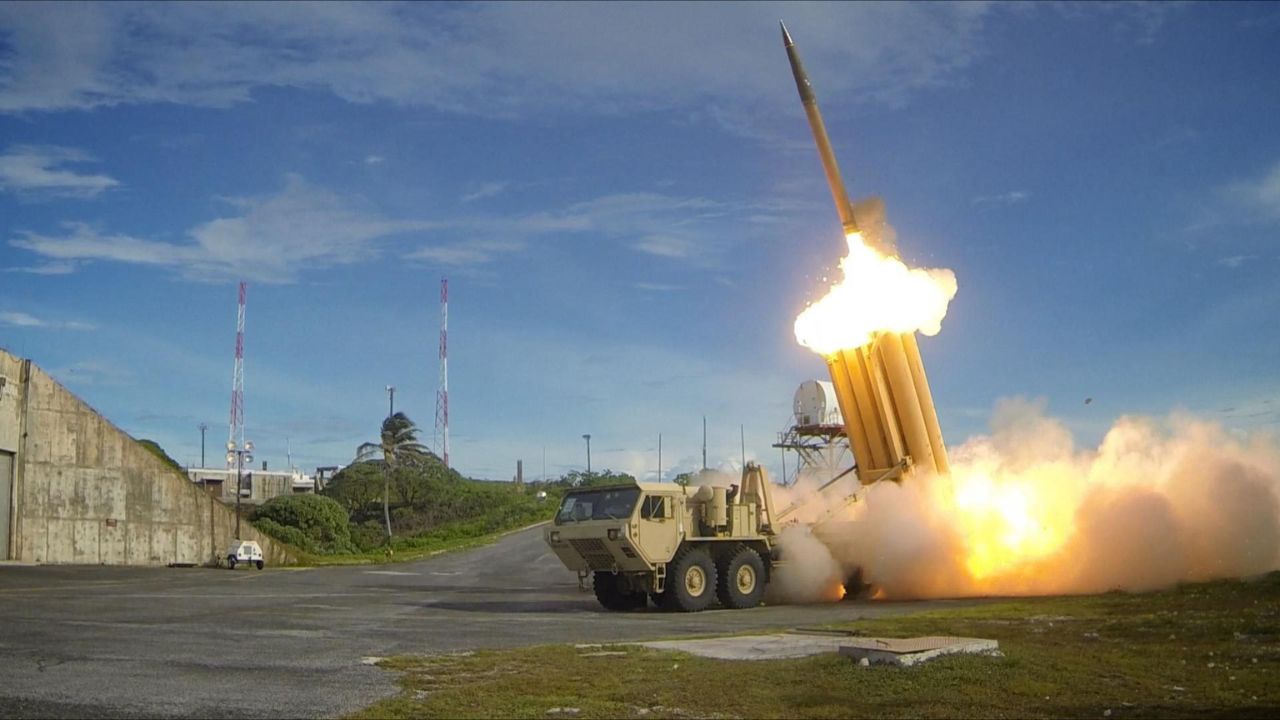
With an Investment of US$ 2.81 Billion, the New US Hypersonic Missile Defense System Promises Ultra-Fast Interception with AI, Advanced Radars, and Lasers, Reinforcing Security Against Global Hypersonic Threats.
The United States is making a giant leap in the military technology race with THAAD 6.0, a hypersonic missile defense system designed to face increasingly fast and unpredictable threats. This time, the promise is not just more accuracy but also a much smarter, agile, and lethal system.
And the investment is no small change: US$ 2.81 billion has been injected into the project, which is in the hands of Lockheed Martin. The idea is to elevate US defense technology to another level, mixing artificial intelligence, state-of-the-art radars, and even laser weapons.
What Is the THAAD Defense System and How Has It Evolved?

THAAD (Terminal High Altitude Area Defense) is already well-known when it comes to missile interception. It is designed to destroy short, medium, and intermediate-range threats before they reach their target. And it does this in a surgical way: instead of exploding near the enemy, it uses “hit-to-kill” technology, basically throwing a “supersonic rock” at the opposing missile.
-
Millions of people have been eating yam for centuries without knowing that this humble tuber contains a compound called diosgenin, which scientists have now discovered can improve memory and help control blood sugar levels.

-
Scientists from an international project drill 1,800 meters of ice in Antarctica using hot water and discover details about one of the most intriguing places on planet Earth.

-
Seen from space, a colossal volcano nearly 5,000 meters high in Russia has released 1,600 km of smoke over the Pacific, forming “devil’s horns” of lava and revealing the brutal force of the Ring of Fire.

-
Expedition 501: Scientists drill into the ocean floor and discover a giant reserve of fresh water hidden beneath the sea, extracting nearly 50,000 liters and revealing an invisible system that could reshape the map of water scarcity.


But then came the big problem: hypersonic missiles. These monsters can reach absurd speeds and still change direction mid-flight. THAAD 6.0 emerges precisely to handle this threat, adding more layers of defense and cutting-edge technology.
The Billion-Dollar Contract for the Development of THAAD 6.0
The US is not playing around. The government closed a contract for US$ 2.81 billion with Lockheed Martin, ensuring that THAAD 6.0 will be developed between 2025 and 2035. They have already started releasing funds: US$ 12.7 million has already been allocated for initial testing.
The main work will take place in Sunnyvale, California, and Dallas, Texas, where engineers and scientists will dedicate themselves to creating the most advanced hypersonic missile defense system ever built.
Expected Technological Advancements in THAAD 6.0
Now comes the interesting part: what changes in THAAD 6.0? The updates promise to completely transform the way the US deals with aerial threats.
If the game is speed, THAAD 6.0 needs to see first. To do this, it will rely on a new version of the X-Band TPY-2 radar, which offers a much greater range and extraordinary accuracy.
But the star of the defense system is artificial intelligence. With it, the system will be able to differentiate a real missile from decoys, as well as predict routes and make decisions in fractions of a second.
Defense Against Hypersonic Threats
Hypersonic missiles are a nightmare precisely because they can change trajectory mid-flight. To combat them, the THAAD 6.0 defense system will need two essential upgrades:
New KKV (Kinetic Kill Vehicle) interceptors – more agile and equipped to engage targets maneuvering at extremely high speeds.
Advanced propulsion, with technologies like scramjet and solid-state engines, which can make interceptors even faster and more efficient.
Directed Energy Weapons
This technology is already advanced enough to be integrated into the THAAD 6.0 defense system. The goal is to use high-power lasers to melt or disable missiles before they even reach their final phase of flight. Meanwhile, microwaves can create an “invisible wall” against multiple threats simultaneously.
This means that, in the future, the US could shoot down enemy missiles without even needing to launch a physical interceptor.









Seja o primeiro a reagir!