





 Portuguese
  English
  Spanish
  4 min of reading
  0 comments


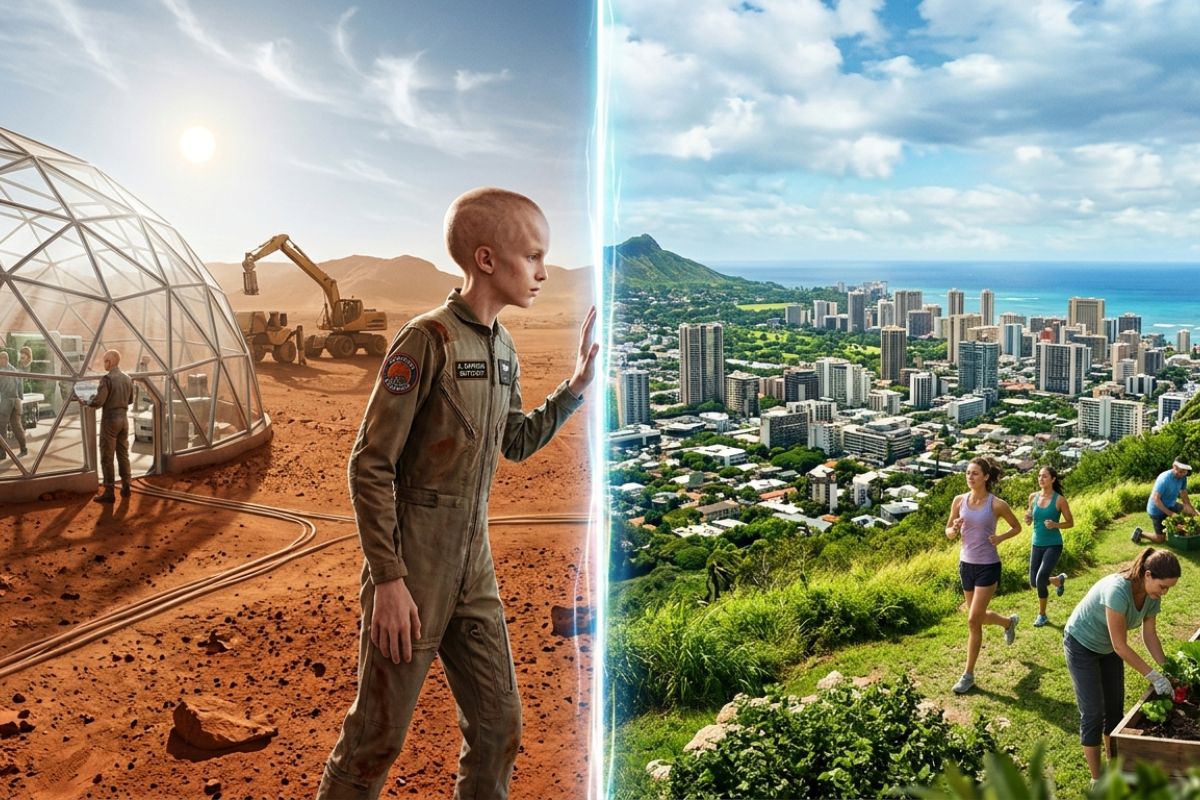
According to Scott Solomon, children of colonists on Mars may drift away from Homo sapiens due to low gravity, radiation, and isolation, creating two evolutionary paths and a difficult ethical dilemma to reverse.
The biggest problem of living on Mars may not be oxygen, nor building shelters, but something much deeper: what happens to the human body when it begins to evolve outside of Earth. For evolutionary biologist Scott Solomon from Rice University, a birth in a Martian colony could inaugurate a biological rupture that, over time, separates humanity into two branches.
In the researcher’s view, the first colonists who arrive on Mars still carry a body shaped by millions of years of terrestrial evolution. But the descendants, born and raised under different conditions, may undergo anatomical and physiological changes so strong that, in an anthropological sense, they would no longer be Homo sapiens.
Why Mars changes the rules of the human body

Mars imposes a radically different set of conditions than Earth. The planet has about 38% of Earth’s gravity, receives two to three times more radiation, lacks a protective magnetic field, and also does not have the microbial biosphere with which our immune system evolved.
-
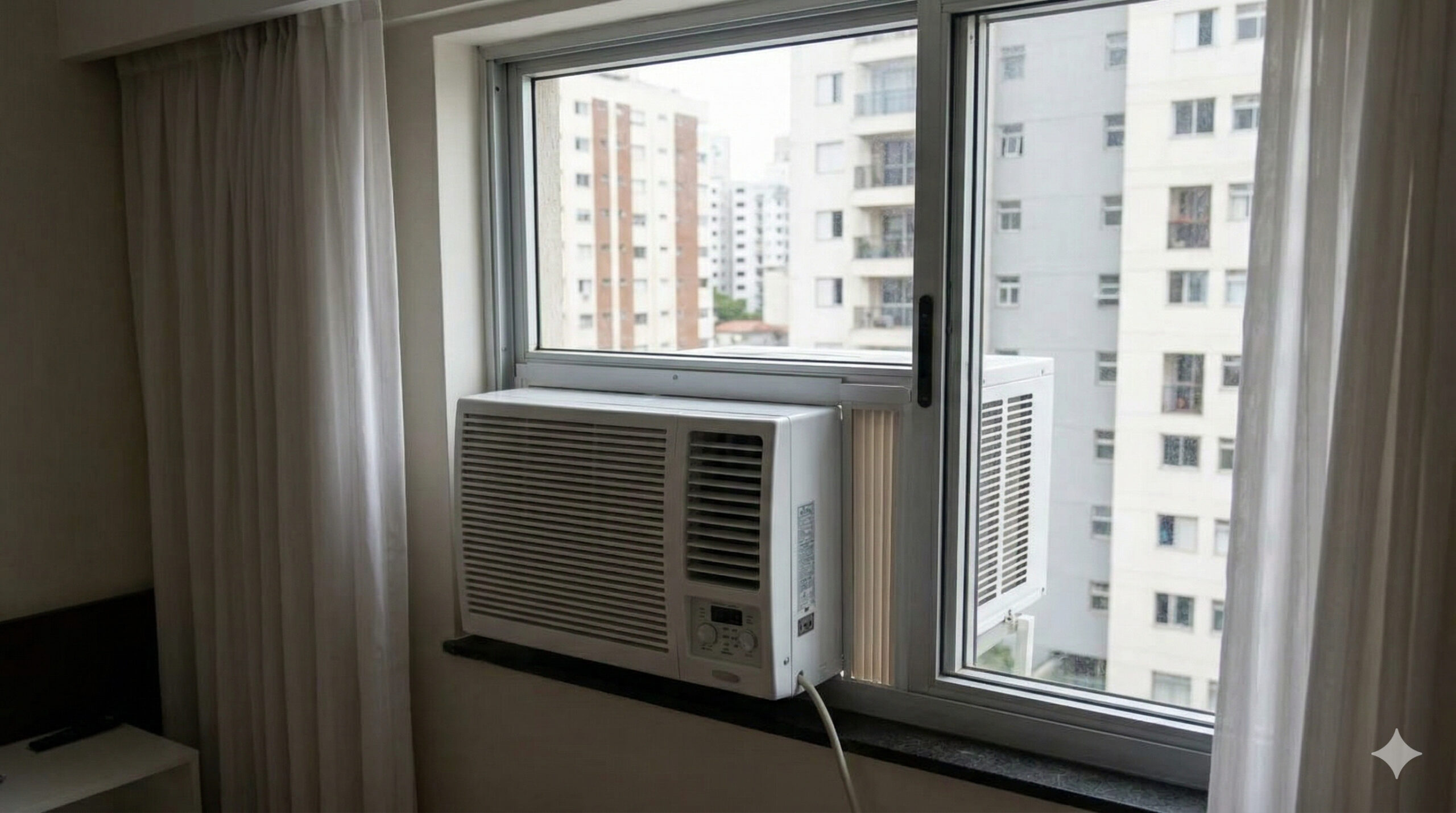
With no separate outdoor unit and designed to fit in the window, monoblock air conditioners used in Japan emerge as an alternative for those who cannot install a split system in a rented apartment.
-
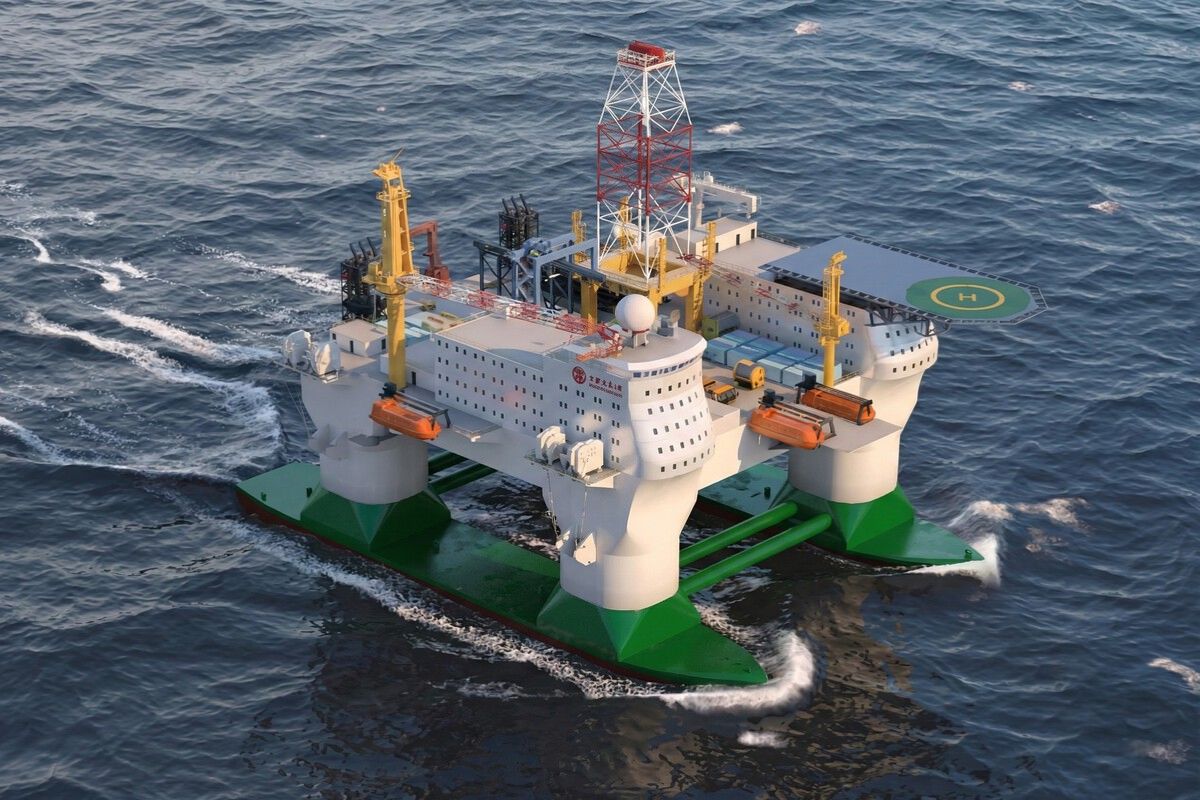
China prepares a 78,000-ton pilotable floating island for deep-sea research: it accommodates 240 people for months, withstands category 17 typhoons and 9-meter waves, and uses metamaterials that dissipate nuclear explosions.
-
End of the stove: new technology from Xiaomi promises to retire the old stove with a smart pot that prepares up to 16 servings in 24 minutes and has 10 automatic levels controlled by an app.

-
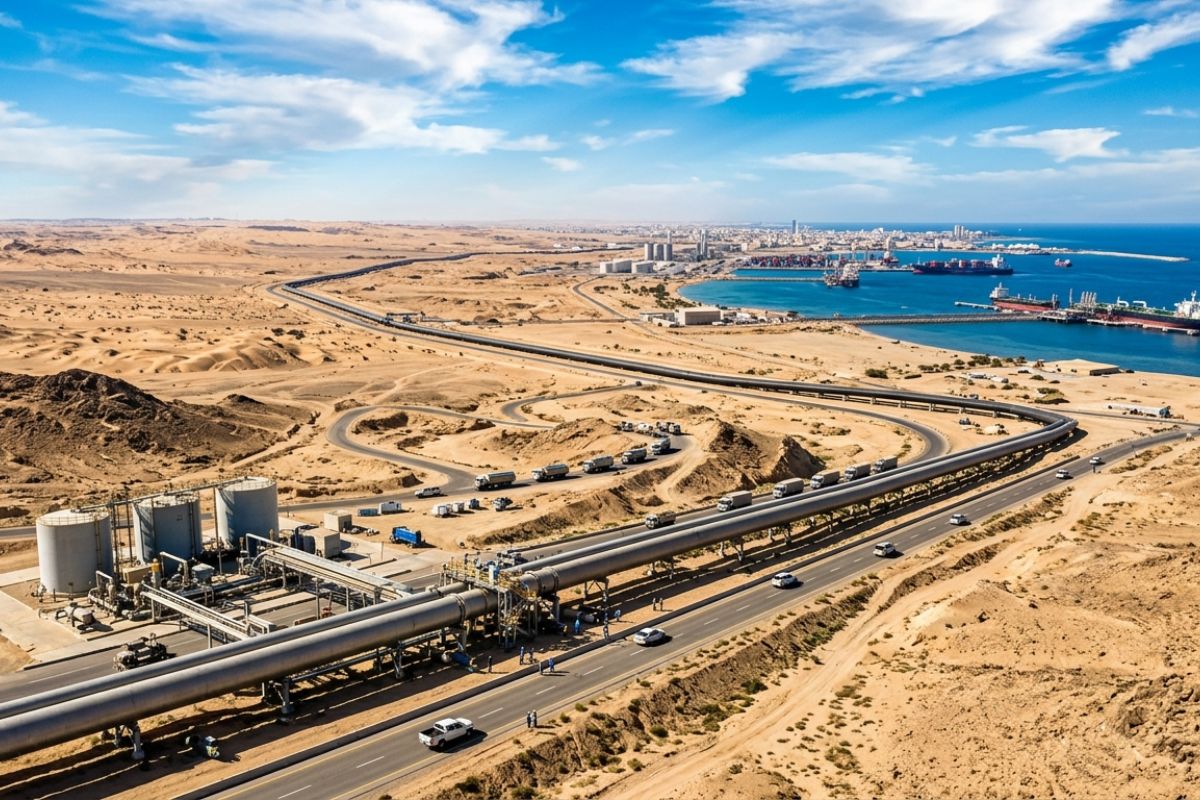
If Ormuz closes, the world freezes: the 1,200 km Saudi Petroline transports oil from the Gulf to the Red Sea, operates near 7 million barrels/day, and becomes a geopolitical weapon in the crisis with the US.
These factors act as forces that push biology down another path. Natural selection and adaptation do not stop just because we change planets, and Solomon argues that the new environment could rewrite part of the “manual” of the human body over generations.
The concept that explains the possible division of humanity
Evolutionary biology already describes the mechanism behind this transformation: allopatric speciation. This occurs when a population becomes isolated and begins to develop in a new environment, while natural selection and genetic drift continue to act.
Over time, those who live on Mars and those who remain on Earth may become so different that the separation is no longer just cultural or technological. It would be a real biological difference, with two populations following their own evolutionary trajectories.
Colonists who arrive on Mars are not the same case as those born there
Solomon makes an important distinction: one thing is to arrive on Mars from Earth and survive with a body already formed under terrestrial conditions. Another is to be born on Mars, developing bones, muscles, nervous system, and immunity under lower gravity, higher radiation, and a closed environment.
In this scenario, the change is not just “adaptation.” It is development shaped by a different world, which could amplify effects over time.
What we already know about the body in space and why it worries
The text reminds us that we don’t even need to wait generations to see signs of impact: there is evidence that astronauts on the International Space Station suffer from accelerated bone loss, muscle atrophy, cardiovascular problems, vision changes, and stress. Even blood can show changes.
The central idea is simple and unsettling: if adults already react this way, children born and raised on Mars may have their bodies structured from the beginning under these conditions, with deeper consequences.
Possible changes: bones, skin, and immune system
Solomon points to examples of transformations that could be favored on Mars. Among them are denser and shorter bones, and an increase in the production of eumelanin, a type of melanin associated with darker skin tones, as possible protection against radiation.
The immune system also comes into play. In a Martian colony, it could become calibrated for a closed environment, raising another consequence: greater vulnerability to common diseases on Earth, should this body need to face microbes for which it was not “trained.”
The most delicate point: reproduction and birth on Mars
The most sensitive issue is reproduction. The text emphasizes that we still do not know if humans would be able to conceive, gestate, and give birth successfully on Mars. Experiments with mammals in microgravity are described as concerning.
Solomon also predicts that childbirth on Mars could inevitably be surgical and riskier, as lower bone density and muscle atrophy could complicate procedures and recovery. It is the kind of detail that turns colonization into a biological dilemma, not just a technological one.
Two paths: let evolution act or intervene with genetic engineering
For Solomon, there are two general possibilities. The first is to allow natural selection to take its course and shape the generations on Mars. The second is to resort to genetic engineering, anticipating problems before sending people and trying to adapt the body to the new environment.
Even so, the macro result may converge to the same destination: two branches of humanity, living under distinct conditions, in different worlds, with different identities and physical limits.
The ethical dilemma that comes with biology
The discussion does not stop at the body. There is a direct ethical point: if a child is born on Mars and cannot return to Earth because their body would not withstand the change, humanity will have created an irreversible decision without that person’s consent.
And this raises questions of rights, identity, and responsibility. Before colonization becomes a reality, these issues need to be faced seriously, because the consequence could go far beyond a scientific base on the Red Planet.
Would you have the courage to have a child on Mars knowing that they might never be able to return to Earth?



Seja o primeiro a reagir!