





 Portuguese
  English
  Spanish
  4 min of reading
  0 comments


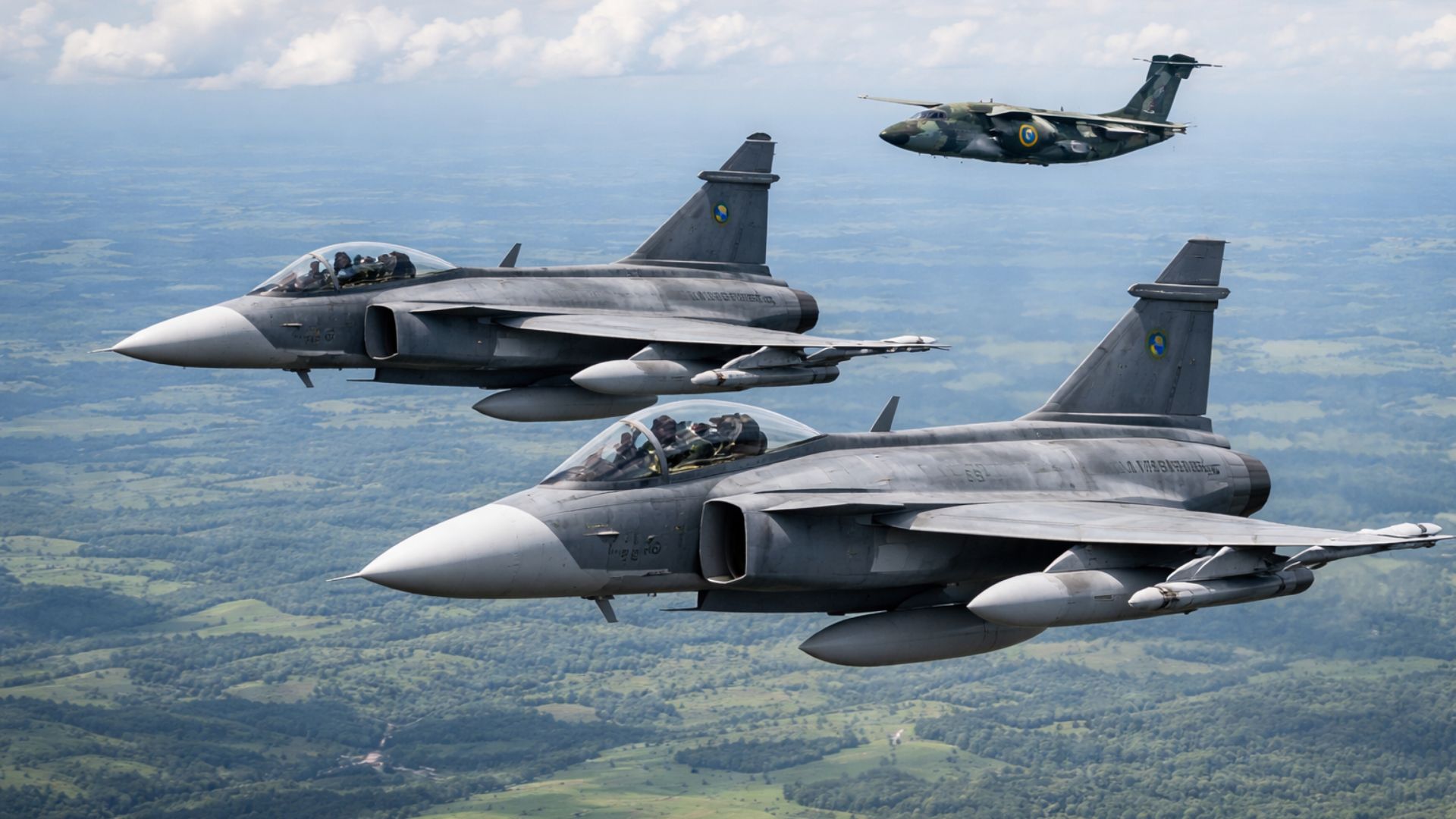
Military capacity below necessary exposes gaps in fighters, strategic transport, and air refueling, while budgetary and structural decisions shape the pace of Brazilian defense and expand the debate on readiness and deterrence.
The assessment that Brazil currently operates below the level considered necessary for robust air deterrence has returned to the center of the debate following statements by Lieutenant Brigadier Carlos de Almeida Baptista Júnior, former commander of the Air Force, to the newspaper O Estado de S. Paulo.
In the interview, he stated that the country would need at least 66 F-39 Gripen fighters, in addition to maritime patrol aircraft and air refueling aircraft, to sustain a military capacity compatible with Brazil’s territorial and maritime dimensions.
The warning comes from a broader diagnosis.
-
A couple buys an old chalet, breaks the kitchen floor for renovation, and finds over a thousand coins of gold and silver hidden since the English Civil War over 4 centuries ago.

-
Rigid bags with their days numbered: new trend prioritizes comfort in 2026.

-
YouTuber creates an excavator equipped with a giant 4.5-meter sword to challenge his brother to a rematch, and the invention quickly goes viral on social media.

-
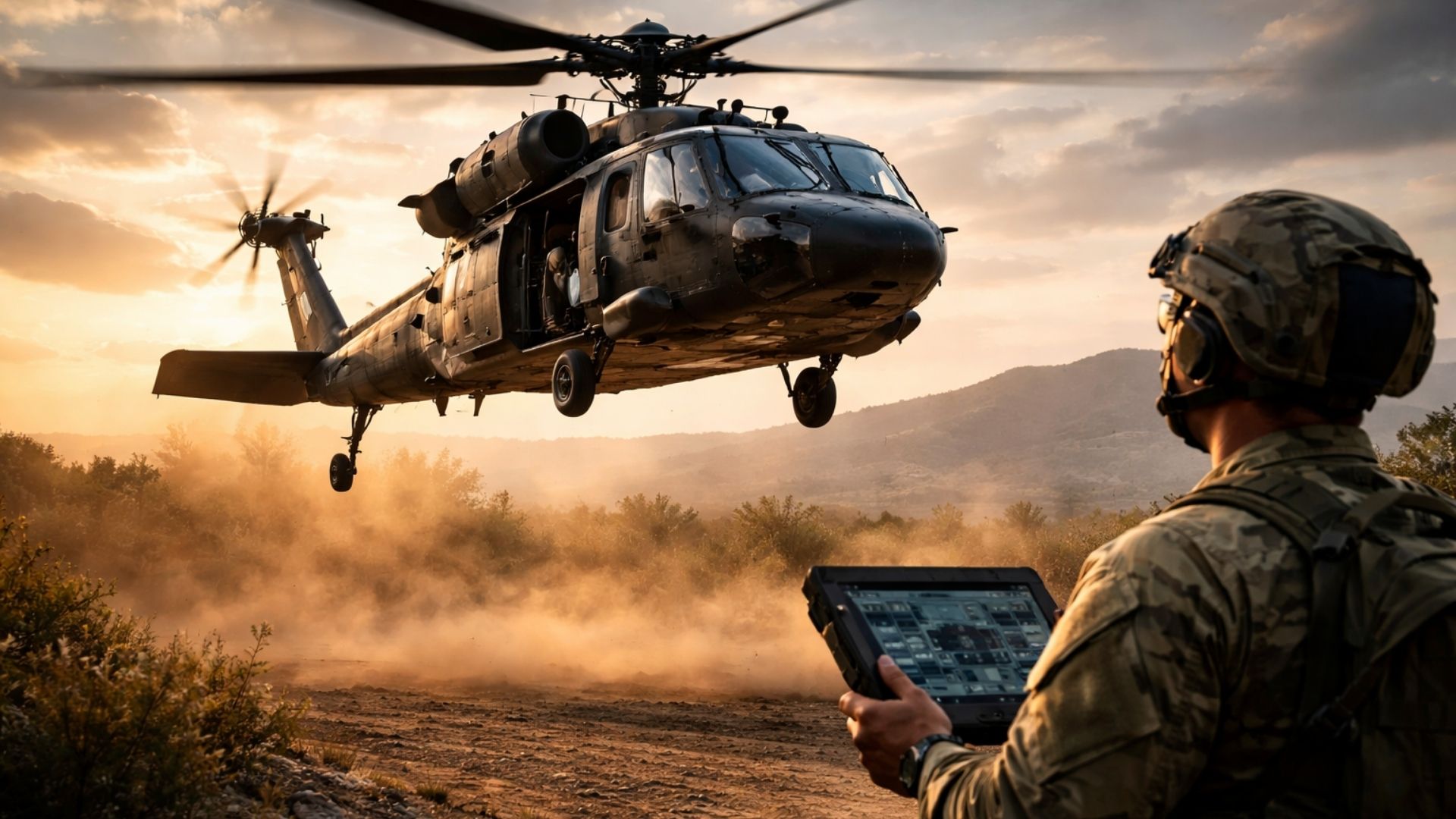
The U.S. Army surprises the world by presenting the UH-60MX Black Hawk helicopter capable of flying without pilots, controlled by a tablet, featuring the MATRIX system, smart sensors, and full autonomy in real combat and rescue missions.

According to the former head of the FAB, the Armed Forces do not currently possess the operational means considered adequate to guarantee national sovereignty, while part of society and even within the military underestimates the possibility of aggression against the country.
The criticism is not limited to the volume of resources and also encompasses the way the defense system is organized.
Quantity of Gripen and gap in air defense
The most sensitive point of the interview lies in the count of fighter aviation.
The contract signed by Brazil in October 2014 with Saab provides for 36 Gripen NG aircraft, consisting of 28 single-seat and 8 twin-seat, with a support package, training, armaments, and industrial cooperation.
This is, so far, the officially consolidated number of the program, although in 2022 the Air Force announced the intention to include four more units in the batch.
The expansion to 40 aircraft was even announced by the FAB and Saab in 2022.
Still, subsequent public sources did not consolidate this total as a new definitive contracted quantity, which keeps the figure of 36 fighters as the most secure factual reference.
Meanwhile, the incorporation occurs gradually.
The first two F-39 Gripen were integrated into the 1st Air Defense Group on December 19, 2022, marking the operational phase of the model in the FAB.
By February 2026, the Force itself reported that the 1st GDA had ten aircraft in operation, employed in air defense missions and airspace policing.
This progress, however, does not eliminate the gap between the available fleet and the quantity indicated as the minimum desirable.
If the presented count is taken as a parameter, the country is still far from the effective number considered necessary to ensure continuous presence, training, maintenance, and territorial coverage.
Reduction of KC-390 and impact on logistical capacity
The discussion on readiness does not involve only fighters.
In the tactical transport and refueling segment, the KC-390 Millennium program was reduced from 28 to 19 aircraft following negotiations between the Air Force and Embraer.
The reduction became one of the most delicate episodes in the relationship between the Force and the manufacturer.
In November 2021, the intention to decrease the order to 15 jets was announced, a move that later resulted in an interim agreement.
In practice, the cut reduces the margin for simultaneous employment in transport, evacuation, logistical support, and air refueling missions.
The model remains central to Brazilian transport aviation.
In November 2025, the KC-390 was employed in air refueling missions during COP30, supporting F-5M fighters in the air defense of the event’s region.
This data confirms the operational relevance of the aircraft but also reinforces that the size of the fleet directly impacts the ability to sustain prolonged operations.
KC-30 and the limitation in air refueling
Another vulnerability appears in the KC-30s, which still do not fully operate air refueling.
The Airbus A330-200s were incorporated in 2022 as a reinforcement for strategic transport, logistical support, and humanitarian actions.
However, the complete conversion to tanker aircraft has not been completed.
The gap is significant because Brazil lost, with the deactivation of the KC-137s, an organic capacity for large-scale strategic refueling.
Without this modernization, the FAB maintains an important asset for long distances but does not fully restore a function considered crucial in war scenarios.
Command structure and defense decisions
In the interview, Baptista Júnior also advocated for strengthening the Joint Staff of the Armed Forces.
He argues that operational employment should be concentrated in permanent joint commands.
Meanwhile, the Navy, Army, and Air Force would focus on organizing, training, and equipping their forces.
The same logic appears in the criticism of the Defense Products Secretariat, which, according to him, has not gained enough strength to centralize strategic decisions.
By its current assignments, the agency acts in promoting and fostering the defense industry.
However, the decision-making power over major programs remains distributed among the Forces.
This context helps explain why strategic programs advance at an uneven pace.
The incorporation of the Gripen, the reduction of the KC-390, and the uncertainty regarding the KC-30s show that military readiness directly depends on budget, planning, and continuity of public policies.





Seja o primeiro a reagir!