





 Portuguese
  English
  Spanish
  5 min of reading
  0 comments


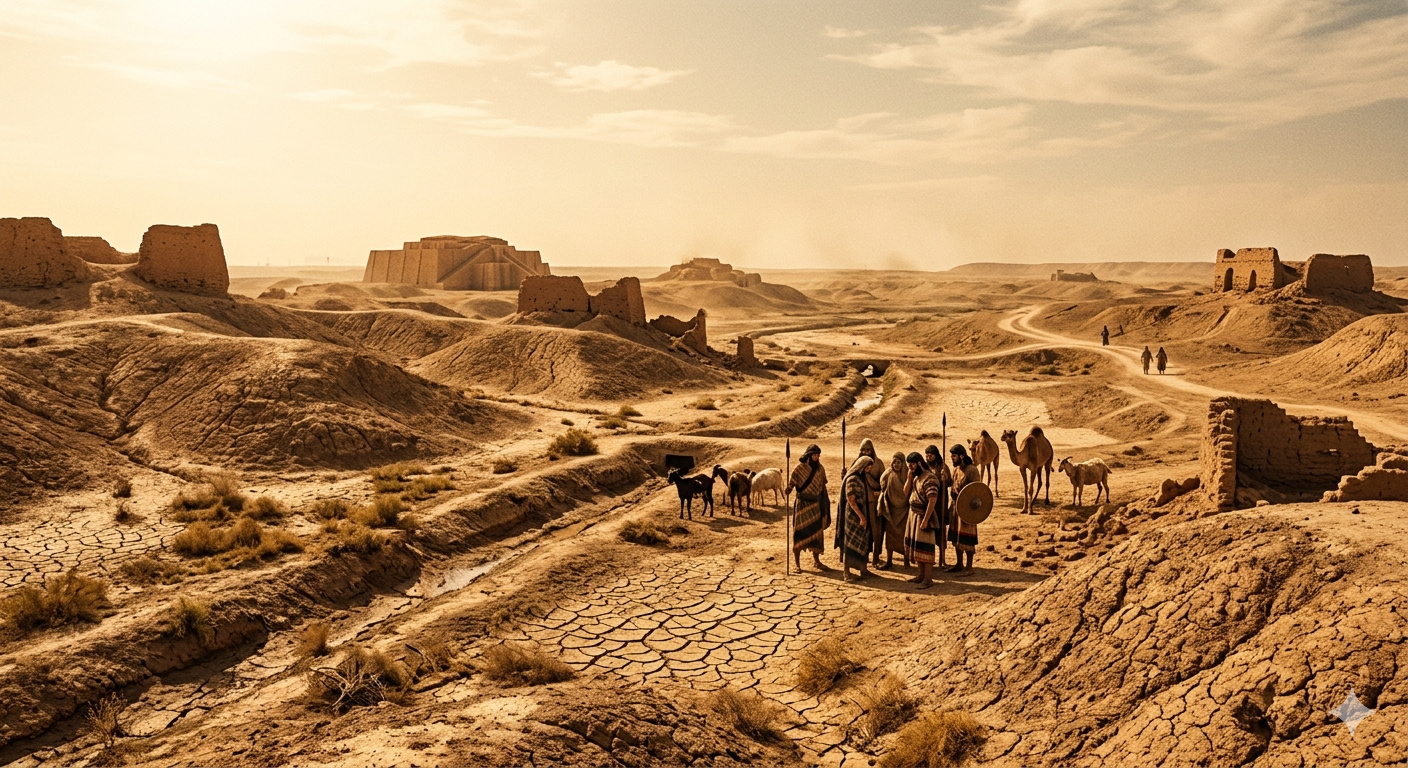
Study with HadCM3 model reveals that a 200-year drought reduced rainfall in the Tigris and Euphrates and led to the collapse of the Akkadian Empire.
According to the classic study published in the scientific journal Science by Harvey Weiss and collaborators, based on paleoclimatic evidence and atmospheric modeling, what destroyed the first empire in history was not an invasion, not an epidemic, and not a political revolution. It was a change in the winds.
More specifically: it was the progressive weakening of the atmospheric systems that brought winter rain to northern Mesopotamia. These systems were the main source of precipitation for the northern plains of Syria and northern Iraq, the region where the Akkadian Empire had built its agricultural base for sustenance. When they weakened, rainfall persistently decreased over generations, triggering an environmental collapse that led to the abandonment of entire cities and the end of the largest political state the world had seen until then.
What was the Akkadian Empire and why did it mark the beginning of large organized states
To understand the magnitude of this collapse, it is necessary to understand what Sargon of Akkad built about 4,300 years ago. For the first time in history, various independent city-states of Mesopotamia were unified under a centralized structure, forming what is now recognized as the first empire of humanity.
-
A “silent skill” is allowing Brazilians to earn up to R$ 22,000 per month without a degree and become indispensable for companies that rely on millions of data to survive.

-
Researchers at the Toyota Research Institute found that if a human uses robotic arms to flip a pancake 300 times in an afternoon, the robot learns to do it on its own the next morning, and this is currently the most promising method to solve the biggest bottleneck in modern robotics.

-
Goodbye iron: a common item in households is starting to lose space to technology that smooths clothes in minutes without an ironing board and with less energy consumption.

-
Antarctica reveals an unusual clue high in the Hudson Mountains, and what appeared to be just an isolated rock began to expose a secret hidden under the ice for ages.


The Akkadian influence extended along the basins of the Tigris and Euphrates rivers, ranging from the south of present-day Iraq to regions of Syria and Turkey. The empire coordinated taxes, maintained a permanent professional army, standardized weights and measures, and structured a complex administrative network — characteristics that anticipate concepts of modern state by millennia.
This system directly depended on the agricultural productivity of the northern lands, which supplied the army and sustained the redistribution of food. As long as it rained, the system functioned. When rainfall decreased, the entire structure began to fail.
Climatic evidence in the Gulf of Oman confirms prolonged drought in Mesopotamia
The confirmation of the climatic cause did not come from written records, but from the ocean floor. Testimonies from marine sediments collected in the Gulf of Oman revealed peaks of minerals such as calcite and dolomite, transported by dust from the arid regions of Mesopotamia.
These deposits began approximately 4,025 years ago and extended for about 300 years, indicating a long period of aridification. The presence of layers of volcanic ash — tephra — associated with these deposits allowed for a direct correlation of these events with the period of the collapse of the Akkadian Empire.

Additional studies with speleothems from the Gol-e-Zard cave in Iran identified long-duration drought events, including a period of approximately 290 years that coincides with the collapse of the empire, reinforcing the climatic hypothesis as a determining factor.
How a 7% reduction in rainfall led to political and social collapse
Simulations from the HadCM3 model indicate that, between 2250 and 2000 BC, there was an average reduction of about 7% in precipitation in the basins of the Tigris and Euphrates. In regions where agriculture depends exclusively on rain, this variation is sufficient to transform productive lands into unviable areas.
The impact was progressive. Harvests decreased, reducing the capacity for food redistribution. Without agricultural surplus, the political system lost its support base. The loyalty of the populations, which depended directly on supply, began to unravel.
Archaeological records show the abandonment of settlements, migration to regions with access to water, and a transition from sedentary agriculture to nomadic practices. The population followed the rivers, oases, and irrigated areas, leaving entire cities behind.
The climatic event of 4.2 thousand years ago and the simultaneous collapse of great civilizations
The collapse of the Akkadian Empire was not an isolated event. It is part of the so-called 4.2 ka BP climatic event, a period of abrupt changes in the global climate that affected various civilizations simultaneously.
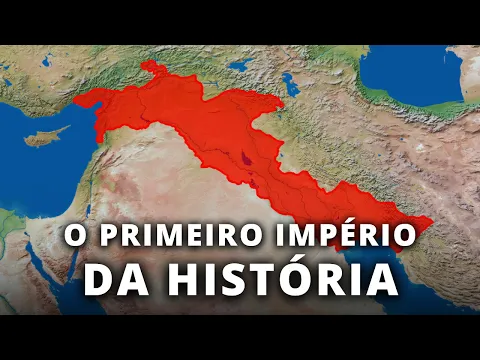

During this period, the Old Kingdom of Egypt declined after the reduction of the Nile floods. The civilization of the Indus Valley began to disintegrate, with population migration to wetter regions. In Anatolia and the Levant, Bronze Age settlements were abandoned.
These collapses occurred synchronously, resulting from global changes in atmospheric and oceanic circulation, possibly associated with the weakening of the Atlantic Meridional Overturning Circulation (AMOC).
The 180 km wall against climate refugees that failed to contain migration
After the collapse, populations from the north migrated en masse to the south, where there was still access to water. In response, the so-called “Repeller of the Amorites” was built, a wall approximately 180 kilometers long between the Tigris and Euphrates, aimed at containing the flow of climate refugees.
The attempt failed. The wall could not prevent migration, and within a few generations, the descendants of these populations became the rulers of Babylon, which emerged as the next major power center in the region.
This episode highlights a recurring pattern in history: climate change displaces populations, and physical barriers rarely manage to contain these movements.
When the rain returned, civilization returned, but the empire did not
The final evidence connecting the collapse to the drought lies in the moment when climatic conditions normalized. Dust deposits in the Gulf of Oman ceased after about 300 years, indicating the return of a wetter climate.
The repopulation of northern Mesopotamia occurred in the same time frame. However, the previous political system was not restored. What emerged was a new social configuration, with different populations and power structures.
The Akkadian Empire lasted less than a century. The drought that destroyed it persisted for over two. When it ended, the world it had organized no longer existed.







Seja o primeiro a reagir!