





 Portuguese
  English
  Spanish
  4 min of reading
  0 comments


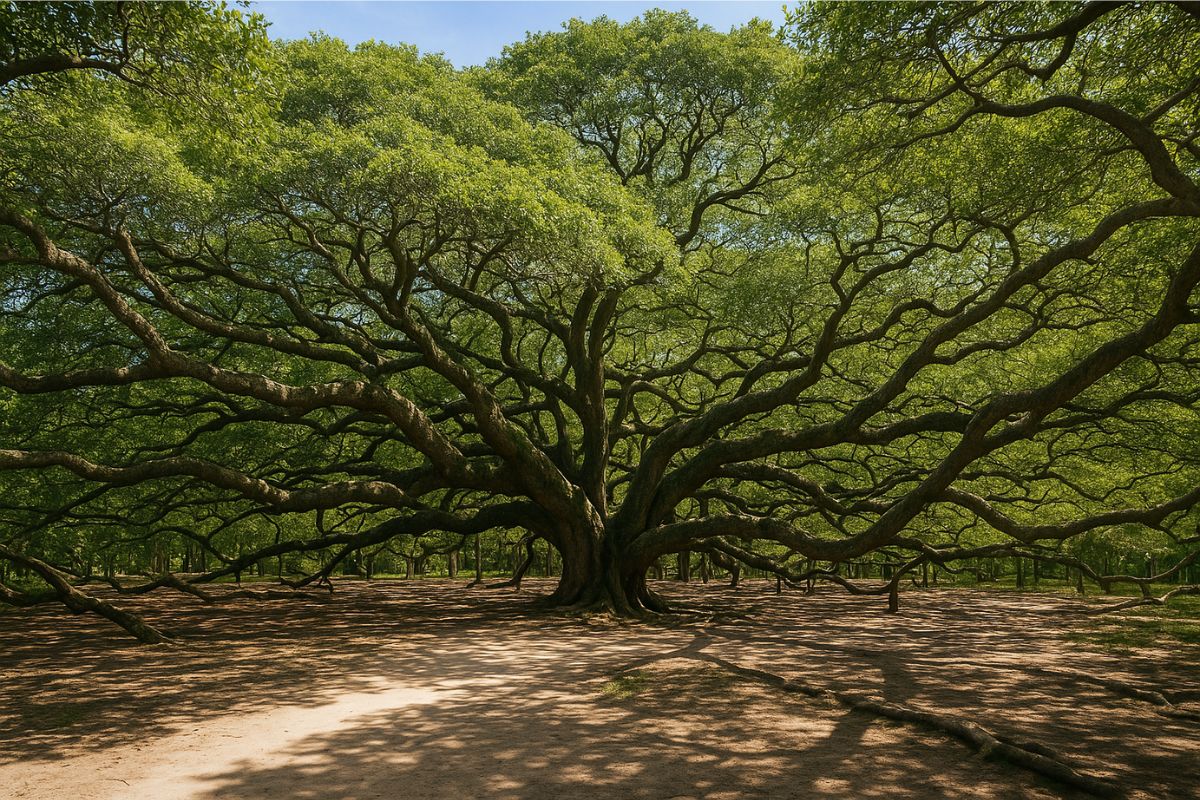
Discover the Impressive Cashew Tree of Pirangi, in Natal-RN: Curiosities, Entrance Fees, and the Race for the Title of Largest in Brazil
In the heart of the Northeast, just a few kilometers from Natal, stands one of the greatest natural wonders of Brazil: the largest cashew tree in the world! Imagine a tree with such a vast canopy that it looks like a small forest; this green giant, with space to accommodate hundreds of visitors, is the true protagonist of Praia de Pirangi do Norte, in Rio Grande do Norte. And pay attention: besides its grandeur, it carries a fierce competition in the Guinness World Records, maintaining its status since 1994.
How to Get to the Largest Cashew Tree in the World and Meet the Green Giant of RN
The gigantic cashew tree is located in Parnamirim, a neighboring municipality of Natal, just 12km from the city center. Close to Praia de Pirangi do Norte, the place is accessible by car, public bus, or even rideshare. There, you arrive in front of this natural spectacle, ready to explore one of the most charming postcards of the Northeast.
A Growth That Defies Logic
- Its branches grow parallel to the ground, not upward.
- When these branches touch the ground, they sprout new roots and multiply like new trunks.
The result? A canopy that occupies about 9,000 m², equivalent to 1.3 football fields! This mechanism created the illusion of multiple trees, but scientists confirm: there are only two, with one dominating 95% of the total area. The main mastermind behind this expansion was a local fisherman, Luís Inácio de Oliveira, who planted the original seed in 1888, and rested in the shade of the tree he planted at the age of 93.
-
Friends have been building a small “town” for 30 years to grow old together, with compact houses, a common area, nature surrounding it, and a collective life project designed for friendship, coexistence, and simplicity.

-
This small town in Germany created its own currency 24 years ago, today it circulates millions per year, is accepted in over 300 stores, and the German government allowed all of this to happen under one condition.

-
Curitiba is shrinking and is expected to lose 97,000 residents by 2050, while inland cities in Paraná such as Sarandi, Araucária, and Toledo are experiencing accelerated growth that is changing the entire state’s map.

-
Tourists were poisoned on Everest in a million-dollar fraud scheme involving helicopters that diverted over $19 million and shocked international authorities.




Cashew Tree of Pirangi Faces Giant Rival in Piauí
In 1994, the cashew tree officially entered the Guinness Book of World Records as the largest cashew tree on the planet, measuring about 8,500 m². However, a new contender has emerged from Piauí: the “Cajueiro-Rei” of Barra Grande, now estimated at 8,832 m² with backing from studies by Unespi, although it has yet to be officially registered in the Guinness.
One of the authors of the study, botanist Francisco Soares Santos Filho, states:
“There is a document that has existed for at least three years proving this and has already been delivered to the Secretary of Tourism of Piauí.” Still, until the official postal service acts again, our Potiguar giant reigns supreme.
Visitation, Flavors, and Challenges: Between Nuts, Lookouts, and the Pruning Controversy
The environmental complex where the cashew tree is located is open daily, from 7:30 AM to 5:30 PM; the entrance fee is only R$ 8, with half price for students, seniors, and children aged 7 to 12, while children under 6 enter for free. There is a suspended lookout offering a panoramic view of the “cashew tree,” overlooking the calm sea of Praia de Pirangi.
During the guided tour, we learn about genetics, local myths, and regional recipes, as well as enjoying fresh juices, nuts, and crafts made with cashew, all supported by the revenue from visitation. In the harvest season, between November and January, production can reach 70,000 fruits, totaling approximately 2.5 tons, although only 15,000 cashews were recorded in 2021, according to regional estimates.
With organic growth coming from the soil, the branches began to invade neighboring houses and compromise the Rota do Sol. To contain the expansion, a metal structure was erected in 2012, called the “barrier,” which supports the branches and prevents accidents. Although some defend pruning to preserve paths and residences, most of the community fears that cuts may affect the vitality of the cashew tree.
136 Years of History: A Celebration of the Living Symbol of the Northeast
At the end of 2024, the Parque do Cajueiro de Pirangi celebrated its 136th anniversary with a special program: cultural performances, conversation circles, distribution of seedlings, and the environmental campaign “RN + Clean.” The event attracted about 300,000 visitors and was open free of charge to celebrate the tree’s heritage significance, highlighted by regional manager Iracy Wanderley.
The Cajueiro de Pirangi is more than just a tree; it is a living icon of Brazil and the Northeast, an ecological gem that bridges science, culture, and tourism. Even amidst competition in the Guinness World Records, it stands firm as a heritage of Rio Grande do Norte. If you haven’t visited yet, it’s worth planning a trip to smell the cashew, walk among the rooted branches, and absorb a lesson in natural history.
What Do You Think?
Did you already know about this wonder? Tell us in the comments what your favorite part of the visit was! And if you liked it, share it with your explorer friends and help spread this green treasure.










-

-

4 pessoas reagiram a isso.